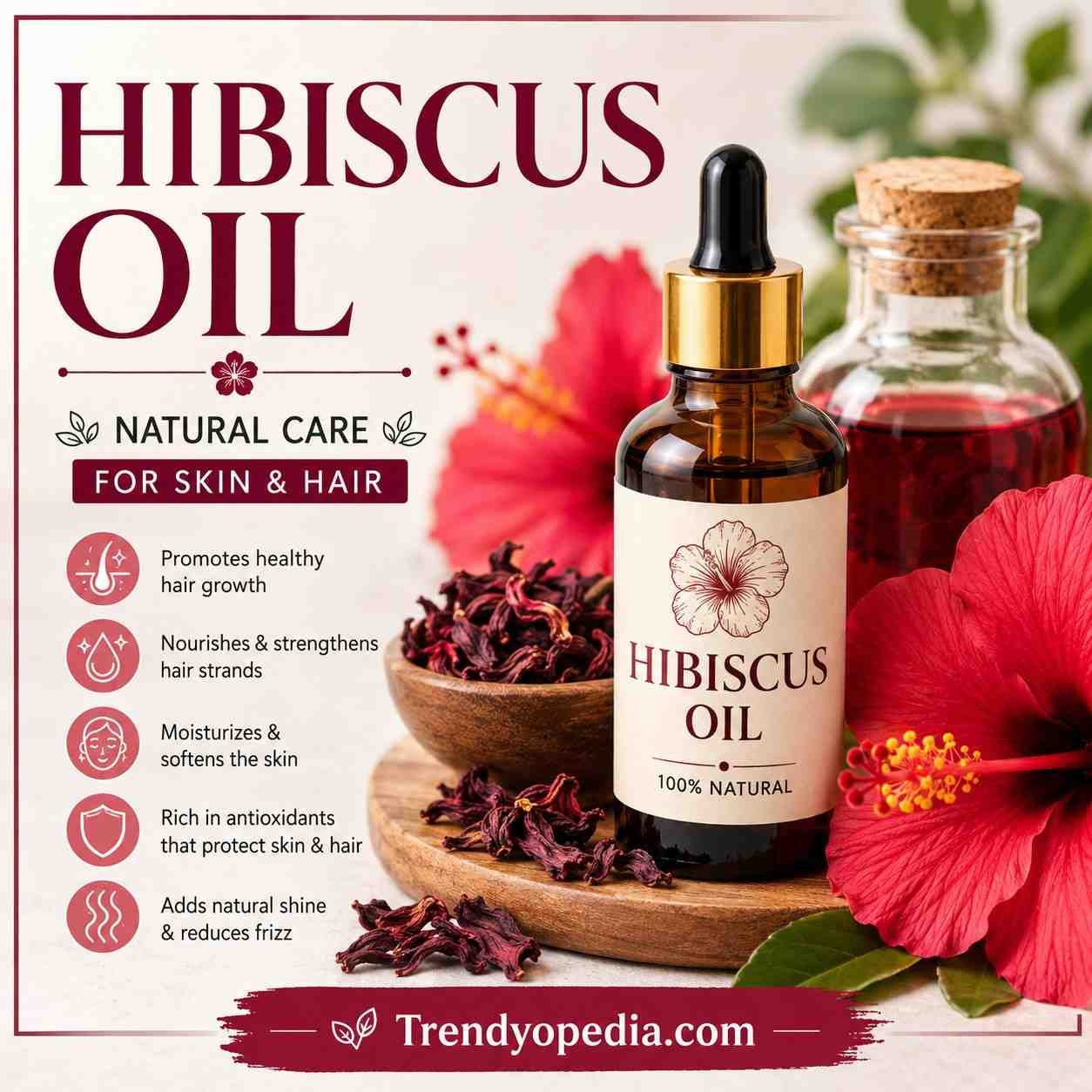
Hibiscus oil is a popular botanical oil made by infusing hibiscus flowers (Hibiscus rosa-sinensis) into a nourishing carrier oil or by blending hibiscus extracts into cosmetic oils. Known as the “flower of beauty,” hibiscus has long been used in traditional beauty practices for promoting healthy-looking hair and glowing skin.
Rich in naturally occurring antioxidants, plant compounds, and nourishing fatty acids (depending on the carrier oil), hibiscus oil is commonly used to moisturize dry skin, condition hair, improve softness, and support a healthy scalp. It is a favorite ingredient in hair oils, facial oils, scalp treatments, shampoos, and conditioners.
In this guide, you’ll learn the evidence-based Hibiscus Oil benefits, how to use it safely, possible side effects, and practical ways to add it to your daily skincare and hair care routine.
If you enjoy natural beauty oils, explore our guides on Rosehip Oil, Pumpkin Seed Oil, Bakuchi Oil . Each botanical oil offers unique benefits for healthy skin, shiny hair, and a nourished scalp.
What Is Hibiscus Oil?
Hibiscus oil is created by infusing fresh or dried hibiscus flowers into a carrier oil such as coconut, jojoba, or olive oil. Some commercial products also contain hibiscus flower extracts combined with nourishing botanical oils.
It is widely used in:
- Hair oils
- Scalp massage oils
- Facial oils
- Body massage oils
- Hair masks
- DIY skincare products
Active Compounds in Hibiscus
Hibiscus flowers naturally contain beneficial plant compounds, including:
- Anthocyanins
- Flavonoids
- Polyphenols
- Vitamin C (in the flower)
- Organic acids
- Antioxidants
These compounds contribute to hibiscus’s popularity in skincare and hair care products.
Types of Hibiscus Oil
1. Cold-Infused Hibiscus Oil
- Made by infusing hibiscus flowers into a carrier oil
- Gentle for regular skincare and hair care
- Rich botanical aroma
2. Hibiscus Extract Oil
- Cosmetic-grade formulation
- Often combined with other plant oils
- Common in serums and hair products
Top Hibiscus Oil Benefits
1. Moisturizes Dry Hair
Hibiscus oil helps coat the hair strands, reducing dryness and improving softness.
2. Supports a Healthy Scalp
Massaging diluted hibiscus oil into the scalp helps keep it moisturized and comfortable.
3. Softens Hair
Regular use can leave hair feeling smoother, softer, and easier to manage.
4. Adds Natural Shine
Hibiscus oil helps improve the appearance of dull, dry hair by enhancing its natural shine.
5. Helps Reduce Frizz
Applying a small amount to the hair ends may reduce flyaways and improve manageability.
6. Moisturizes the Skin
The nourishing oils used in hibiscus oil blends help reduce moisture loss and keep skin hydrated.
7. Supports the Skin Barrier
Regular moisturizing helps strengthen the skin’s natural protective barrier.
8. Rich in Antioxidants
Hibiscus contains antioxidant compounds that help protect the skin from everyday environmental stressors.
9. Improves Skin Softness
Consistent use may leave rough, dry skin feeling smoother.
10. Lightweight Beauty Oil
Depending on the carrier oil used, hibiscus oil absorbs well without leaving a heavy residue.
11. Multipurpose Natural Oil
This oil is suitable for:
- Hair care
- Skin care
- Body massage
- Scalp massage
- DIY beauty recipes
12. Suitable for Self-Care Routines
Its pleasant floral aroma makes This oil a relaxing addition to beauty rituals.
Hibiscus Oil for Hair
This oil is one of the most popular botanical oils used in natural hair care.
Potential benefits include:
- Softer hair
- Reduced dryness
- Better shine
- Improved manageability
- Healthier-looking scalp
For stronger, healthier-looking hair, combine your hair care routine with our Biotin for Hair Growth and Top 10 Vitamins for Hair Growth guides. Proper nutrition, along with regular scalp care, supports healthy hair from the inside out.
According to the American Academy of Dermatology (AAD), healthy hair is influenced by nutrition, overall health, and gentle hair care practices.
Hibiscus Oil for Scalp
A moisturized scalp is essential for healthy-looking hair.
Massage diluted This oil into the scalp for 5–10 minutes before shampooing.
It may help:
- Reduce dryness
- Improve scalp comfort
- Condition the scalp
A healthy scalp is the foundation of healthy-looking hair. Pair your topical hair care routine with our Hibiscus Water and Hibiscus Tea guides to discover additional ways hibiscus can be part of your overall wellness routine.
Hibiscus Oil for Skin
This oil helps soften and moisturize the skin while supporting the skin’s natural moisture barrier.
It may help improve:
- Skin hydration
- Smoothness
- Softness
- Overall skin appearance
Hibiscus Oil for Face
When used as part of a skincare routine, This oil can help keep the skin soft and nourished.
How to Use
- Apply 2–3 drops to clean skin.
- Massage gently until absorbed.
- Follow with moisturizer if needed.
- Use sunscreen during the day.
Mayo Clinic recommends applying moisturizer after cleansing to help retain hydration and maintain healthy skin.
How to Use Hibiscus Oil
For Hair
- Warm a small amount between your palms.
- Massage into the scalp.
- Leave for 30–60 minutes before washing.
For Face
- Apply a few drops after cleansing.
- Use before moisturizer.
For Body
Massage into damp skin after showering to help lock in moisture.
DIY Hibiscus Hair & Skin Oil Blend
Ingredients
- 2 tablespoons jojoba oil
- 1 tablespoon moringa oil
- 1 tablespoon hibiscus-infused oil
- 1 capsule vitamin E oil (optional)
Directions
- Mix all ingredients in a clean glass bottle.
- Shake well before use.
- Apply to hair, scalp, or dry skin as needed.
Gentle hair care, scalp hydration, and conditioning can improve hair softness and overall appearance. (Source: Cleveland Clinic)
Hibiscus Oil vs Jojoba Oil
| Feature | Hibiscus Oil | Jojoba Oil |
|---|---|---|
| Texture | Light to medium | Lightweight |
| Best For | Hair & skin nourishment | Daily moisturizing |
| Rich In | Botanical antioxidants | Vitamin E & wax esters |
| Daily Use | Yes | Yes |
Hibiscus Oil vs Moringa Oil
| Feature | Hibiscus Oil | Moringa Oil |
|---|---|---|
| Main Benefit | Hair softness & hydration | Deep nourishment |
| Best For | Dry hair & skin | Dry skin & hair |
| Texture | Medium | Silky |
Hibiscus Oil vs Castor Oil
| Feature | Hibiscus Oil | Castor Oil |
|---|---|---|
| Texture | Light | Thick |
| Best For | Daily conditioning | Deep hair conditioning |
| Hair Feel | Soft & lightweight | Rich & intensive |
Best Time to Use Hibiscus Oil
Morning
- Apply a few drops to dry hair ends.
- Use on dry skin before moisturizer.
- Finish with sunscreen if applied to the face.
Evening
- Massage into the scalp before washing.
- Apply to clean skin before bedtime.
- Use as an overnight hair treatment if desired.
How Often Should You Use Hibiscus Oil?
| Purpose | Recommended Use |
|---|---|
| Face | Daily or as needed |
| Hair Ends | 2–3 times weekly |
| Scalp Massage | 1–2 times weekly |
| Body Moisturizer | Daily after showering |
Possible Side Effects
Hibiscus oil is generally well tolerated, but some individuals may experience:
- Mild skin irritation
- Redness
- Itching
- Allergic reactions
- Breakouts in sensitive skin
Always perform a patch test before applying This oil to larger areas of the skin or scalp.
Precautions
- Choose high-quality hibiscus-infused oil from a trusted brand.
- Store in a cool, dry place away from sunlight.
- Avoid contact with the eyes.
- Stop use if irritation develops.
- Consult a healthcare professional if you have persistent skin or scalp conditions.
FAQs
Is hibiscus oil good for hair?
Yes. This oil helps moisturize hair, improve softness, reduce frizz, and support a healthy-looking scalp.
Can I use hibiscus oil every day?
Yes. Many people use small amounts daily on the hair ends or dry skin, while scalp treatments are commonly used once or twice a week.
Is hibiscus oil good for the face?
Yes. When formulated with a suitable carrier oil, This oil can help moisturize the skin and improve softness.
Can hibiscus oil be mixed with other oils?
Yes. Hibiscus oil blends well with Jojoba Oil, Rosehip Oil, Moringa Oil, and Vitamin E Oil for DIY skincare and hair care recipes.
How should I store hibiscus oil?
Store it in a tightly sealed bottle in a cool, dark place to help preserve its quality.
Concusion
Hibiscus oil is a versatile botanical oil that helps moisturize the skin, soften hair, and support a healthy-looking scalp. Rich in naturally occurring antioxidant plant compounds, it fits easily into daily skincare and hair care routines. Regular use, along with a balanced beauty routine, can help maintain smooth skin and healthier-looking hair.
To build a complete natural beauty routine, explore our related guides on Batana Oil, Tulsi Oil, Amla Oil, on Trendyopedia.
Author Bio
Author: Hitasha
Hitasha is a beauty and wellness writer at Trendyopedia, specializing in evidence-based skincare, hair care, nutrition, and natural beauty. She creates practical, research-backed content that helps readers make informed beauty and wellness decisions.
Disclaimer
This article is for informational purposes only and should not be considered medical advice. Individual results may vary. If you have sensitive skin, allergies, or ongoing scalp conditions, consult a dermatologist or qualified healthcare professional before using hibiscus oil.