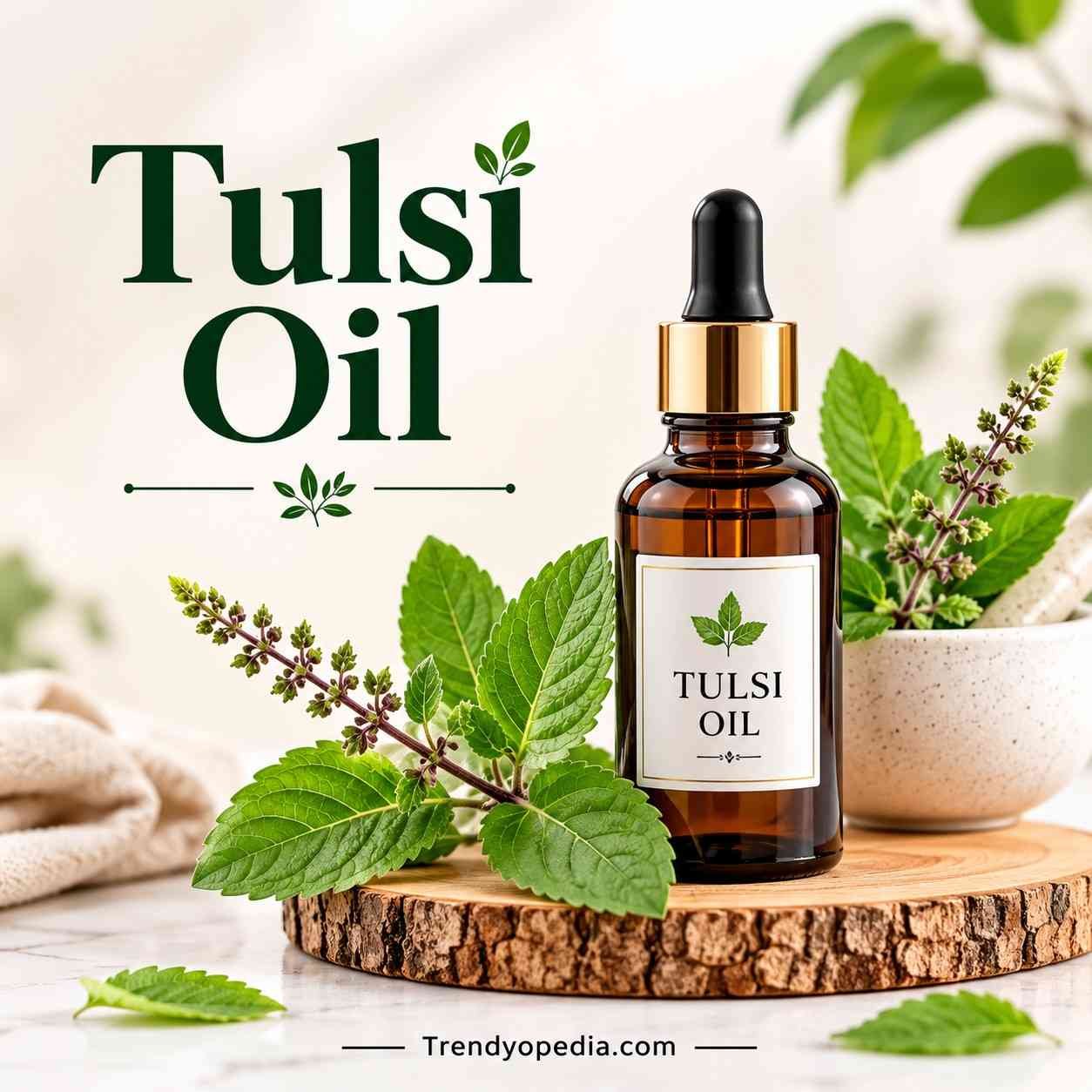
Tulsi oil, also known as Holy Basil Oil, is a fragrant essential oil extracted from the leaves of the Ocimum tenuiflorum (Ocimum sanctum) plant. Revered in Ayurveda for centuries, tulsi is widely used in skincare, hair care, aromatherapy, and wellness routines because of its naturally occurring antioxidant and aromatic compounds.
When properly diluted with a carrier oil, tulsi oil can help moisturize the skin, support a healthy-looking scalp, reduce dryness, and leave hair feeling softer and refreshed. It is commonly added to facial oils, scalp treatments, massage blends, shampoos, and body care products. Since tulsi oil is an essential oil, it should never be applied directly to the skin without dilution.
In this guide, you’ll discover the evidence-based Tulsi Oil benefits, how to use it safely, possible side effects, and practical tips for incorporating it into your daily beauty routine.
If you’re interested in the benefits of holy basil, don’t miss our Tulsi Water and Tulsi Tea guides. These articles explain how tulsi can be enjoyed as part of a balanced wellness routine, while this guide focuses on the topical uses of Tulsi Oil for skincare and hair care.
What Is Tulsi Oil?
Tulsi oil is produced through steam distillation of fresh tulsi leaves and flowering tops.
Unlike carrier oils such as jojoba or rosehip oil, tulsi oil is an essential oil, meaning it is highly concentrated and should always be diluted before topical use.
Tulsi oil is commonly used in:
- Facial oil blends
- Hair oils
- Scalp massage oils
- Aromatherapy
- Body massage oils
- Homemade skincare products
Active Compounds in Tulsi Oil
Tulsi oil naturally contains several aromatic plant compounds, including:
- Eugenol
- Linalool
- Caryophyllene
- Methyl eugenol (varies by variety)
- Rosmarinic acid (present in the plant)
- Antioxidant phytochemicals
These compounds contribute to tulsi’s distinctive aroma and its traditional use in personal care products.
Types of Tulsi Oil
1. Steam-Distilled Tulsi Essential Oil
- Highly concentrated
- Strong herbal aroma
- Must be diluted before use
- Ideal for aromatherapy and DIY blends
2. Tulsi-Infused Oil
- Made by infusing tulsi leaves into a carrier oil
- Gentler on the skin
- Suitable for massage and body care
- Ready for topical use
Top Tulsi Oil Benefits
1. Helps Moisturize the Skin
When blended with a carrier oil, tulsi oil helps soften and nourish dry skin.
2. Supports a Healthy Skin Barrier
Regular moisturizing with suitable skincare products helps reduce moisture loss and supports the skin’s protective barrier.
3. Rich in Antioxidant Compounds
Tulsi contains naturally occurring antioxidant compounds that help protect the skin from everyday environmental stressors.
4. Refreshes the Skin
Its fresh herbal aroma leaves the skin feeling clean and revitalized after use.
5. Supports Scalp Care
Diluted tulsi oil is commonly used in scalp massage blends to help moisturize the scalp and promote a healthy hair care routine.
6. Softens Hair
Adding a few diluted drops to your hair care routine may help improve softness and manageability.
7. Helps Reduce Hair Dryness
When mixed with a nourishing carrier oil, tulsi oil can help improve the appearance of dry hair.
8. Adds Natural Shine
Regular conditioning with oils can leave hair looking smoother and shinier.
9. Suitable for Massage
Holy Basil oil’s pleasant herbal scent makes it a popular ingredient in relaxing massage blends.
10. Multipurpose Beauty Oil
Holy Basil oil can be used in:
- Hair oil blends
- Facial oil blends
- Massage oils
- Body oils
- Aromatherapy
11. Complements a Wellness Routine
Its refreshing aroma makes Holy Basil oil a popular choice for home spa and self-care rituals.
12. Easy to Blend
Holy Basil oil pairs well with carrier oils such as jojoba, rosehip, sweet almond, and moringa oil.
Tulsi Oil for Skin
Holy Basil oil is most commonly used in diluted form as part of a skincare routine.
Potential benefits include:
- Softer skin
- Improved hydration
- Healthy-looking glow
- Better skin comfort
- Refreshed appearance
Healthy skin starts with a strong protective barrier. Read our How to Repair a Damaged Skin Barrier guide to learn how to reduce dryness, improve hydration, and protect your skin from environmental stress.
Tulsi Oil for Face
Because Holy Basil oil is an essential oil, always dilute it with a carrier oil before applying it to the face.
How to Use
- Mix 1–2 drops of Holy Basil oil with 1 teaspoon of jojoba or rosehip oil.
- Apply to clean, slightly damp skin.
- Avoid the eye area.
- Use sunscreen during the daytime.
Tulsi Oil for Hair
Holy Basil oil is often added to hair oil blends because of its refreshing scent and conditioning properties.
It may help:
- Improve hair softness
- Reduce dryness
- Add shine
- Refresh the scalp
- Improve manageability
According to the American Academy of Dermatology (AAD), healthy hair is influenced by nutrition, overall health, and gentle hair care practices.
Tulsi Oil for Scalp
Mix a few drops of diluted Holy Basil oil with a carrier oil and gently massage the scalp for several minutes before shampooing.
This routine may help:
- Moisturize the scalp
- Improve comfort
- Support healthy-looking hair
How to Use Tulsi Oil Safely
For Face
- Dilute 1–2 drops with a carrier oil.
- Massage gently into clean skin.
- Follow with moisturizer if needed.
For Hair
- Mix 2–3 drops with 1 tablespoon of jojoba or coconut oil.
- Massage into the scalp.
- Leave on for 20–30 minutes before washing.
For Body
Mix with a carrier oil before applying to the skin after a shower.
DIY Tulsi Oil Hair & Skin Blend
Ingredients
- 2 tablespoons jojoba oil
- 1 tablespoon moringa oil
- 2 drops tulsi essential oil
- 1 capsule vitamin E (optional)
Directions
- Combine all ingredients in a clean glass bottle.
- Shake gently before use.
- Apply a small amount to hair ends or dry skin.
Note: Because Holy Basil oil is highly concentrated, always perform a patch test before first use.
Mayo Clinic recommends moisturizing after cleansing to help maintain hydration and protect the skin’s natural barrier.
Tulsi Oil vs Jojoba Oil
Both oils are excellent additions to a skincare routine, but they have different uses.
| Feature | Tulsi Oil | Jojoba Oil |
|---|---|---|
| Type | Essential Oil | Carrier Oil |
| Best For | Aromatherapy & diluted skincare | Daily moisturizing |
| Texture | Concentrated | Lightweight |
| Direct Skin Use | No (must dilute) | Yes |
| Hair Care | Yes (diluted) | Yes |
Tulsi Oil vs Rosehip Oil
| Feature | Tulsi Oil | Rosehip Oil |
|---|---|---|
| Type | Essential Oil | Carrier Oil |
| Best For | Refreshing skincare blends | Skin hydration |
| Rich In | Aromatic plant compounds | Essential fatty acids |
| Daily Use | Diluted only | Yes |
Tulsi Oil vs Moringa Oil
| Feature | Tulsi Oil | Moringa Oil |
|---|---|---|
| Type | Essential Oil | Carrier Oil |
| Main Benefit | Aromatic scalp & skin care | Deep nourishment |
| Texture | Concentrated | Silky |
| Best For | DIY blends | Hair & skin |
Best Time to Use Tulsi Oil
Morning
- Add diluted Holy Basil oil to a facial or body oil blend.
- Follow with moisturizer and sunscreen.
Evening
- Use as part of a relaxing scalp massage.
- Apply in a diluted facial oil blend before moisturizer.
- Enjoy its refreshing herbal aroma during your nighttime routine.
How Often Should You Use Tulsi Oil?
| Purpose | Recommended Use |
|---|---|
| Facial Oil Blend | 2–3 times weekly |
| Scalp Massage | 1–2 times weekly |
| Hair Oil | Weekly |
| Body Massage | As needed |
Because Holy Basil oil is highly concentrated, avoid excessive use and always dilute it before topical application.
Possible Side Effects
Holy Basil oil is generally safe when properly diluted, but some people may experience:
- Skin irritation
- Redness
- Itching
- Allergic reactions
- Sensitivity on delicate skin
Stop using the oil if irritation develops and seek medical advice if symptoms persist.
Precautions
- Never apply undiluted tulsi essential oil directly to the skin.
- Always mix it with a carrier oil such as jojoba, rosehip, or moringa oil.
- Perform a patch test before first use.
- Keep away from the eyes and mucous membranes.
- Store in a cool, dark place away from direct sunlight.
- If you are pregnant, breastfeeding, or have a medical condition, consult a healthcare professional before using essential oils.
FAQs
Is tulsi oil good for the skin?
Yes. When diluted with a carrier oil, Holy Basil oil can be used as part of a skincare routine to help moisturize and refresh the skin.
Can I apply tulsi oil directly to my face?
No. Tulsi oil is an essential oil and should always be diluted with a carrier oil before applying it to the face.
Is tulsi oil good for hair?
Yes. Diluted Holy Basil oil is commonly used in hair oil blends to improve hair softness, add shine, and support a healthy-looking scalp.
Can I use tulsi oil every day?
Because it is an essential oil, daily use may not be suitable for everyone. Many people prefer using diluted Holy Basil oil a few times per week, depending on their skin type and tolerance.
Which carrier oil works best with tulsi oil?
Jojoba oil, rosehip oil, sweet almond oil, and moringa oil are popular carrier oils for diluting tulsi essential oil.
How should I store tulsi oil?
Keep the bottle tightly closed and store it in a cool, dark place away from heat and sunlight.
Concusion
Tulsi oil is a concentrated essential oil valued for its refreshing aroma and traditional use in skincare, hair care, and wellness routines. When diluted with a suitable carrier oil, it can help moisturize the skin, condition the hair, and support a healthy-looking scalp. Because it is highly concentrated, safe dilution and patch testing are important before regular use.
To build a complete natural beauty routine, explore our related guides on Castor Oil, Pumpkin Seed Oil, Bakuchi Oil, Batana Oil Benefits, on Trendyopedia.