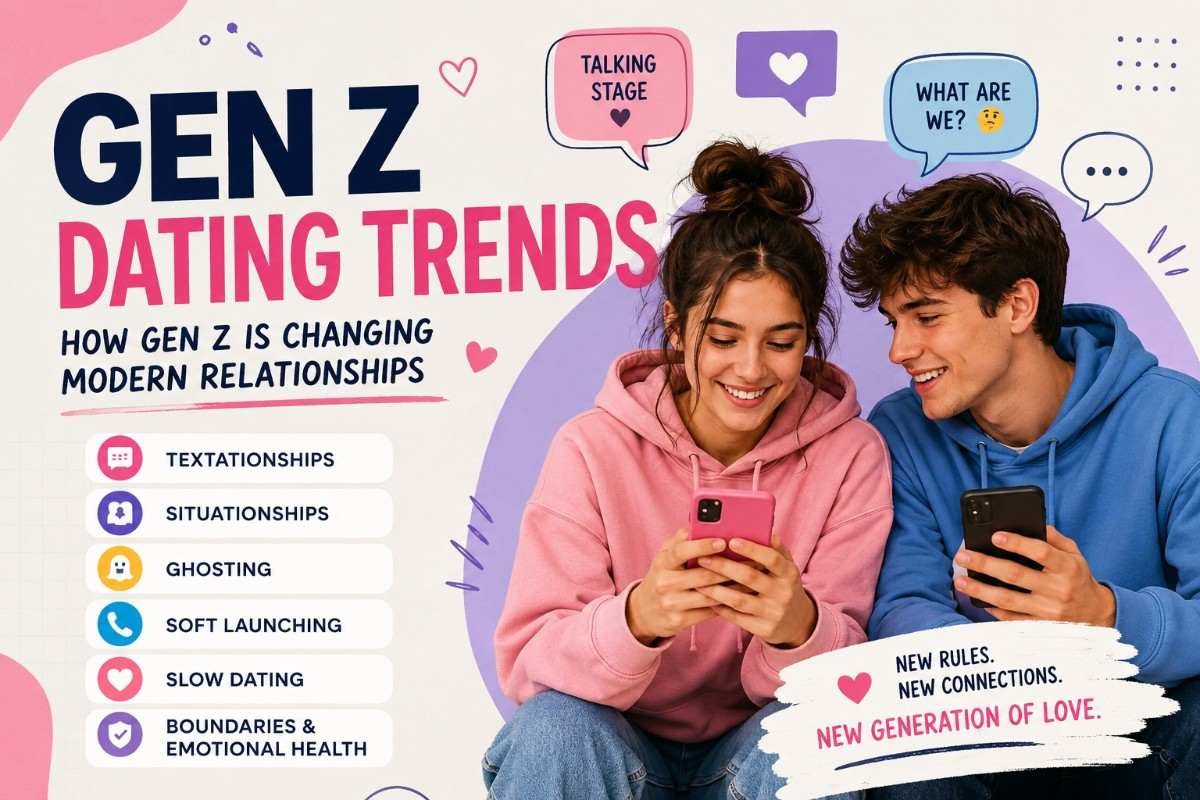
Gen Z Dating Trends: Dating is changing, and Gen Z is helping reshape what modern relationships look like. From textationships and situationships to soft-launching relationships on social media, dating today can look very different from traditional romance.
Gen Z is also putting more focus on communication, personal boundaries, emotional compatibility, and flexibility. In this guide, we’ll explore the biggest Gen Z dating trends, what they mean, and how they are influencing modern relationships.
Gen Z is also changing traditional ideas about lifestyle, work, and relationships. Read our guide on How Gen Z Is Redefining Success Without 9–5 Jobs to explore another major Gen Z trend.
What Are Gen Z Dating Trends?
Gen Z dating trends are the changing habits, behaviors, language, and expectations surrounding dating among younger adults.
Technology plays a major role. People can meet through dating apps, social media, gaming communities, online groups, or mutual connections. Texting and DMs can become an important part of getting to know someone before a relationship develops.
Some trends are positive and encourage clearer communication, while others can create confusion when expectations aren’t discussed.
1. The Talking Stage
The talking stage has become one of the most recognizable parts of modern dating.
It describes the period when two people communicate regularly and explore romantic interest without officially being in a relationship.
During this stage, people may:
- Text every day
- Flirt
- Go on casual dates
- Share personal information
- Talk about relationship goals
- Decide whether they are compatible
The talking stage can be useful because it gives people time to get to know each other before making a commitment.
However, if it continues indefinitely without communication about intentions, it can become confusing.
2. Textationships
Gen Z Dating Trends: A textationship is a relationship-like connection that primarily exists through texting or online communication.
You may talk throughout the day, share personal feelings, flirt, and develop strong emotional feelings without actually becoming a couple.
This trend shows how digital communication has become an important part of modern dating.
For a deeper explanation, read our What Is Textationship? Meaning, Signs, Risks & How to Handle One.
3. Situationships
Gen Z Dating Trends: A situationship is an undefined romantic connection that falls somewhere between friendship and a committed relationship.
Two people might:
- Spend time together
- Flirt
- Kiss or become physically intimate
- Text constantly
- Act like a couple
- Avoid defining the relationship
Situationships aren’t necessarily bad. They can work when both people want the same type of connection.
The problem starts when one person expects commitment while the other prefers keeping things casual.
4. Soft Launching Relationships
Gen Z Dating Trends: Social media has created another popular dating trend: soft launching.
Instead of posting a clear photo with a partner, someone may subtly reveal that they’re dating.
Examples include:
- Posting two coffee cups
- Showing someone’s hand
- Sharing a restaurant photo with another person’s plate
- Posting a silhouette
- Including a partner’s shoulder in a picture
The idea is to acknowledge a relationship without making a major public announcement.
For many people, this approach offers more privacy than immediately posting a couple photo.
5. Hard Launching a Relationship
Gen Z Dating Trends: The opposite of a soft launch is a hard launch.
A hard launch is when someone publicly reveals their relationship, often through a clear photo, video, or social-media announcement.
It might include:
“Meet my boyfriend.”
or
“My favorite person.”
Some people prefer hard launches because they make the relationship status clear. Others prefer keeping relationships private.
6. Dating With Stronger Boundaries
Gen Z Dating Trends: One of the more positive Gen Z dating trends is an increased focus on personal boundaries.
People may be more willing to communicate:
- What they are comfortable with
- How often they want to communicate
- Whether they want exclusivity
- Their relationship expectations
- Their need for personal space
- What behavior they consider unacceptable
Healthy boundaries can make dating less confusing because both people know what is expected.
7. Dating Apps Are Part of the Process
Gen Z Dating Trends: Dating apps have become a normal way for many people to meet potential partners.
Instead of relying entirely on school, work, friends, or social events, people can connect with others based on location, interests, preferences, and compatibility.
But dating apps also create new challenges, including:
- Too many choices
- Dating-app fatigue
- Ghosting
- Unclear intentions
- Superficial first impressions
- Conversations that never become dates
As a result, some people are becoming more selective about how much time they spend on dating apps.
8. Ghosting
Gen Z Dating Trends: Ghosting happens when someone suddenly stops communicating without explaining why.
For example, someone may:
- Stop replying to messages
- Ignore calls
- Disappear from social media
- End communication without explanation
Ghosting can happen after a few conversations or even after several dates.
Although people may ghost because they feel uncomfortable rejecting someone directly, being ignored can leave the other person confused.
Whenever it is safe and appropriate, honest communication is generally a more respectful way to end a connection.
9. Breadcrumbing
Gen Z Dating Trends: Breadcrumbing means giving someone occasional attention without making meaningful progress toward a relationship.
Someone might:
- Send random flirty messages
- Like your posts
- Reply to your stories
- Disappear for days
- Return with another message
- Avoid making actual plans
The attention can keep someone interested without providing real commitment.
If you’re looking for a serious relationship, consistency is usually more meaningful than occasional attention.
10. Love Bombing
Gen Z Dating Trends: Love bombing refers to overwhelming someone with excessive affection, attention, compliments, or grand romantic gestures, particularly early in a relationship.
Examples can include:
- Constant messages
- Excessive compliments
- Very intense declarations of affection
- Pressure for quick commitment
- Extremely frequent attention
It’s important to distinguish genuine enthusiasm from manipulative behavior. One intense conversation or romantic gesture doesn’t automatically mean someone is love bombing.
Look at the overall pattern and whether the person respects your boundaries.
11. Emotional Compatibility Matters More
Gen Z Dating Trends: Attraction is still important, but many modern daters also consider emotional compatibility.
Questions people may ask include:
- Can we communicate openly?
- Do we respect each other’s boundaries?
- Do our values match?
- Can we resolve disagreements?
- Do we want similar things?
- Do I feel comfortable being myself?
A strong relationship isn’t only about chemistry. Compatibility can matter just as much over time.
12. Dating for Compatibility Instead of Labels
Gen Z Dating Trends: Some people are less focused on immediately finding a traditional relationship label.
Instead, they may focus on whether the connection actually works.
Rather than asking:
“Are we officially boyfriend and girlfriend?”
they may first consider:
“Are we happy, compatible, respectful, and moving in the same direction?”
Labels can still be important, but they may come after the connection has developed.
13. Private Relationships
Gen Z Dating Trends: Not everyone wants their relationship displayed online.
Some Gen Z couples prefer keeping their romantic lives private because social media can create pressure.
A private relationship doesn’t necessarily mean a secret relationship.
There’s an important difference:
Private: Both people know about the relationship but don’t publicly share everything.
Secret: One person may intentionally hide the relationship from important people in their life.
The healthiest choice depends on the people involved and their circumstances.
14. Dating Without Constant Communication
Gen Z Dating Trends: While some people enjoy texting all day, others are becoming more comfortable with having digital boundaries.
A person doesn’t necessarily need to reply immediately to prove that they care.
Healthy communication can include:
- Taking breaks from the phone
- Spending time with friends
- Focusing on work or school
- Having hobbies
- Enjoying time alone
- Communicating when you’re unavailable
Constant texting shouldn’t be the only measure of romantic interest.
15. Slow Dating
Gen Z Dating Trends: Slow dating focuses on getting to know someone gradually rather than rushing into a relationship.
Instead of immediately becoming emotionally invested, people may take time to:
- Meet.
- Have conversations.
- Observe compatibility.
- Understand each other’s values.
- Build trust.
- Decide whether to become more serious.
Slow dating can help people avoid making major relationship decisions based solely on initial attraction.
16. Dating With Financial Awareness
Gen Z Dating Trends: Modern dating can also involve more conversations about money.
People may discuss:
- Splitting restaurant bills
- Affordable dates
- Financial goals
- Lifestyle expectations
- Career ambitions
- Long-term financial compatibility
A date doesn’t have to be expensive to be meaningful.
Coffee, walking, visiting a free event, cooking together, or exploring a local area can all provide opportunities to connect.
17. Social Media Is Part of Dating
For Gen Z, social media can be part of the dating experience from beginning to end.
Someone might discover a person through Instagram or TikTok, move to DMs, exchange phone numbers, and eventually meet in person.
Social media can also influence how people interpret relationships.
For example:
- “Why haven’t they posted me?”
- “Who is that person commenting on their photo?”
- “Why did they like their ex’s post?”
- “Why did they remove our picture?”
These situations can create unnecessary uncertainty.
Healthy relationships usually require communication rather than relying entirely on social-media clues.
18. Dating Trends Are Becoming More Personalized
There isn’t one “correct” Gen Z dating style.
Some people want marriage and long-term commitment. Others prefer casual dating. Some enjoy dating apps, while others prefer meeting people naturally.
The bigger trend is personalization.
People increasingly want relationships that fit their individual:
- Values
- Lifestyle
- Goals
- Boundaries
- Communication preferences
- Emotional needs
Constant phone use can also influence daily routines. Spending too much time communicating online may sometimes affect sleep and other lifestyle habits.
Read Sleep Deprivation in Gen Z to learn more about sleep-related issues affecting Gen Z.
Gen Z Dating Trends: What Is Changing?
| Dating Trend | What It Means |
|---|---|
| Talking Stage | Getting to know someone before becoming official |
| Textationship | A connection mainly maintained through texting |
| Situationship | An undefined romantic relationship |
| Soft Launch | Subtly revealing a relationship online |
| Hard Launch | Publicly announcing a relationship |
| Ghosting | Suddenly ending communication |
| Breadcrumbing | Giving attention without meaningful commitment |
| Love Bombing | Overwhelming someone with intense attention |
| Slow Dating | Taking more time to build a connection |
| Private Dating | Keeping a relationship mostly offline |
Are Gen Z Dating Trends Good or Bad?
There isn’t a simple answer.
Some trends can make dating more flexible and help people communicate their boundaries. Others can make relationships more confusing.
Potential Benefits
- More flexibility
- Greater awareness of boundaries
- More ways to meet people
- Easier communication
- Greater emphasis on compatibility
- More acceptance of different relationship styles
Potential Challenges
- Dating-app fatigue
- Communication misunderstandings
- Ghosting
- Social-media jealousy
- Unclear relationship expectations
- Emotional attachment before meeting
- Pressure created by online comparison
Ultimately, the trend itself isn’t necessarily the problem. How people communicate and treat each other matters more.
How to Navigate Modern Dating
If you’re dating in the digital age, a few simple principles can make things easier.
Be Clear About Your Intentions
If you’re looking for a serious relationship, don’t be afraid to communicate that.
Don’t Overanalyze Social Media
A like, follow, story view, or delayed reply doesn’t always reveal someone’s feelings.
Watch Actions
Someone’s behavior over time can tell you more than a few romantic messages.
Maintain Your Own Life
Keep your friendships, hobbies, goals, and routines even when you’re dating someone.
Respect Boundaries
Healthy dating requires both people to feel comfortable saying yes or no.
Communicate When You’re Confused
Instead of guessing what someone means, ask.
A simple conversation can prevent weeks of unnecessary uncertainty.
FAQs
What is the biggest Gen Z dating trend?
There isn’t one single trend. Talking stages, situationships, textationships, dating apps, soft launches, and greater emphasis on boundaries are all prominent parts of modern dating culture.
Why does Gen Z have situationships?
Situationships can appeal to people who want companionship or romance without immediately committing to a traditional relationship. However, they can become difficult when expectations aren’t shared.
What is a Gen Z soft launch?
A soft launch is a subtle social-media post that hints at a romantic relationship without clearly revealing the partner’s identity.
Is ghosting common in Gen Z dating?
Ghosting is a recognized part of modern dating culture, particularly in digital communication. It can happen when someone wants to end contact but avoids having a direct conversation.
What is a talking stage?
The talking stage is the period when two people communicate and explore romantic interest before officially becoming a couple.
Are Gen Z relationships different from older generations?
Dating culture changes with technology and social norms. Gen Z has grown up with smartphones, social media, and dating apps, so digital communication plays a particularly visible role in how many young adults meet and communicate.
Is online dating healthy?
Online dating can be a useful way to meet people, but it comes with challenges. Healthy online dating involves realistic expectations, privacy awareness, boundaries, and safe in-person meeting practices.
Conclusion
Gen Z dating trends are changing the way people meet, communicate, and define relationships. From talking stages and textationships to situationships, soft launches, and slow dating, modern romance is becoming increasingly influenced by technology and individual preferences.
Not every trend works for everyone. The healthiest approach is to focus less on following a dating trend and more on clear communication, mutual respect, boundaries, compatibility, and consistent actions.
Whether you prefer a traditional relationship, a slow-burn connection, or something more casual, knowing what you want—and communicating it clearly—can make modern dating much easier to navigate.
check out our guide to the Gen Z Sign Language ,Bed Rotting .
About the Author
Hitasha is a lifestyle and wellness writer at Trendyopedia, creating easy-to-understand content about modern trends, relationships, beauty, health, and everyday lifestyle topics. Her goal is to make trending subjects simple, practical, and informative for readers.
Disclaimer
This article is for general informational and entertainment purposes only. Dating and relationship experiences differ from person to person. This content is not a substitute for professional relationship or mental-health advice.