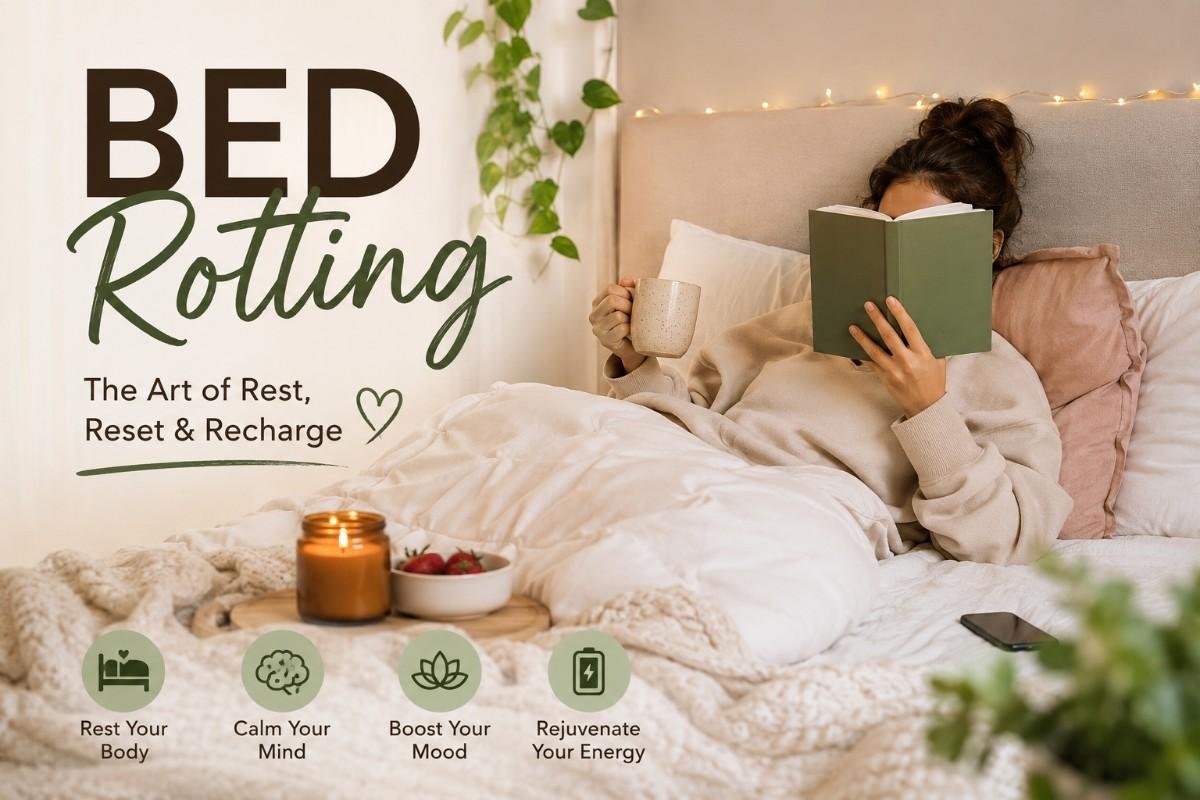
What if doing absolutely nothing for a while could actually be part of your self-care routine? That’s the idea behind bed rotting, a viral wellness and lifestyle trend that has become popular on social media. The term describes intentionally spending an extended period in bed relaxing, watching shows, scrolling through your phone, reading, listening to music, napping, or simply enjoying some quiet time.
For many people, bed rotting is a way to escape the pressure to always be productive and give themselves permission to slow down. Occasional intentional rest can feel refreshing, but spending too much time in bed may have downsides. In this guide, we’ll explore what bed rotting means, its potential benefits and risks, and how to enjoy the trend in a healthier and more balanced way.
Bed rotting has become especially popular among younger audiences dealing with busy schedules and modern lifestyle pressures. If you’re interested in this topic, read our guide to Sleep Deprivation in Gen Z
What Is Bed Rotting?
“Bed rotting” is a viral wellness and social media term for intentionally spending an extended period of time in bed while relaxing, resting, watching shows, reading, scrolling, listening to music, or simply doing nothing.
Unlike its name suggests, bed rotting does not literally mean being inactive all day. For many people, it describes taking a deliberate break from responsibilities and giving themselves permission to rest.
The trend became popular because modern life can feel constantly busy. Between work, school, social commitments, exercise, household tasks, and digital notifications, people may feel guilty when they take time to slow down.
A planned period of rest can feel refreshing—but there is an important difference between intentional relaxation and regularly avoiding daily activities.
Why Is Bed Rotting Trending?
Social media has helped turn bed rotting into a recognizable self-care trend. Videos often show people spending a cozy day in bed with snacks, blankets, movies, books, skincare, or a favorite playlist.
Several factors may explain its popularity:
- Busy lifestyles and work-related stress
- The desire for more downtime
- Social media’s focus on cozy self-care
- Burnout and mental fatigue
- Greater interest in rest and recovery
- A rejection of the idea that every moment must be productive
The trend also challenges “hustle culture,” where constant productivity can sometimes be treated as a measure of personal success.
The trend also reflects how younger generations are redefining success without 9–5 jobs and questioning traditional ideas about productivity.
Is Bed Rotting Actually Good for You?
It can be enjoyable and restorative when practiced occasionally and intentionally.
Rest gives your body and mind an opportunity to slow down. A relaxing day can help you recover after a particularly demanding week or simply provide time away from responsibilities.
However, bed rotting itself should not be considered a medical treatment for stress, anxiety, depression, or other mental health conditions.
The key is balance.
A few hours of comfortable rest can be very different from spending most days in bed and avoiding normal activities.
Potential Benefits of Bed Rotting
1. It Can Give You Permission to Rest
Many people feel guilty when they are not being productive.
Taking intentional downtime can help change that mindset. Rest is a normal part of a balanced lifestyle, rather than something that always needs to be “earned.”
2. It May Help You Feel Mentally Refreshed
After a demanding period, quiet time can help you mentally disconnect from work and responsibilities.
Reading, listening to calming music, watching a favorite show, or simply lying down can provide a break from constant stimulation.
3. It Can Be a Form of Self-Care
Self-care does not always have to involve elaborate routines.
Sometimes it can be as simple as:
- Sleeping a little longer
- Reading a book
- Watching a movie
- Listening to music
- Taking a break from notifications
- Relaxing with comfortable bedding
4. It May Help You Recognize When You Need a Break
One useful aspect of the trend is that it encourages people to pay attention to tiredness.
Instead of automatically pushing through exhaustion, you may become more aware of when your body and mind need recovery.
5. It Can Be Enjoyable
Rest does not need to have a productivity goal.
Sometimes relaxing simply because it feels good can be part of a healthy lifestyle.
The Potential Downsides of Bed Rotting
Bed rotting becomes less helpful when it turns into a regular pattern of avoiding everyday life.
Too Much Inactivity
Long periods of inactivity mean less movement throughout the day. Regular physical activity is important for overall health.
If you spend an entire day in bed, consider getting up periodically to stretch, walk around, drink water, or complete basic daily activities.
Disrupted Sleep Schedule
Your bed is strongly associated with sleep. Spending long periods awake in bed can potentially make it harder to maintain a consistent sleep routine.
If you’re resting during the day, try not to let it regularly replace your normal nighttime sleep schedule.
Excessive Screen Time
Bed rotting often involves phones, tablets, streaming services, or social media.
Too much screen time can make it easy to lose track of time and may interfere with sleep if screens are used late at night.
Avoiding Responsibilities
Rest becomes less beneficial when it consistently replaces important responsibilities.
Skipping meals, personal hygiene, work, school, exercise, or social connections because you cannot motivate yourself to get out of bed may be a sign that something deeper deserves attention.
Bed Rotting vs. Resting: What’s the Difference?
The biggest difference is intention and impact.
| Intentional Rest | Unhealthy Pattern |
|---|---|
| Planned downtime | Spending most days in bed |
| Helps you recharge | Leaves you feeling worse |
| You can return to normal activities | Daily responsibilities are repeatedly avoided |
| Maintains a regular sleep routine | Sleep schedule becomes disrupted |
| Includes basic self-care | Basic needs are neglected |
| Occasional | Persistent and difficult to control |
The same activity can be relaxing for one person and problematic for another. Pay attention to how you feel afterward. If you’re creating a relaxing nighttime routine, you may also want to read Tea Before Bed: Good or Bad?
How to Try Bed Rotting in a Healthier Way
If you want to enjoy the cozy side of this trend, try creating boundaries around your rest day.
1. Set a Time Limit
Instead of getting into bed without an endpoint, decide how long you want to relax.
For example, you might reserve an afternoon for guilt-free downtime.
2. Keep Hydrated
Keep water nearby and remember to drink regularly.
You can also take short breaks to refill your glass and move around.
3. Eat Proper Meals
Relaxing in bed should not mean replacing meals with snacks all day.
Try to maintain your normal eating routine.
4. Get Some Movement
Even on a lazy day, stand up occasionally.
A short walk, gentle stretching, or simple household movement can break up long periods of inactivity.
5. Protect Your Sleep Schedule
Try to keep your usual bedtime and wake-up time relatively consistent.
If you need a nap, keeping it reasonable and earlier in the day may make it easier to sleep at night.
6. Make It More Than Scrolling
Bed rotting doesn’t have to mean endless social media.
Try activities such as:
- Reading
- Journaling
- Listening to music
- Watching a movie
- Meditation
- Gentle stretching
- Calling a friend
- Doing a relaxing skincare routine
7. Leave the Bed When You’re Ready
One of the simplest rules is to eventually transition back into your normal routine.
Open the curtains, shower, get dressed, make a meal, take a walk, or complete one small task.
Is Bed Rotting the Same as Being Lazy?
No.
Rest and laziness are not necessarily the same thing.
Everyone needs downtime, and taking a break does not mean someone lacks ambition.
The concern is when prolonged inactivity becomes persistent and starts interfering with responsibilities, relationships, sleep, physical activity, or personal care.
A healthy approach is to think of rest as one part of your lifestyle—not your entire lifestyle.
When Bed Rotting May Be a Warning Sign
Occasionally wanting to stay in bed is normal.
However, if you frequently feel unable to get out of bed or have persistent difficulty managing normal daily activities, it may be worth talking with a qualified healthcare professional.
Pay particular attention if staying in bed is accompanied by:
- Persistent low mood
- Loss of interest in activities you normally enjoy
- Significant changes in sleep
- Major changes in appetite
- Persistent fatigue
- Social withdrawal
- Difficulty completing everyday responsibilities
Bed rotting should not be used as a substitute for professional support when you are struggling.
How to Create a Better “Rest Day”
A balanced rest day can still feel wonderfully lazy while including basic healthy habits.
Morning:
Wake up around your usual time, drink water, eat breakfast, and take a few minutes to stretch.
Afternoon:
Enjoy your cozy bed time, watch a movie, read, nap if needed, or listen to music.
Evening:
Get up, eat a proper dinner, take a short walk, shower, and return to your normal evening routine.
This approach lets you enjoy relaxation without allowing the entire day to become inactive.
Bed Rotting and the Rise of Cozy Wellness
Bed rotting fits into a larger shift toward slower forms of wellness.
Trends such as slow living, cozy routines, digital detoxes, and mindful self-care all reflect a desire to step away from constant productivity.
The positive lesson isn’t that people should stay in bed all day.
Instead, it may be that rest deserves a legitimate place in our routines.
FAQs
What does bed rotting mean?
Bed rotting is a social media term for spending an extended period relaxing in bed, often while watching television, scrolling, reading, sleeping, or simply doing nothing.
Is bed rotting healthy?
Occasional intentional rest can be part of a healthy lifestyle. Spending excessive amounts of time in bed regularly, especially when it interferes with sleep, movement, responsibilities, or self-care, is less healthy.
How long should you bed rot?
There is no medically established ideal amount of time. The important factors are maintaining basic needs, regular movement, a consistent sleep schedule, and normal daily responsibilities.
Can bed rotting help with burnout?
A period of rest may feel restorative when you’re tired, but it should not be considered a treatment for burnout. If exhaustion or difficulty functioning persists, professional support may be appropriate.
Is bed rotting the same as depression?
No. Bed rotting is a social media term, while depression is a medical condition. However, persistent difficulty getting out of bed combined with other concerning symptoms can warrant speaking with a healthcare professional.
Can you bed rot without sleeping?
Yes. The term can include awake activities such as watching movies, reading, listening to music, scrolling, or simply relaxing.
Concusion
Bed rotting may have started as a funny internet phrase, but it reflects a genuine need many people have: permission to slow down.
Taking an occasional lazy afternoon or cozy day can be enjoyable and refreshing. The goal is to make rest intentional rather than allowing prolonged inactivity to become your everyday routine.
So, enjoy the blanket, put on your favorite show, silence your notifications, and relax—but remember to drink water, eat properly, move your body, maintain your sleep routine, and return to everyday life when you’re ready. If you enjoy wellness trends that encourage slowing down, check out our guide to the Silent Walking Trend
Rest is not the opposite of productivity. Sometimes, rest is what helps you come back feeling ready for it.
Author
Hitasha is a lifestyle and wellness content writer at Trendyopedia, creating easy-to-understand articles about health, beauty, wellness, and modern lifestyle trends.
Disclaimer
This article is for general informational and educational purposes only. It is not medical advice and does not replace evaluation or treatment from a qualified healthcare professional.