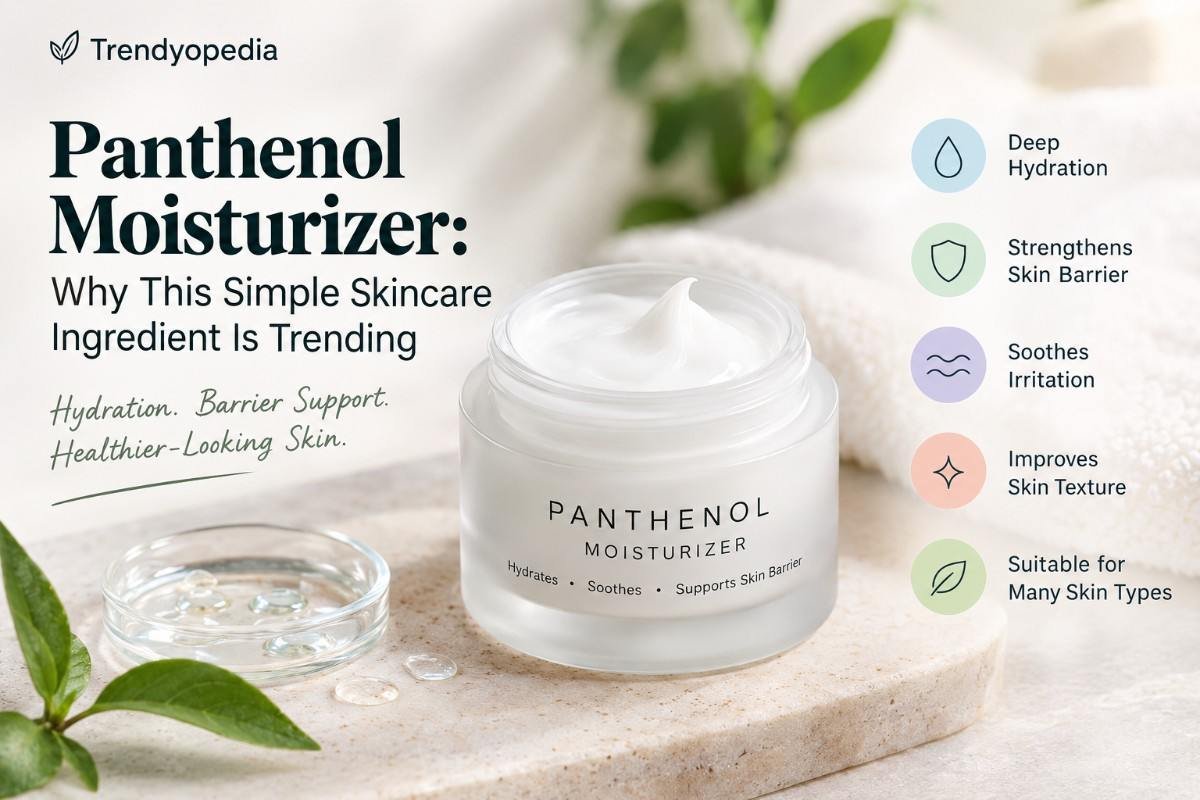
Panthenol moisturizer is becoming a popular choice for people who want hydrated, comfortable-looking skin without an overly complicated skincare routine. While ingredients such as retinol, peptides, PDRN, and exfoliating acids often dominate beauty conversations, panthenol offers something much simpler: hydration and skin-barrier support.
Also known as provitamin B5, panthenol is widely used in creams, lotions, serums, ointments, and other skincare products. Research on topical dexpanthenol, the biologically active form of panthenol, has found moisturizing and barrier-supporting effects.
So, why is this relatively simple ingredient getting renewed attention?
The answer is closely connected to one of the biggest changes in modern skincare: people are becoming more interested in protecting the skin barrier instead of constantly adding stronger active ingredients.
What Is Panthenol?
Panthenol is a provitamin form of vitamin B5. When applied to the skin, dexpanthenol can be converted into pantothenic acid, which is involved in the body’s coenzyme A system.
In skincare, panthenol is primarily valued for its ability to function as a humectant, meaning it helps attract and retain water.
It is commonly found in:
- Moisturizers
- Facial creams
- Hydrating serums
- Body lotions
- Barrier creams
- After-sun products
- Hand creams
- Haircare products
- Products designed for dry or irritated skin
Panthenol can also be combined with other barrier-supporting ingredients such as ceramides, glycerin, niacinamide, and fatty acids.
Why Is Panthenol Moisturizer Trending?
The popularity of panthenol isn’t necessarily about a sudden discovery of a brand-new ingredient. Panthenol has been used in skincare for years.
What’s changing is the way people are approaching skincare.
Instead of constantly adding powerful actives, many consumers are becoming more interested in hydration, skin-barrier care, and simpler routines.
This shift can be seen alongside trends such as skin cycling, minimalist skincare, and barrier repair.
For example, your guide to Skin Cycling explains how recovery nights can be used to give the skin a break from stronger active ingredients.
Panthenol fits naturally into that recovery-focused approach.
1. The Rise of Skin-Barrier Skincare
Your skin barrier is the outer protective layer of the skin. It helps limit water loss and protects the skin from external environmental factors.
When the barrier is disrupted, skin may feel:
- Dry
- Tight
- Rough
- Flaky
- Sensitive
- Easily irritated
Research on topical dexpanthenol suggests that it can improve hydration and support skin-barrier function.
This makes panthenol particularly relevant to today’s barrier-focused skincare movement.
If you’re interested in this subject, you can also explore our guide on How to Repair a Damaged Skin Barrier.
2. People Are Simplifying Their Skincare Routines
The era of extremely complicated skincare routines is being balanced by a growing interest in skinimalism and minimalist beauty.
Instead of using multiple treatment products every day, some people are choosing a smaller routine built around:
- Gentle cleansing
- Hydration
- Moisturization
- Sun protection
A panthenol moisturizer can fit comfortably into this type of routine.
It doesn’t have to replace every other skincare ingredient. Instead, it can serve as the moisturizing and barrier-supporting step of a routine.
3. Active-Ingredient Overload Is Making Barrier Care More Important
Retinoids, exfoliating acids, acne treatments, vitamin C, and other active ingredients can all have a place in skincare.
However, using too many products or using them incorrectly may cause irritation.
That’s one reason recovery-focused routines have become popular.
A moisturizer containing panthenol may be useful during periods when the skin needs additional hydration.
This doesn’t mean panthenol can “repair” every skin problem or reverse damage overnight. Rather, evidence suggests topical dexpanthenol can support hydration and barrier function.
What Does Panthenol Do for Skin?
Panthenol has several properties that make it useful in moisturizing products.
1. Helps Hydrate the Skin
Panthenol is hygroscopic, meaning it has the ability to attract and hold water.
This humectant property helps increase moisture in the outer layer of the skin.
Research involving topical dexpanthenol has demonstrated improvements in stratum-corneum hydration.
2. Supports the Skin Barrier
The outer layer of the skin needs an appropriate balance of water, lipids, and proteins to function effectively.
Studies suggest dexpanthenol can influence components of the stratum corneum and support barrier function.
3. May Reduce Water Loss
One important measure of barrier function is transepidermal water loss, or TEWL.
Some clinical research has found that topical dexpanthenol can reduce TEWL while improving skin hydration.
4. Can Help Improve the Feel of Dry Skin
When skin becomes dehydrated, it can feel rough or tight.
A moisturizing product containing panthenol can help increase hydration, which may make skin feel softer and more comfortable.
5. Has Been Studied for Skin Repair
Dexpanthenol has also been investigated for its role in supporting epidermal regeneration and wound healing.
However, cosmetic panthenol moisturizer should not be considered a substitute for medical treatment of significant wounds, burns, infections, or serious skin conditions.
Panthenol vs. Dexpanthenol: What’s the Difference?
You’ll often see both panthenol and dexpanthenol on skincare-related information.
Panthenol is a provitamin B5 compound, while dexpanthenol is the D-isomer of panthenol and the biologically active form that can be converted into pantothenic acid.
In everyday skincare discussions, however, people often use “panthenol” broadly when talking about products containing panthenol or dexpanthenol.
If you’re checking an ingredient label, look at the complete ingredient list rather than relying only on the marketing name on the front of the package.
Who Can Use a Panthenol Moisturizer?
Panthenol-containing moisturizers may be useful for many different skin types, particularly when hydration is a priority.
Dry Skin
Dry skin may benefit from a moisturizer containing humectants such as panthenol.
For very dry skin, a richer cream containing additional emollients or occlusive ingredients may provide more moisture retention than a lightweight gel.
Sensitive Skin
Panthenol is commonly used in products designed for sensitive or dry skin.
However, sensitive skin can react to many different ingredients, so always check the complete formula.
A product can contain panthenol but also include fragrance, essential oils, preservatives, or other ingredients that may not suit everyone.
Oily Skin
Oily skin still needs hydration.
If your skin is oily, look for a lightweight panthenol moisturizer such as a gel-cream or lotion rather than automatically choosing a heavy cream.
Combination Skin
A lightweight panthenol moisturizer can be useful when some areas of the face feel dry while others become oily.
You can also adjust the amount applied to different areas of your face.
Can Panthenol Help a Damaged Skin Barrier?
Panthenol may support the skin barrier, but the phrase “damaged skin barrier” should not be interpreted as something that one ingredient can instantly fix.
Research on dexpanthenol has shown improvements in hydration and barrier-related measurements, including reductions in TEWL in some studies.
A barrier-supportive routine generally focuses on:
- Gentle cleansing
- Regular moisturization
- Avoiding unnecessary irritation
- Limiting excessive exfoliation
- Using sunscreen
- Introducing active ingredients gradually
If your skin is persistently painful, inflamed, cracked, severely itchy, or developing a rash, it’s better to seek advice from a dermatologist rather than relying on a cosmetic moisturizer alone.
How to Use a Panthenol Moisturizer
A panthenol moisturizer can be used in either a morning or evening skincare routine.
Simple Morning Routine
Step 1: Gentle cleanser
Step 2: Optional hydrating serum
Step 3: Panthenol moisturizer
Step 4: Broad-spectrum sunscreen
Simple Evening Routine
Step 1: Cleanser
Step 2: Treatment product, if needed
Step 3: Panthenol moisturizer
Step 4: Optional occlusive product for very dry skin
You don’t need to create a complicated routine simply because panthenol is trending.
In skincare, consistency is often more practical than constantly switching between new products.
Can You Use Panthenol With Retinol?
Panthenol Moisturizer: Generally, panthenol can be incorporated into routines that also contain retinoids.
In fact, a moisturizer containing panthenol can be useful as part of a hydration-focused routine when using potentially irritating active ingredients.
However, don’t assume that adding panthenol makes retinol irritation impossible.
If you’re new to retinoids, start gradually and follow the directions for the specific product you’re using.
For beginners, a simple approach may be:
Cleanser → Retinoid → Panthenol moisturizer
If your skin is particularly sensitive, some people use moisturizer before and/or after their retinoid, depending on the product and their tolerance.
Can Panthenol Be Used With Niacinamide?
Yes. Panthenol and niacinamide are frequently found together in skincare formulas.
They serve somewhat different roles:
| Ingredient | Common skincare role |
|---|---|
| Panthenol | Hydration and barrier support |
| Niacinamide | Barrier support, skin tone and oil-related concerns |
| Glycerin | Humectant hydration |
| Ceramides | Support the skin’s lipid barrier |
| Hyaluronic acid | Humectant hydration |
| Petrolatum | Occlusive moisture-loss reduction |
A moisturizer combining several complementary ingredients may be more useful than choosing a product based on one “hero ingredient” alone.
Panthenol vs. Hyaluronic Acid
Panthenol Moisturizer: These ingredients are both associated with hydration, but they aren’t identical.
Panthenol is a provitamin B5 ingredient that acts as a humectant and has evidence supporting skin-barrier and moisturizing effects.
Hyaluronic acid is a naturally occurring glycosaminoglycan known for its water-binding capacity.
You don’t necessarily have to choose between them.
Many modern moisturizers contain multiple hydrating ingredients.
Panthenol vs. Ceramides
Ceramides are lipids naturally found in the skin barrier.
Panthenol and ceramides can therefore play complementary roles in a moisturizer.
A formula containing both may provide:
- Hydration
- Moisture retention
- Barrier support
The complete formulation matters more than simply looking for one ingredient.
Is Panthenol Good for Acne-Prone Skin?
Panthenol Moisturizer: Panthenol itself is primarily a moisturizing and barrier-supporting ingredient rather than an acne treatment.
It does not replace ingredients specifically used to manage acne, such as salicylic acid, benzoyl peroxide, or prescription treatments.
However, maintaining adequate moisturization can be important for people using acne treatments because some acne products can cause dryness and irritation.
Choose a moisturizer based on the entire formula and your skin’s needs.
Does Panthenol Make Skin Glow?
Panthenol isn’t a traditional “glow” ingredient in the same category as exfoliating acids or certain antioxidants.
However, hydrated skin can appear smoother and more comfortable.
When dryness and flaking are reduced, the skin may look more supple and healthy.
So the effect is better described as hydration and improved skin feel rather than an instant brightening treatment.
How to Choose a Panthenol Moisturizer
Don’t choose a product simply because the front label says “panthenol.”
Look at the complete formulation.
For Dry Skin
Consider:
- Panthenol
- Glycerin
- Ceramides
- Squalane
- Fatty acids
- Occlusive ingredients
For Oily Skin
Consider:
- Lightweight lotion
- Gel-cream texture
- Panthenol
- Glycerin
- Non-heavy emollients
For Sensitive Skin
Consider:
- Fragrance-free formulas
- Simple ingredient lists
- Panthenol
- Ceramides
- Glycerin
And always patch-test a new product if you’re concerned about sensitivity.
Panthenol Is Not a Miracle Ingredient
Panthenol Moisturizer: Skincare trends often turn individual ingredients into overnight sensations.
Panthenol deserves attention because there is research supporting its moisturizing and barrier-related properties, but it shouldn’t be presented as a miracle cure.
A 2026 randomized trial found that a moisturizer containing panthenol, niacinamide, and dipotassium glycyrrhizate improved hydration and reduced TEWL in people with dry skin. Importantly, the researchers noted that the study design could not determine how much of the effect came specifically from panthenol because the formulation contained multiple active ingredients.
This is an important reminder: the whole skincare formula matters.
Why Simple Panthenol Moisturizer Is Becoming Popular
The renewed interest in panthenol reflects a larger beauty movement.
Consumers are increasingly interested in:
- Skin-barrier health
- Minimalist skincare
- Gentle formulations
- Hydration
- Fewer unnecessary products
- Recovery after active treatments
- Long-term skin health
This is also why ingredients such as PDRN have attracted attention.
If you’re following the latest beauty ingredient trends, check out our guide to PDRN Skincare: Benefits, Uses & Why Salmon DNA Is Trending.
Panthenol represents a different side of the same conversation: instead of focusing only on a cutting-edge ingredient, it focuses on basic skin support.
Panthenol Moisturizer and the Skinimalism Movement
Skinimalism is about simplifying beauty routines and focusing on products that serve a clear purpose.
A panthenol moisturizer fits this philosophy because one product can contribute to hydration while supporting the skin barrier.
This doesn’t mean everyone needs panthenol.
Rather, it demonstrates why straightforward ingredients are becoming relevant again.
For more on simplified skincare, see our Minimalist Skincare Routine guide.
Common Mistakes to Avoid
1. Assuming More Panthenol Is Always Better
A higher concentration isn’t automatically better for every person.
The overall formulation and your skin’s tolerance matter.
2. Ignoring the Rest of the Ingredient List
Panthenol may be beneficial, but other ingredients determine the overall performance and tolerability of a moisturizer.
3. Using Too Many Actives
Adding a panthenol moisturizer doesn’t mean you should continue piling on multiple exfoliants and treatments.
4. Skipping Sunscreen
A moisturizer doesn’t replace sunscreen.
Use appropriate sun protection during the daytime.
5. Expecting Overnight Results
Hydration can improve relatively quickly, but changes in skin condition often require consistent care.
FAQs
What is panthenol moisturizer?
A panthenol moisturizer is a skincare product containing panthenol or dexpanthenol, a provitamin B5 ingredient commonly used for hydration and skin-barrier support.
Is panthenol good for dry skin?
Panthenol can be useful for dry skin because it has humectant properties and topical dexpanthenol has been shown to improve skin hydration in clinical research.
Can I use panthenol every day?
Panthenol-containing moisturizers can generally be incorporated into daily skincare routines, provided the complete product formula is suitable for your skin.
Can I use panthenol with retinol?
Panthenol can generally be used alongside retinoid routines and may provide additional moisturization. However, it does not eliminate the possibility of retinoid irritation.
Is panthenol the same as vitamin B5?
Panthenol is a provitamin form of vitamin B5. Dexpanthenol can be converted into pantothenic acid, the active vitamin B5 form.
Does panthenol help the skin barrier?
Research on topical dexpanthenol supports improvements in hydration and measures associated with skin-barrier function.
Can oily skin use panthenol moisturizer?
Yes. Oily skin can still become dehydrated. People with oily skin may prefer lightweight panthenol lotions or gel-creams.
Can panthenol treat acne?
Panthenol is primarily a moisturizing and barrier-supporting ingredient rather than an acne treatment. Acne-specific ingredients or medical treatment may be necessary depending on the condition.
Conclusion
Panthenol moisturizer is trending because skincare is becoming less about using the strongest possible active and more about maintaining healthy, hydrated skin.
Panthenol, particularly dexpanthenol, has a substantial history of topical use and research supporting its moisturizing and barrier-supporting properties.
It may be especially appealing to people dealing with dryness, sensitivity, or complicated skincare routines.
But the ingredient isn’t magic.
The best moisturizer is one that suits your skin type, contains a well-formulated combination of ingredients, and can be used consistently.
As the beauty industry continues moving toward barrier care, skinimalism, and recovery-focused routines, simple ingredients such as panthenol may continue to receive more attention.
Author
Hitasha is a lifestyle, beauty, wellness, and trend writer at Trendyopedia, creating easy-to-understand articles based on research and current consumer trends.
Disclaimer
This article is for informational purposes only and does not replace professional medical or dermatological advice. Always check product ingredients and consult a qualified dermatologist if you have persistent or severe skin concerns.