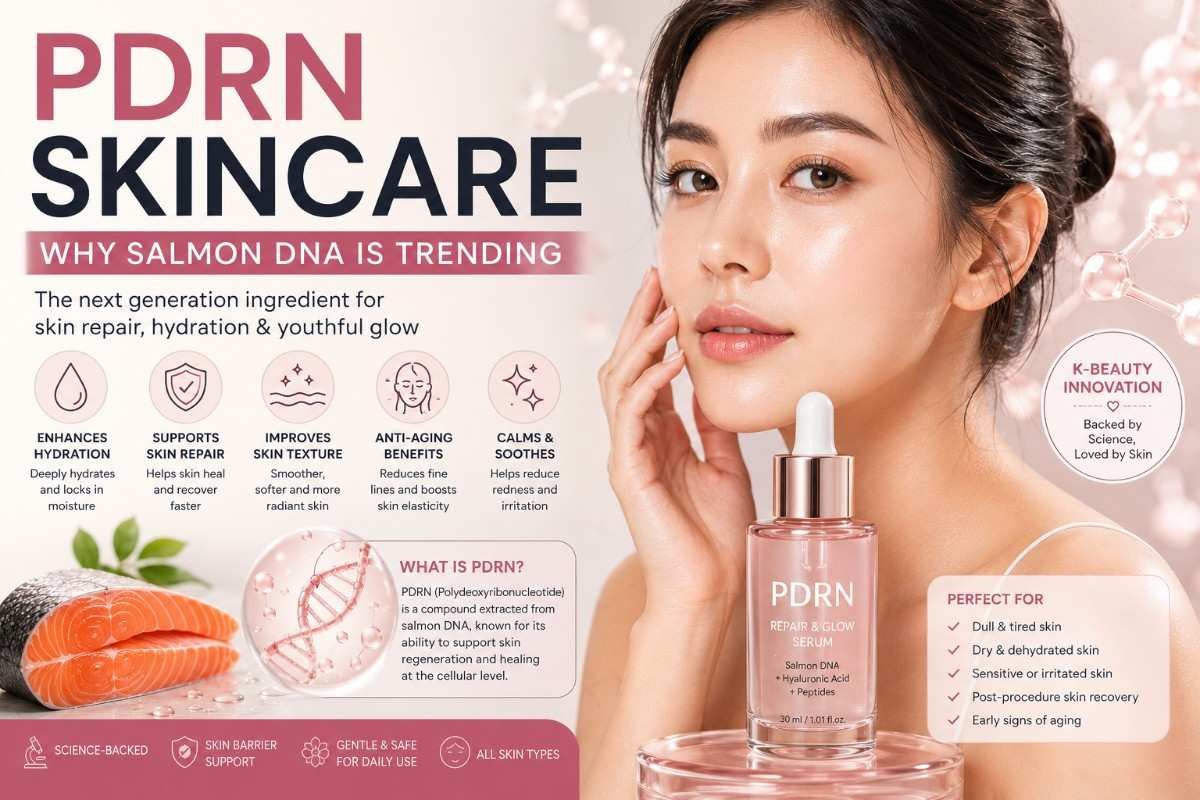
From snail mucin and peptide serums to skin cycling and barrier repair creams, the beauty industry is constantly introducing new innovations. One of the latest ingredients attracting attention is PDRN (Polydeoxyribonucleotide), often referred to as “salmon DNA skincare.” Once primarily used in aesthetic clinics, PDRN is now appearing in serums, ampoules, sheet masks, and moisturizers as consumers search for advanced skincare solutions.
Social media platforms like TikTok and Instagram have helped make PDRN a viral skincare trend, with many users claiming it leaves their skin looking smoother, more hydrated, and more radiant. In particular, the ingredient has become popular in K-beauty (Korean skincare), where skin-repair and barrier-supporting products are already a major focus.
Despite its growing popularity, many people still have questions. What exactly is PDRN? Does it really come from salmon? Is it safe to use? And is there scientific evidence behind the claims?
In this guide, you’ll learn what PDRN skincare is, how it works, its potential benefits, and whether this trending ingredient deserves a place in your skincare routine.
What Is PDRN?
PDRN (Polydeoxyribonucleotide) is a compound made from small fragments of DNA. In medical and cosmetic applications, PDRN is commonly extracted and purified from salmon sperm DNA, which has been studied because of its high compatibility with human tissue after extensive purification.
It is important to understand that PDRN skincare products do not contain living cells or genetic material capable of altering your DNA. Instead, the purified DNA fragments are used as cosmetic ingredients that may help support the skin’s natural repair processes.
Initially, PDRN was used in medical settings for wound healing and tissue repair. As research expanded, skincare brands began incorporating it into products designed to improve hydration, skin texture, and overall skin appearance.
According to the National Institutes of Health (NIH), PDRN has been studied for its role in tissue repair and regenerative medicine, although research on topical cosmetic applications is still evolving.
Why Is Salmon DNA Trending in Skincare?
Several factors have contributed to the rapid rise of PDRN skincare.
1. Growing Interest in Skin Repair
Modern skincare has shifted away from using too many harsh active ingredients at once. Instead, there is greater emphasis on maintaining a healthy skin barrier and supporting the skin’s natural renewal process.
PDRN fits well into this trend because it is marketed as a skin-repair ingredient rather than an aggressive exfoliating treatment.
Many people are also adopting routines such as Skin Cycling to support the skin barrier while reducing irritation from active ingredients. PDRN products can complement these recovery-focused routines by providing additional hydration and skin support.
2. Influence of Korean Beauty
Korean skincare brands are known for introducing innovative ingredients before they become mainstream worldwide.
PDRN Skincare products first gained popularity in Korean aesthetic clinics before expanding into everyday skincare routines through serums, creams, and facial treatments.
Korean skincare is also known for introducing innovative hydration techniques. If you’re interested in maximizing moisture, read our guide to the Skin Flooding Trend, which explains how layering hydrating products can improve skin comfort.
3. Demand for Anti-Aging Solutions
Consumers increasingly seek ingredients that may help improve:
- Fine lines
- Skin elasticity
- Hydration
- Skin texture
- Overall radiance
Although research is still evolving, PDRN Skincare has attracted attention for its potential role in supporting healthier-looking skin.
4. Social Media Popularity
Beauty influencers have highlighted PDRN Skincare as a next-generation skincare ingredient, often sharing before-and-after photos that showcase smoother, more hydrated skin.
While these personal experiences can be encouraging, individual results vary, and clinical research provides a more reliable basis for evaluating effectiveness.
How Does PDRN Work?
Unlike exfoliating acids or retinoids, PDRN is not designed to remove skin layers or increase cell turnover directly.
Instead, it is believed to support the skin’s natural repair environment through several mechanisms that are still being studied.
Researchers suggest that PDRN may help:
- Support skin regeneration
- Improve hydration
- Encourage healthier-looking skin
- Help maintain the skin barrier
- Promote recovery after cosmetic procedures
Much of the strongest evidence for PDRN Skincare comes from medical research involving wound healing and tissue repair. More high-quality studies are still needed to confirm the long-term cosmetic benefits of topical PDRN skincare products.
Potential Benefits of PDRN Skincare
1. Supports Skin Barrier Health
A healthy skin barrier helps protect against moisture loss, pollution, and environmental stress.
PDRN is often included in formulations alongside ingredients such as ceramides, peptides, and hyaluronic acid to support barrier function.
When the skin barrier is healthy, it often appears:
- Smoother
- Softer
- More hydrated
- Less irritated
The American Academy of Dermatology (AAD) emphasizes that maintaining a healthy skin barrier through gentle skincare and regular moisturizing is essential for overall skin health.
2. Deep Hydration
Many PDRN products are formulated with moisturizing ingredients that improve water retention.
Hydrated skin tends to:
- Feel softer
- Look plumper
- Show fewer signs of dryness
- Reflect light more evenly
This makes PDRN serums especially appealing for people with dry or dehydrated skin.
Healthy-looking skin also depends on proper hydration from within. Learn more in our article about Chlorophyll Water, which explores its potential wellness benefits and common misconceptions.
3. May Improve Skin Texture
Some users report smoother skin after using PDRN consistently.
Although individual results vary, improved hydration and barrier support can contribute to a more refined skin texture over time.
4. Helps Calm Skin After Cosmetic Procedures
In some medical settings, PDRN has been studied as part of recovery protocols following procedures such as laser treatments and microneedling.
Its potential role in supporting tissue repair has contributed to its popularity in professional skincare clinics.
However, any post-procedure skincare routine should be guided by your dermatologist or healthcare provider.
5. May Support Healthy-Looking Aging Skin
As we age, the skin naturally becomes thinner, drier, and less elastic.
PDRN is being explored as one ingredient that may help maintain smoother, healthier-looking skin by supporting hydration and skin recovery.
It should not be viewed as a replacement for proven anti-aging practices such as daily sunscreen use and a consistent skincare routine.
Who Can Benefit from PDRN Skincare?
PDRN skincare may be suitable for people who want to improve overall skin health rather than target one specific concern.
It may be especially helpful for:
- Dry skin
- Dehydrated skin
- Mature skin
- Dull-looking skin
- Sensitive skin (depending on the formulation)
- People recovering from certain cosmetic procedures (under professional guidance)
Individuals with known fish or seafood allergies should carefully review ingredient lists and consult a healthcare professional before using products containing salmon-derived ingredients.
Is PDRN Safe?
Current research suggests that purified PDRN is generally well tolerated when used appropriately in cosmetic products and medical applications.
However, safety depends on factors such as:
- Product quality
- Ingredient formulation
- Individual skin sensitivity
- Existing allergies
As with any new skincare product, perform a patch test before applying it to your entire face.
PDRN vs. Retinol vs. Hyaluronic Acid
PDRN is often compared with other popular skincare ingredients, but each serves a different purpose.
| Ingredient | Primary Benefit | Best For |
|---|---|---|
| PDRN | Supports skin repair, hydration, and barrier health | Dry, sensitive, or mature skin |
| Retinol | Improves cell turnover and reduces fine lines | Aging and acne-prone skin |
| Hyaluronic Acid | Attracts and retains moisture | All skin types, especially dehydrated skin |
Rather than replacing one another, these ingredients can often complement each other when used appropriately. A dermatologist can help determine the best routine based on your skin concerns.
How to Use PDRN Skincare
PDRN is available in several skincare products, including serums, ampoules, creams, and sheet masks.
Morning Routine
- Cleanse your face with a gentle cleanser.
- Apply a hydrating toner (optional).
- Use a PDRN serum or ampoule.
- Follow with a moisturizer.
- Finish with a broad-spectrum sunscreen (SPF 30 or higher).
Daily sunscreen is essential because healthy skin depends on consistent UV protection. Some people combine PDRN products with cooling treatments like the Cryotherapy Skincare Trend to help reduce temporary puffiness and refresh the skin. Always introduce new products gradually to avoid irritation.
The Mayo Clinic recommends cleansing gently, moisturizing regularly, and applying broad-spectrum sunscreen daily as the foundation of healthy skincare.
Evening Routine
- Remove makeup and cleanse your skin.
- Apply a PDRN serum.
- Use a nourishing moisturizer to lock in hydration.
Many people prefer using PDRN in the evening when the skin naturally undergoes repair processes during sleep.
Best Ingredients to Pair with PDRN
PDRN works well alongside many barrier-supporting and hydrating ingredients.
Ceramides
Ceramides help strengthen the skin barrier and reduce moisture loss.
Together with PDRN, they may improve skin comfort and hydration.
Hyaluronic Acid
Hyaluronic acid attracts water to the skin, while PDRN supports overall skin health.
This combination is popular in hydrating skincare routines.
Peptides
Peptides support the skin by helping maintain its structure and improving the appearance of firmness.
They pair well with PDRN in many anti-aging products.
Niacinamide
Niacinamide can help improve skin tone, reduce redness, and strengthen the skin barrier.
Many skincare formulations combine niacinamide with PDRN for comprehensive skin support.
Centella Asiatica (Cica)
Known for its soothing properties, Centella Asiatica may help calm sensitive skin.
Combined with PDRN, it can be beneficial for skin that feels irritated or dehydrated.
Ingredients to Use with Caution
Although PDRN is generally gentle, combining multiple powerful active ingredients at once may increase irritation in some people.
If you’re new to skincare, introduce products gradually.
Use caution when layering:
- High-strength retinoids
- Strong exfoliating acids (AHA/BHA)
- Benzoyl peroxide
- Prescription acne medications
If irritation occurs, reduce the number of active ingredients or seek professional advice.
Possible Risks and Side Effects
PDRN skincare is generally considered well tolerated, but side effects are still possible.
1. Allergic Reactions
Because many PDRN products are derived from salmon DNA, individuals with fish allergies should consult a healthcare professional before use.
Although purification removes many proteins responsible for allergic reactions, caution is still recommended.
2. Skin Irritation
PDRN Skincare-Some users may experience:
- Mild redness
- Temporary irritation
- Itching
- Burning sensation
These reactions are more likely if multiple active ingredients are used together.
3. Product Quality Differences
Not all PDRN products are created equally.
Choose products from reputable brands that clearly list ingredients and follow quality manufacturing standards.
Common Myths About PDRN Skincare
Myth 1: PDRN Changes Your DNA
False.
PDRN does not alter your genetic makeup. The purified DNA fragments used in skincare products do not integrate into human DNA or modify your genes.
Myth 2: Results Appear Overnight
False.
While some users notice improved hydration quickly, meaningful improvements in skin texture generally require consistent use over several weeks.
Myth 3: PDRN Replaces Retinol
False.
Retinol and PDRN work differently.
Retinol primarily increases skin cell turnover, while PDRN focuses on supporting skin repair and hydration.
Many skincare routines can include both ingredients, depending on individual skin tolerance.
Myth 4: PDRN Is Only for Mature Skin
False.
Although popular for anti-aging, PDRN may also benefit younger adults experiencing dehydration, dullness, or a weakened skin barrier.
Who Should Avoid PDRN?
PDRN may not be suitable for everyone.
Consult a healthcare professional before use if you:
- Have a known fish or seafood allergy.
- Have active skin infections.
- Have severe inflammatory skin conditions.
- Are uncertain about using new skincare ingredients after cosmetic procedures.
Always patch-test new products before applying them to your entire face.
Expert Tips for Getting the Best Results
To maximize the benefits of PDRN skincare:
- Use sunscreen every day.
- Apply PDRN Skincare consistently rather than expecting overnight results.
- Pair it with gentle moisturizers.
- Avoid over-exfoliating.
- Maintain a healthy skincare routine focused on hydration and barrier repair.
- Buy products from trusted brands with transparent ingredient lists.
Consistency is often more important than using many different products.
FAQs
What is PDRN in skincare?
PDRN (Polydeoxyribonucleotide) is a skincare ingredient made from purified DNA fragments, commonly derived from salmon. It is used in skincare products designed to support hydration, skin repair, and barrier health.
Is salmon DNA skincare safe?
For most people, topical PDRN skincare products are generally considered safe when used as directed. People with fish allergies should review ingredients carefully and consult a healthcare professional before use.
Does PDRN reduce wrinkles?
Current research suggests that PDRN Skincare may improve skin hydration and overall appearance, which can make fine lines appear less noticeable. More research is needed to confirm long-term anti-aging effects.
Can I use PDRN Skincare every day?
Many PDRN Skincare serums and creams are designed for daily use. Follow the manufacturer’s instructions and monitor your skin’s response.
Can PDRN Skincare be used with retinol?
Yes. Many people alternate PDRN Skincare and retinol or use them together in a balanced skincare routine, depending on skin tolerance. If you’re unsure, consult a dermatologist.
How long does it take to see results?
Some people notice improved hydration within days, while improvements in skin texture and overall appearance typically require several weeks of consistent use.
Conclusion
PDRN skincare has quickly become one of the most talked-about innovations in modern beauty, largely due to its association with skin repair, hydration, and healthier-looking skin. While the nickname “salmon DNA skincare” may sound unusual, the purified PDRN Skincare used in cosmetic products is carefully processed and is not capable of changing your DNA.
Although early research and user experiences are promising, topical PDRN is not a miracle ingredient, and more long-term clinical studies are needed to fully understand its cosmetic benefits. The best results come from combining PDRN with a well-rounded skincare routine that includes gentle cleansing, daily sunscreen, moisturizers, and evidence-based ingredients suited to your skin type.
If you’re interested in the latest skincare innovations, be sure to explore our guides on AI-Personalized Skincare, Face Basting Trend. Together, these articles provide practical, evidence-based insights into building a healthier skincare routine.
The World Health Organization (WHO) and other health organizations encourage the responsible use of emerging health technologies and continued reliance on qualified healthcare professionals for medical advice.
About the Author
Hitasha is a health, nutrition, and skincare content writer at Trendyopedia, specializing in evidence-based beauty trends, wellness, and healthy living. She researches the latest scientific studies and expert recommendations to create accurate, easy-to-understand articles that help readers make informed skincare decisions. Her content focuses on simplifying complex topics into practical, trustworthy advice while following Google’s E-E-A-T (Experience, Expertise, Authoritativeness, and Trustworthiness) guidelines.
Disclaimer
The information provided in this article is for educational and informational purposes only and should not be considered medical or dermatological advice. While PDRN skincare products are widely used in cosmetic formulations, individual results may vary depending on skin type, product quality, and personal health factors. Always perform a patch test before using a new skincare product and consult a board-certified dermatologist or qualified healthcare professional if you have persistent skin concerns, allergies, or underlying medical conditions. Trendyopedia is committed to publishing accurate, evidence-based content but does not replace professional medical advice, diagnosis, or treatment.