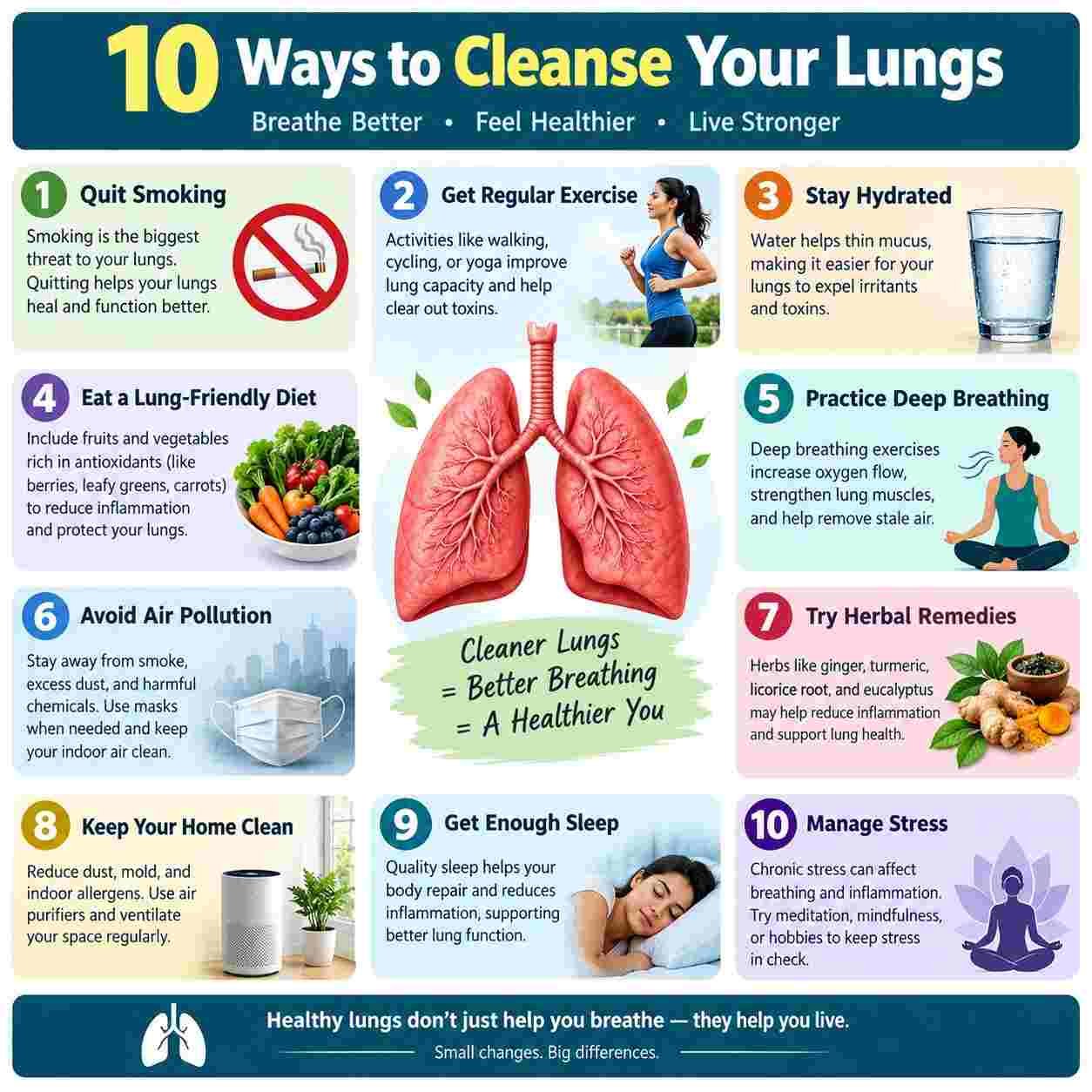
Ways to Cleanse Your Lungs: Your lungs work continuously to bring oxygen into your body and remove carbon dioxide. Because of this important job, many people search for ways to cleanse their lungs after smoking, exposure to pollution, allergies, or other environmental irritants.
However, it is important to understand what “lung cleansing” really means.
Your lungs already have natural defense mechanisms. Tiny hair-like structures called cilia help move mucus and trapped particles out of the airways, while coughing helps clear irritants and secretions.
There is currently no special drink, supplement, or detox program proven to physically “flush” toxins from healthy lungs.
Instead, the most useful approach is to support your lungs’ natural defenses and reduce the things that can damage or irritate them.
If you’re trying to improve your overall wellness, your daily habits matter just as much as individual health trends. For example, Morning Sunlight can be part of a simple morning routine that encourages time outdoors and supports a healthy lifestyle.
10 Ways to Cleanse Your Lungs
1. Quit Smoking
Ways to Cleanse Your Lungs: If you smoke, quitting is one of the most important things you can do for your lungs.
Cigarette smoke contains thousands of chemicals and can damage lung tissue over time. Smoking is strongly associated with conditions including chronic obstructive pulmonary disease (COPD) and lung cancer.
After quitting, the body begins making changes that can improve respiratory health. Coughing and mucus may change as the airways recover and clear accumulated secretions.
You do not need to wait for a “lung detox” product to start. Stopping exposure to tobacco smoke is itself one of the most meaningful steps toward better lung health.
If quitting feels difficult, healthcare professionals can help you choose an appropriate smoking-cessation strategy.
2. Avoid Secondhand Smoke
Ways to Cleanse Your Lungs: You can protect your lungs even if you do not smoke yourself.
Secondhand smoke exposes nonsmokers to many of the same harmful substances found in tobacco smoke. Regular exposure can increase the risk of respiratory problems and other health conditions.
Try to:
- Keep your home smoke-free.
- Avoid enclosed spaces where people are smoking.
- Ask smokers not to smoke inside your home or car.
- Avoid spending long periods around cigarette smoke.
Reducing exposure gives your lungs fewer irritants to deal with.
3. Exercise Regularly
Ways to Cleanse Your Lungs: Regular physical activity does not literally scrub your lungs clean, but it can support overall cardiovascular and respiratory fitness.
During exercise, your heart and muscles require more oxygen, so your breathing rate increases. Over time, regular aerobic activity can improve your body’s ability to use oxygen efficiently.
Activities such as:
- Walking
- Cycling
- Swimming
- Dancing
- Jogging
- Brisk walking
can be incorporated into a healthy routine.
If you have a chronic respiratory condition or have been inactive for a long time, talk with a healthcare professional about an appropriate exercise level.
Regular movement is another important part of taking care of your body. If you enjoy walking as a low-impact form of exercise, you can also explore 6-6-6 Walking Trend, a popular walking routine that focuses on making daily movement more consistent.
4. Improve Indoor Air Quality
Ways to Cleanse Your Lungs: The air inside your home can contain dust, smoke, pet allergens, mold, cleaning-product fumes, and other airborne irritants.
Improving indoor air quality is therefore another practical way to support your respiratory health.
Consider:
- Ventilating rooms when appropriate.
- Controlling excessive indoor humidity.
- Keeping living spaces reasonably dust-free.
- Avoiding indoor smoking.
- Maintaining heating and cooling systems properly.
- Reducing exposure to strong chemical fumes.
Good ventilation can be particularly helpful when cooking or using products that release fumes.
5. Reduce Exposure to Outdoor Air Pollution
Ways to Cleanse Your Lungs: Outdoor air pollution can contain particles and gases that irritate the respiratory system.
On days when air pollution is particularly high, consider checking your local air-quality information before doing prolonged outdoor exercise.
You can reduce exposure by:
- Limiting strenuous outdoor activity during severe pollution.
- Avoiding areas with heavy traffic when possible.
- Keeping windows closed during particularly poor air-quality periods when appropriate.
- Following local public-health recommendations during pollution events.
Reducing repeated exposure to airborne pollutants is more useful than relying on a supposed lung-detox drink.
6. Stay Hydrated
Ways to Cleanse Your Lungs: Water does not “detox” your lungs, but staying adequately hydrated supports normal body functions.
The respiratory system produces mucus, which is part of the body’s natural defense system. Adequate fluid intake can help maintain normal mucus consistency.
Instead of looking for a special lung-cleansing beverage, focus on drinking enough fluids throughout the day according to your individual needs.
Water is usually a simple choice.
People with certain medical conditions may have specific fluid restrictions, so individualized medical advice should take priority.
7. Practice Good Hand Hygiene
Ways to Cleanse Your Lungs: Respiratory infections can affect the lungs and airways, particularly in people who are vulnerable to complications.
Good hand hygiene is a simple way to reduce the spread of many infections.
Wash your hands regularly, especially:
- Before eating.
- After using public transportation.
- After coughing or sneezing.
- After being in crowded public places.
- After touching potentially contaminated surfaces.
Avoid touching your eyes, nose, and mouth with unwashed hands.
These small habits can help reduce exposure to germs that may cause respiratory infections.
8. Maintain a Healthy Diet
Ways to Cleanse Your Lungs: There is no specific food that can detoxify your lungs.
However, a balanced diet provides nutrients needed for overall health and supports your body’s normal immune and repair processes.
Build meals around a variety of:
- Fruits
- Vegetables
- Whole grains
- Beans and lentils
- Nuts and seeds
- Healthy sources of protein
Colorful fruits and vegetables are particularly useful because they provide a variety of vitamins, minerals, and plant compounds.
Rather than focusing on one “lung-cleansing” food, aim for an overall balanced eating pattern.
9. Protect Your Lungs From Workplace Irritants
Ways to Cleanse Your Lungs: Some occupations can expose workers to dust, fumes, smoke, chemicals, or other substances that can irritate or damage the respiratory system.
If your work involves airborne hazards, follow workplace safety procedures carefully.
Depending on the workplace, this may include:
- Using appropriate respiratory protection.
- Improving ventilation.
- Following chemical-safety instructions.
- Using protective equipment correctly.
- Reporting unsafe air-quality conditions.
Do not assume that a supplement or detox drink can counteract repeated exposure to workplace hazards.
Reducing the exposure itself is the priority.
10. Get Medical Attention for Persistent Breathing Problems
Ways to Cleanse Your Lungs: One of the most overlooked aspects of lung health is recognizing when symptoms need professional evaluation.
A persistent cough, unexplained shortness of breath, wheezing, chest pain, coughing up blood, or repeated respiratory infections should not simply be treated as a need for a “lung cleanse.”
Depending on the symptoms, a healthcare professional may recommend an examination or tests to determine what is causing the problem.
Early evaluation can be particularly important for people who smoke, have significant occupational exposures, or have a history of respiratory disease.
Do Lung Detox Drinks Really Work?
Ways to Cleanse Your Lungs: Lung-detox teas, juices, powders, and supplements are widely promoted online.
However, there is no established beverage that can physically remove accumulated toxins from healthy lungs in the way these products often claim.
Your lungs have their own defense and clearance mechanisms. The most meaningful ways to support them are to avoid tobacco smoke, reduce exposure to pollutants and irritants, stay physically active, and maintain overall health.
Be cautious when a product promises to “clean years of smoking from your lungs” or claims to remove toxins quickly.
Air quality is another factor worth considering, especially for people who spend a lot of time indoors. Creating a healthier home environment can go hand in hand with Analog Living, which explores ways to reduce excessive screen time and create healthier everyday routines.
Can Your Lungs Repair Themselves?
Ways to Cleanse Your Lungs: The answer depends on the type and extent of lung damage.
When harmful exposure stops, the body can recover from some types of irritation and injury. For example, quitting smoking can lead to improvements in respiratory symptoms and reduce the risk of several smoking-related diseases over time.
However, not all lung damage is completely reversible.
Conditions such as COPD can cause permanent changes to the lungs. This is why prevention and early medical care are important.
What Is the Fastest Way to Improve Lung Health?
Ways to Cleanse Your Lungs: There is no single overnight lung cleanse.
Instead, focus on the habits with the strongest practical value:
- Stop smoking if you smoke.
- Avoid secondhand smoke.
- Exercise regularly.
- Reduce exposure to polluted or contaminated air.
- Improve indoor ventilation and air quality.
- Eat a balanced diet.
- Stay adequately hydrated.
- Follow workplace respiratory-safety practices.
- Reduce infection exposure through good hygiene.
- Seek medical care for persistent or concerning symptoms.
These habits support your lungs without relying on unproven detox claims.
When Should You See a Doctor?
Ways to Cleanse Your Lungs: Not every cough requires medical attention, but certain symptoms deserve evaluation.
Seek medical advice if you experience:
- Persistent or worsening cough
- Shortness of breath
- Wheezing
- Chest pain
- Coughing up blood
- Repeated chest infections
- Unexplained weight loss
- Breathing difficulties that interfere with normal activities
Severe difficulty breathing, blue or gray lips/skin, confusion, or sudden serious breathing problems require urgent medical attention.
Healthy breathing habits can also complement a broader wellness routine. If you’re interested in relaxation and mindful movement, explore Nervous System Yoga, which discusses gentle yoga and relaxation practices that may help support everyday stress management.
FAQs About Ways to Cleanse Your Lungs
Can you really cleanse your lungs naturally?
Your lungs already have natural mechanisms for clearing mucus and inhaled particles. Rather than trying to detoxify them with special products, focus on reducing harmful exposures and supporting overall lung health.
What is the best way to cleanse your lungs after smoking?
The most important step is to stop smoking and avoid continued exposure to tobacco smoke. Your body can begin making changes after you quit, although recovery depends on factors such as how long and how much you smoked and whether permanent lung damage has occurred.
Does drinking water clean your lungs?
Water does not directly remove toxins from your lungs. However, adequate hydration supports normal body functions and helps maintain normal mucus consistency.
Do lung detox teas work?
There is not good evidence that detox teas can physically remove toxins from the lungs. Some teas may be pleasant to drink, but they should not be presented as a treatment for lung disease or smoking-related damage.
Does exercise clean your lungs?
Exercise does not literally clean the lungs. Regular physical activity can, however, improve cardiovascular fitness and help your body use oxygen more efficiently.
Can lungs recover after quitting smoking?
Some respiratory symptoms and lung functions can improve after quitting smoking, while certain types of damage may be permanent. Quitting remains one of the most important steps for protecting future lung health.
Conclusion
The best ways to cleanse your lungs are not complicated detox programs or expensive supplements.
Your lungs already have natural systems for protecting and clearing the airways. The most effective approach is to support those systems by avoiding smoking and secondhand smoke, reducing air-pollution exposure, exercising regularly, maintaining good indoor air quality, eating a balanced diet, and paying attention to persistent respiratory symptoms.
If you are experiencing ongoing coughing, wheezing, chest pain, or difficulty breathing, don’t rely on a lung detox. Talk with a healthcare professional to identify the underlying cause.
Finally, staying hydrated is an important part of general wellness. If you’re interested in popular hydration trends, you can also read about Functional Water and how different types of enhanced water have become part of modern wellness culture.
About the Author
Written by Hitasha — Hitasha is a wellness and lifestyle writer at Trendyopedia, creating easy-to-understand, research-informed content on health, beauty, wellness, and everyday trends.
Disclaimer
This article is for general informational and educational purposes only. It is not intended to provide medical advice, diagnosis, or treatment. Always consult a qualified healthcare professional for personalized medical guidance or concerns about your health.