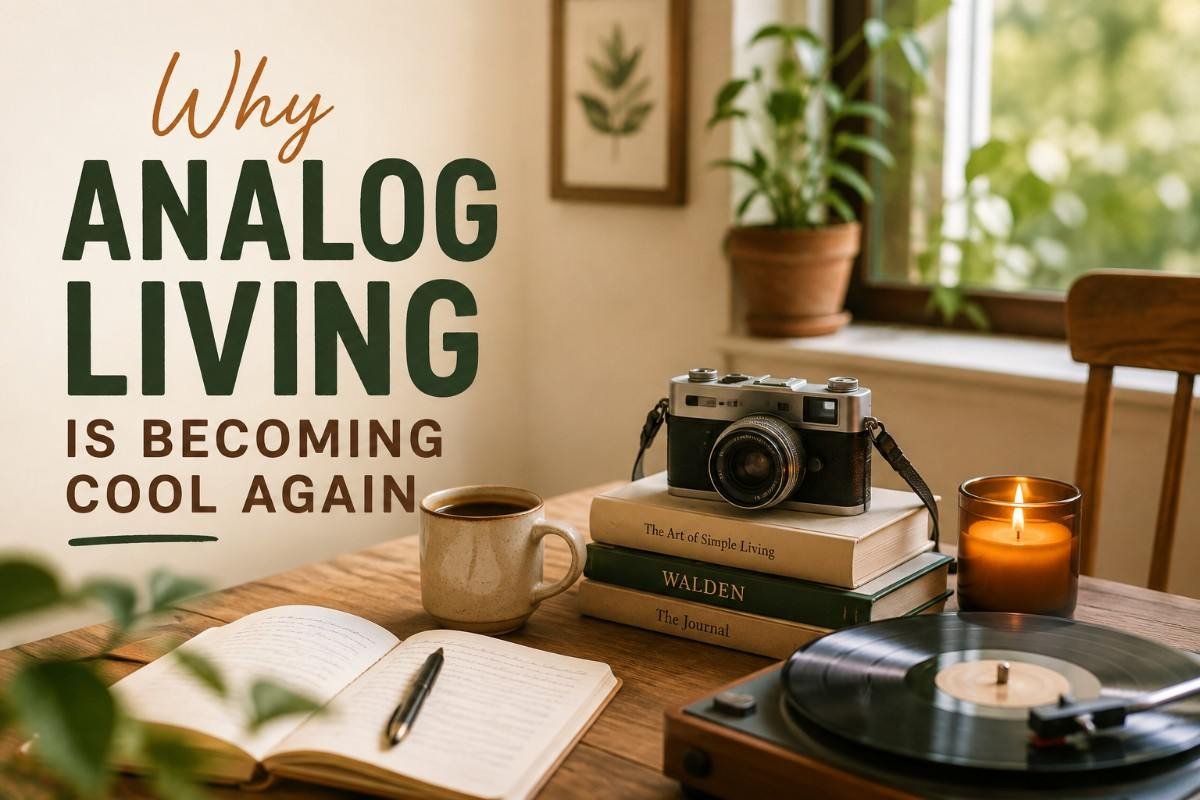
Why Analog Living Is Becoming Cool Again: In a world filled with smartphones, social media notifications, streaming services, artificial intelligence, and endless digital content, an unexpected trend is making a comeback: analog living.
From reading physical books and writing in paper journals to using film cameras and spending weekends offline, more people are intentionally choosing activities that don’t require a screen.
This movement isn’t about rejecting technology completely. Instead, it’s about creating a healthier balance between digital convenience and real-world experiences.
As concerns about screen time, digital distractions, and constant connectivity continue to grow, analog living has become one of the most talked-about lifestyle trends among Millennials and Gen Z.
So why is analog living becoming cool again?
The answer lies in a growing desire for simplicity, focus, creativity, and genuine human connection.
The growing interest in offline activities is closely connected to the Digital Detox Trends: Simple Ways to Spend Less Time on Your Phone, as more people look for ways to reduce unnecessary screen time.
What Is Analog Living?
Why Analog Living Is Becoming Cool Again: Analog living refers to engaging in activities that don’t rely on digital technology.
Examples include:
- Reading physical books
- Writing in a journal
- Drawing or painting
- Gardening
- Knitting
- Cooking from a recipe book
- Playing board games
- Listening to vinyl records
- Using film cameras
- Writing letters
- Solving puzzles
These activities often require more attention and participation than digital alternatives.
Rather than passively consuming content, analog living encourages people to create, explore, and engage with the world around them.
Why Is Analog Living Trending?
Why Analog Living Is Becoming Cool Again: The popularity of analog living is largely a response to modern digital lifestyles.
Many people spend hours every day:
- Checking notifications
- Scrolling social media
- Watching short videos
- Answering messages
- Working on screens
Over time, this constant connectivity can feel overwhelming.
As a result, many people are seeking activities that provide a break from digital distractions.
This shift has helped fuel trends such as:
- Digital detox
- Slow living
- Mindful living
- Silent walking
- Screen-free evenings
- Journaling
- Reading challenges
- DIY hobbies
Analog living fits naturally into all of these movements. Another trend encouraging people to step away from digital distractions is the Silent Walking Trend, which combines walking with a quieter, more screen-free experience.
The Appeal of Analog Living
1. It Helps Reduce Screen Time
Why Analog Living Is Becoming Cool Again: One of the biggest reasons people embrace analog activities is to spend less time looking at screens.
Many individuals are becoming more aware of how often they check their phones throughout the day.
Analog hobbies create opportunities to:
- Disconnect from notifications
- Reduce mindless scrolling
- Focus on a single activity
- Spend more time in the present moment
This doesn’t mean eliminating technology completely.
It simply means creating healthier boundaries.
For more ideas, check out our guide on Digital Detox Trends: Simple Ways to Spend Less Time on Your Phone.
2. It Encourages Mindfulness
Many digital experiences are designed to keep our attention moving quickly from one piece of content to the next.
Analog activities often have the opposite effect.
Reading a book, sketching, knitting, or gardening requires patience and attention.
These slower activities encourage mindfulness and help people focus on what they are doing right now.
3. It Feels More Authentic
Many people enjoy the physical experience of analog items.
Examples include:
- Turning pages in a book
- Writing with a pen
- Developing film photographs
- Playing vinyl records
- Completing a puzzle
These experiences can feel more personal and memorable than their digital equivalents.
The tactile nature of analog activities is a major part of their appeal.
4. It Sparks Creativity
Digital platforms often encourage consumption.
Analog hobbies encourage creation.
When you:
- Paint
- Write
- Journal
- Build something
- Cook
- Garden
You actively participate in the process.
Many people find that creative analog hobbies help them feel more productive and fulfilled.
5. It Provides a Break From Information Overload
Modern life delivers an endless stream of information.
News alerts, emails, messages, videos, and social media updates compete for attention throughout the day.
Analog activities provide a welcome pause.
Instead of constantly consuming information, people can slow down and focus on one task at a time.
Popular Analog Living Activities
Reading Physical Books
Why Analog Living Is Becoming Cool Again: Book sales and reading challenges continue to attract people looking for a screen-free hobby.
Reading physical books offers:
- Fewer distractions
- Better focus
- Less screen exposure
- A relaxing experience
Many readers appreciate the feeling of holding a physical book rather than reading on a device.
Journaling
Journaling has become increasingly popular as a wellness practice.
Benefits may include:
- Organizing thoughts
- Tracking goals
- Reflecting on experiences
- Practicing gratitude
A simple notebook and pen are all you need.
Gardening
Gardening combines:
- Physical activity
- Outdoor time
- Creativity
- Mindfulness
Whether growing herbs on a windowsill or maintaining a large garden, gardening is a popular analog hobby.
Gardening is another simple way to step away from screens and reconnect with hands-on activities. You don’t need a large outdoor space to get started—even a few pots on a balcony or windowsill can work. If you’re new to growing plants, check out our guide How to Start Small Herb Garden for simple tips on creating your own small herb garden.
Cooking From Scratch
Cooking allows people to step away from screens and focus on a hands-on activity.
Preparing meals from basic ingredients can feel rewarding and creative.
Many people are rediscovering traditional cooking methods as part of the analog living trend.
Film Photography
Why Analog Living Is Becoming Cool Again: Despite advanced smartphone cameras, film photography has experienced renewed interest.
Film photography encourages people to:
- Slow down
- Think carefully about each photo
- Appreciate the creative process
The limited number of exposures on a film roll creates a different experience from taking hundreds of digital photos.
Board Games
Why Analog Living Is Becoming Cool Again: Board games provide a social activity that doesn’t involve screens.
They encourage:
- Conversation
- Problem-solving
- Teamwork
- Friendly competition
For many people, board games offer a refreshing alternative to digital entertainment.
Analog Living and Mental Wellbeing
Many people report feeling calmer when they spend time on analog activities.
Possible reasons include:
- Fewer interruptions
- Less multitasking
- Reduced social comparison
- Greater focus
- More meaningful engagement
While analog living isn’t a cure for stress or anxiety, many people find it helpful as part of a balanced lifestyle.
Analog Living vs. Digital Detox
Why Analog Living Is Becoming Cool AgainL: These concepts are closely related but different.
Analog Living
Focuses on adding more non-digital activities into daily life.
Example:
Reading a book instead of scrolling social media.
Digital Detox
Focuses on reducing or limiting digital device use.
Example:
Taking a weekend break from social media.
Many people use both approaches together.
For example:
- Reducing screen time
- Replacing scrolling with reading
- Spending more time outdoors
- Creating phone-free evenings
How to Start Living More Analog
Why Analog Living Is Becoming Cool Again: You don’t need to completely abandon technology.
Start small.
Step 1: Choose One Analog Activity
Examples:
- Reading
- Journaling
- Gardening
- Drawing
- Cooking
- Walking
Pick something that genuinely interests you.
Step 2: Create Screen-Free Time
Try:
- 30 minutes before bed
- One hour after work
- Screen-free meals
- Weekend mornings
Consistency matters more than perfection.
Step 3: Keep Supplies Visible
Want to read more?
Keep a book nearby.
Want to journal?
Leave your notebook on your desk.
Making analog activities easy to access increases the chances you’ll actually do them.
Step 4: Start Small
You don’t need to spend hours on a hobby.
Start with:
- 10 pages of reading
- 10 minutes of journaling
- A short walk
- A simple recipe
Small habits often become lasting habits.
Is Analog Living Just Nostalgia?
Why Analog Living Is Becoming Cool Again: Some people see analog living as a nostalgic trend.
While nostalgia certainly plays a role, the movement is about more than simply recreating the past.
Many people are choosing analog activities because they provide benefits that digital experiences sometimes lack:
- Focus
- Creativity
- Presence
- Relaxation
- Human connection
In that sense, analog living is less about looking backward and more about creating balance in modern life.
The Future of Analog Living
Why Analog Living Is Becoming Cool Again: As technology continues to become more advanced, analog experiences may become even more valuable.
The more time people spend online, the more attractive offline experiences can seem.
Future trends may include:
- More phone-free events
- Increased interest in physical books
- Growth in creative hobbies
- More slow-living communities
- Greater focus on mindful technology use
Rather than replacing technology, analog living will likely continue alongside it. This shift toward slower lifestyles is especially interesting among younger generations. You can also read How Gen Z Is Redefining Success Without 9–5 Jobs to explore another changing lifestyle trend.
FAQs
What is analog living?
Analog living is a lifestyle that emphasizes non-digital activities such as reading, journaling, gardening, cooking, and other screen-free hobbies.
Why is analog living becoming popular?
Many people are seeking balance after spending large amounts of time on digital devices. Analog activities offer opportunities to slow down, focus, and engage with the real world.
Does analog living mean giving up technology?
No. Most people who practice analog living still use technology. The goal is balance, not complete disconnection.
What are some examples of analog hobbies?
Popular analog hobbies include reading, journaling, painting, gardening, knitting, photography, cooking, puzzles, and board games.
Is analog living good for mental wellbeing?
Many people find analog activities relaxing because they reduce distractions and encourage focus. However, experiences vary from person to person.
Conclusion
Why Analog Living Is Becoming Cool Again: Analog living is becoming cool again because people are looking for ways to slow down in an increasingly digital world.
Whether it’s reading a book, keeping a journal, growing plants, cooking from scratch, or taking a phone-free walk, analog activities provide something many modern lifestyles lack: uninterrupted attention.
The goal isn’t to reject technology.
The goal is to create space for meaningful experiences that happen beyond the screen.
In a world filled with notifications and endless scrolling, sometimes the most refreshing trend is simply putting the phone down and enjoying life offline. and check out our guide Bed Rotting, Phone Relationships .
Author
Hitasha – Lifestyle and wellness writer at Trendyopedia, covering health trends, digital wellness, self-improvement, and modern lifestyle topics.
Disclaimer
This article is for informational purposes only and should not be considered medical, psychological, or professional advice. Individual experiences with digital wellness and lifestyle changes may vary
3 thoughts on “Why Analog Living Is Becoming Cool Again: The Trend Away From Screens”