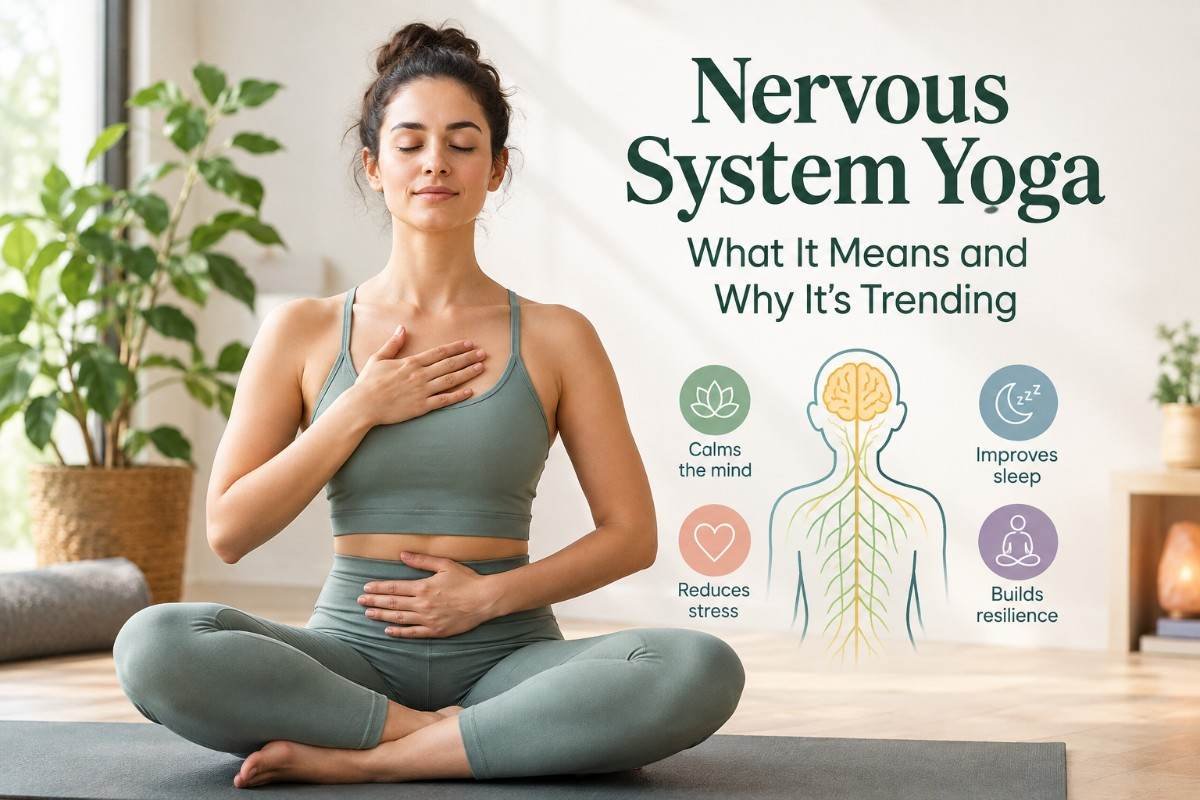
Nervous System Yoga is becoming a popular wellness topic as more people look for gentle ways to manage everyday stress, improve body awareness, and create moments of relaxation.
Unlike fast-paced yoga styles that focus heavily on strength and flexibility, nervous system-focused yoga generally emphasizes slow movement, comfortable breathing, mindfulness, and relaxation.
But what exactly does “nervous system yoga” mean? Is it a specific type of yoga, and can it actually help with stress?
Let’s explore what this growing wellness trend involves, what the research says, and how beginners can create a simple practice.
Nervous System Yoga shares some similarities with Somatic Yoga, another growing mind-body practice that emphasizes slow, intentional movement and body awareness.
What Is Nervous System Yoga?
Nervous System Yoga is not necessarily one standardized form of yoga with a single set of poses.
Instead, the term is commonly used online to describe yoga practices that emphasize calming movement, breath awareness, mindfulness, and relaxation.
A nervous-system-focused session may include:
- Slow yoga movements
- Gentle stretching
- Comfortable breathing
- Meditation
- Body awareness
- Restorative poses
- Short periods of stillness
- Relaxation at the end of practice
The emphasis is generally less on achieving difficult poses and more on how you feel during the practice.
Why Is Nervous System Yoga Trending?
The popularity of nervous system wellness reflects a broader interest in stress management and mind-body practices.
People are increasingly interested in wellness routines that don’t require intense workouts or complicated equipment.
Social media has also helped popularize terms such as “nervous system regulation,” “somatic movement,” and “stress reset.”
However, it’s important to understand that social-media wellness language doesn’t always match medical terminology.
The nervous system is a complex biological system, and claims that a particular yoga pose can instantly “reset” or “heal” it should be treated cautiously.
Understanding the Nervous System
The nervous system helps control and coordinate many functions throughout the body.
It includes the central nervous system, made up of the brain and spinal cord, and the peripheral nervous system, which connects the central nervous system with the rest of the body.
One part of the peripheral nervous system is the autonomic nervous system, which helps regulate involuntary functions such as heart rate, digestion, and breathing.
The autonomic nervous system includes the sympathetic and parasympathetic branches, among others.
You may hear wellness content describe these as the body’s “fight-or-flight” and “rest-and-digest” systems. These descriptions can be useful for basic understanding, but the actual physiology is more complex.
A gentle morning yoga routine can also be paired with Morning Sunlight to create a simple wellness routine at the beginning of the day.
Does Yoga Affect the Nervous System?
Research suggests that yoga can influence stress-related outcomes, although the evidence varies depending on the type of yoga, the population studied, and the outcome being measured.
Yoga combines physical activity with breathing, attention, and relaxation. This combination may help some people manage stress and improve their sense of well-being.
However, yoga shouldn’t be described as a guaranteed way to “reset” the nervous system.
The most accurate way to think about it is that gentle yoga can be one tool for supporting relaxation and stress management.
7 Gentle Practices Used in Nervous System Yoga
You don’t need an advanced yoga routine to explore this style. Here are several simple practices.
1. Child’s Pose
Child’s Pose is often included in slower yoga sessions.
Kneel on a mat and gradually bring your hips toward your heels. Fold forward comfortably and allow your arms to rest wherever they feel natural.
You can place a cushion underneath your forehead or chest for additional support.
Stay for several comfortable breaths.
Don’t force your hips or knees into a position that causes pain.
2. Cat-Cow
Cat-Cow creates gentle movement through the spine.
Start on your hands and knees.
As you inhale, gently move toward a comfortable extended position. As you exhale, slowly round your spine.
Move at a pace that feels comfortable.
Instead of trying to stretch as far as possible, focus on slow movement and awareness of your breathing.
3. Legs Up the Wall
Legs Up the Wall is a popular restorative yoga position.
Sit beside a wall and carefully bring your legs upward while lying back.
Your arms can rest comfortably by your sides.
Stay in the position for a few minutes if it feels comfortable.
If you experience pain, dizziness, numbness, or discomfort, come out of the pose.
4. Mountain Pose
Mountain Pose is a simple standing posture that can be used for mindfulness.
Stand comfortably with your feet grounded.
Relax your shoulders and allow your arms to rest naturally.
Notice the sensation of your feet against the floor.
Take several comfortable breaths while paying attention to your posture.
5. Seated Breathing
You don’t always need movement.
Sit comfortably on a chair, cushion, or yoga mat.
Allow your shoulders to relax.
Notice your natural breathing without trying to force it.
Pay attention to the sensation of inhaling and exhaling for one or two minutes.
If focusing on your breathing makes you uncomfortable or increases anxiety, stop and return to normal breathing.
6. Savasana
Savasana, or Corpse Pose, is commonly practiced at the end of yoga sessions.
Lie comfortably on your back and allow your arms and legs to relax.
Close your eyes if you prefer.
Rather than trying to “empty your mind,” simply notice your body and surroundings.
Even a few minutes can provide a quiet ending to a yoga practice.
7. Gentle Forward Fold
Stand with your feet comfortably apart.
Slowly bend forward from your hips.
Keep your knees slightly bent if necessary.
Allow your head and neck to relax without forcing the stretch.
Come back to standing slowly, particularly if you are prone to dizziness.
A 10-Minute Nervous System Yoga Routine
If you’re a beginner, you can keep your routine very simple.
Minute 1: Comfortable seated breathing
Minutes 2–3: Cat-Cow
Minutes 4–5: Child’s Pose
Minutes 6–7: Mountain Pose
Minutes 8–9: Legs Up the Wall
Minute 10: Savasana
The goal isn’t to complete every pose perfectly.
Instead, use the routine as a short opportunity to slow down, move gently, and pay attention to your body.
Nervous System Yoga and Breathing
Breathing is one of the most recognizable components of many yoga practices.
Slow, controlled breathing is often used during yoga and relaxation exercises.
A simple approach is to breathe comfortably while gradually paying attention to the length and smoothness of your breathing.
You don’t need to take extremely deep breaths.
Comfortable breathing is more important than forcing a particular breathing pattern.
Some people may find breath-focused practices relaxing, while others may feel uncomfortable when concentrating on their breathing. If that happens, return to normal breathing.
Nervous System Yoga vs. Somatic Yoga
These terms are sometimes used interchangeably online, but they aren’t exactly the same thing.
Nervous System Yoga is generally an informal term describing yoga practices centered on relaxation, stress management, and body awareness.
Somatic Yoga generally places greater emphasis on noticing internal physical sensations and using slow, intentional movements to improve body awareness.
Both approaches can involve gentle movement and mindfulness.
If you’re interested in this broader wellness trend, you can also explore Somatic Yoga: Why This Mind-Body Practice Is Trending.
Nervous System Yoga vs. Traditional Yoga
Traditional yoga can include many different elements, including physical postures, breathing practices, meditation, and philosophical traditions.
Depending on the style, yoga may be:
- Gentle and restorative
- Physically demanding
- Meditation-focused
- Breath-focused
- Strength-oriented
- Flexibility-oriented
Nervous system yoga generally emphasizes the gentler and relaxation-focused side of yoga.
This means it can be particularly appealing to people who don’t want every workout to be intense.
Can Beginners Try Nervous System Yoga?
Yes.
You don’t need advanced flexibility or yoga experience.
A beginner can start with simple movements such as:
- Mountain Pose
- Cat-Cow
- Child’s Pose
- Gentle seated stretches
- Savasana
Start with a few minutes and gradually build your practice.
A qualified yoga instructor can also help you learn proper positioning and modifications.
When Should You Practice Nervous System Yoga?
There is no universal “best” time.
Morning
A few gentle movements can provide a calm start to the day.
You could combine your routine with Morning Sunlight as part of a broader morning wellness routine.
During a Work Break
If you spend hours sitting at a desk, a few gentle movements can provide a break from prolonged sitting.
After Work
A short session can become a transition between work and personal time.
Before Bed
Slow yoga and relaxation practices can fit naturally into an evening routine.
If sleep is your main goal, Yoga Nidra is another relaxation-focused practice worth exploring.
For an evening relaxation routine, you can also explore Yoga Nidra, a practice that is increasingly popular as a sleep and relaxation trend.
How Often Should You Do Nervous System Yoga?
There isn’t one required schedule.
For beginners, 5–10 minutes a few times per week can be a practical starting point.
If you enjoy it, you can gradually increase your practice.
Consistency matters more than making every session long.
Even a short routine can create an intentional pause during a busy day.
Common Mistakes to Avoid
Trying to “Reset” Your Nervous System Instantly
You may see social-media posts promising that a particular pose can immediately reset your nervous system.
The science is more complicated.
Think of yoga as a potential tool for relaxation and stress management rather than an instant physiological reset.
Forcing Your Breathing
You don’t need to take extremely deep breaths or hold your breath for long periods.
Keep breathing comfortable.
Choosing Difficult Poses
Advanced poses aren’t necessary for a relaxation-focused practice.
Simple movements may be enough.
Ignoring Pain
Yoga should not require you to push through sharp or significant pain.
Modify or stop an exercise if it doesn’t feel right.
Other Ways to Support Stress Management
Yoga is only one part of a healthy lifestyle.
Other strategies may include:
- Regular physical activity
- Adequate sleep
- Spending time outdoors
- Social connection
- Meditation
- Relaxation exercises
- Healthy eating
- Taking breaks from screens
For people interested in reducing digital overload, Digital Detox Trends offer practical ideas for creating more intentional screen habits.
Walking is another simple form of physical activity. You can also explore Walking Yoga if you enjoy combining mindful movement with walking.
Is Nervous System Yoga a Medical Treatment?
No.
“Nervous System Yoga” is primarily a wellness term rather than a standardized medical treatment.
Yoga may be used as a complementary practice for stress management, but it shouldn’t replace professional medical or mental-health care.
If you’re experiencing persistent anxiety, panic attacks, severe stress, depression, sleep problems, or other symptoms that interfere with daily life, consider speaking with a qualified healthcare professional.
People with injuries, medical conditions, pregnancy, or physical limitations should ask an appropriate healthcare professional or qualified yoga instructor about suitable modifications.
Walking is another simple form of movement, while Walking Yoga combines walking with mindful movement and body awareness.
FAQs
What is nervous system yoga?
Nervous System Yoga is an informal wellness term for gentle yoga practices that emphasize relaxation, breathing, mindfulness, and body awareness.
Can nervous system yoga reduce stress?
Yoga may help some people manage stress and improve well-being. However, individual responses vary, and it should not be presented as a guaranteed treatment.
Is nervous system yoga suitable for beginners?
Yes. Beginners can start with simple poses such as Mountain Pose, Child’s Pose, Cat-Cow, and Savasana.
How long should I practice nervous system yoga?
You can start with 5–10 minutes. As you become comfortable, you can gradually increase the duration.
What is the difference between nervous system yoga and somatic yoga?
Nervous System Yoga is generally used to describe relaxation-focused yoga, while Somatic Yoga places particular emphasis on internal body awareness and slow, intentional movement.
Can I do nervous system yoga before bed?
Gentle yoga can be incorporated into an evening wind-down routine. Relaxation-focused practices may be more appropriate at night than vigorous yoga.
Does nervous system yoga cure anxiety?
No. Yoga should not be considered a cure for an anxiety disorder. It may be one complementary wellness practice for managing stress.
Conclusion
Nervous System Yoga has become a popular wellness concept because it offers a gentler alternative to high-intensity exercise. Its focus on slow movement, comfortable breathing, mindfulness, and relaxation can make it approachable for beginners.
The term itself is not a standardized medical treatment, and claims about instantly “resetting” the nervous system should be viewed carefully. Instead, think of this practice as one possible way to create more moments of calm and body awareness in your everyday routine.
Start with just a few minutes of gentle movement. You don’t need complicated poses or an expensive setup. A yoga mat, comfortable clothing, and a quiet space may be enough to begin.
If you’re also looking for gentle practices that may support everyday stress management, explore Yoga for Anxiety for beginner-friendly poses and relaxation techniques.
Author
Hitasha is a wellness and lifestyle writer at Trendyopedia, creating easy-to-understand, research-informed content about health trends, fitness, nutrition, beauty, and everyday well-being.
Disclaimer
This article is for general informational and educational purposes only. It is not medical advice and does not replace consultation with a qualified healthcare professional. Stop any exercise that causes pain, dizziness, or discomfort and seek professional guidance when appropriate.
Sources & References
2 thoughts on “Nervous System Yoga: What It Means and Why It’s Trending”