What if the secret to living a longer, healthier life wasn’t hidden in supplements or extreme diets—but in simple, traditional ways of eating?
The Blue Zone Diet is inspired by regions of the world where people consistently live beyond 90 or even 100 years—often free from chronic diseases. These areas, known as Blue Zones, have been studied extensively by researchers and popularized by Dan Buettner in collaboration with organizations like National Geographic Society.
This guide explores the science, foods, lifestyle habits, and practical steps behind the Blue Zone Diet—so you can apply these longevity secrets to your own life.
What Are Blue Zones?
The 5 Blue Zone Regions
Blue Zones are five regions identified for their high number of centenarians:
- Sardinia (Italy)
- Okinawa (Japan)
- Ikaria (Greece)
- Nicoya Peninsula (Costa Rica)
- Loma Linda (USA)
People in these areas share similar habits—despite cultural differences.
What is the Blue Zone Diet?
The Blue Zone diet refers to the typical eating patterns of people living in regions of the world known as “Blue Zones,” where people tend to live much longer, healthier lives—often reaching 100 years old. The concept was popularized by Dan Buettner, who identified these longevity hotspots.
What are Blue Zones?
These regions include places like:
- Sardinia (Italy)
- Okinawa (Japan)
- Nicoya Peninsula
- Ikaria
- Loma Linda (USA)
People in these areas share lifestyle habits—including diet—that are linked to longevity.
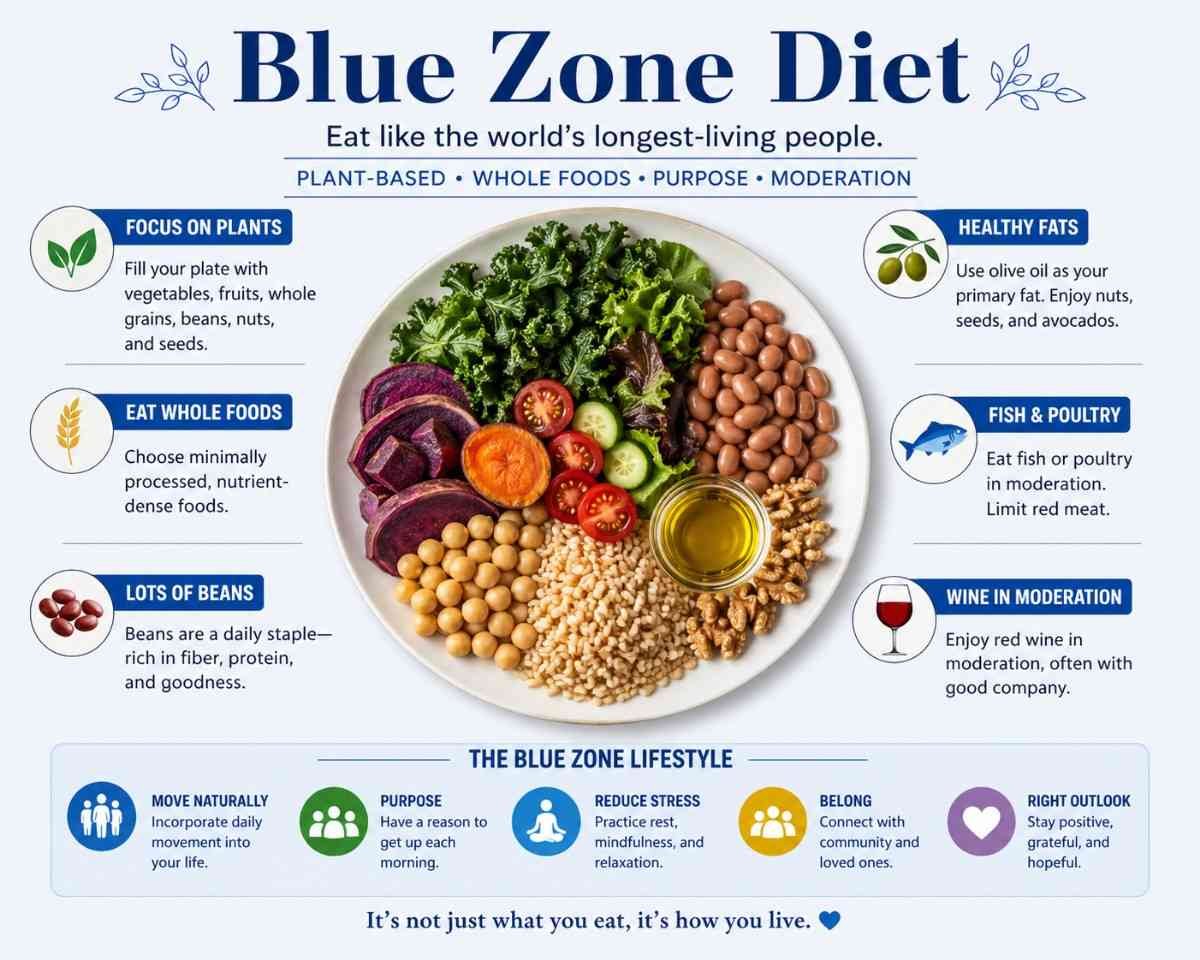
Core principles of the Blue Zone diet
1. Mostly plant-based
About 90–95% of the diet comes from plants:
- Vegetables, fruits, whole grains
- Beans and legumes (a major protein source)
- Nuts and seeds
Meat is eaten rarely, often just a few times per month.
2. Beans are the star
Beans (like lentils, chickpeas, black beans) are a staple in all Blue Zones. They provide:
- Protein
- Fiber
- Slow-digesting carbs
They’re often considered the foundation of the diet.
3. Healthy fats (especially olive oil)
Common fat sources include:
- Olive oil (especially in Mediterranean Blue Zones)
- Nuts
- Occasionally avocados
These fats support heart health.
4. Minimal processed foods and sugar
Highly processed foods, refined sugar, and artificial ingredients are rarely consumed. Most food is:
- Fresh
- Home-cooked
- Seasonal
5. Moderate portions & mindful eating
People tend to:
- Eat until they’re about 80% full (a concept from Okinawa called hara hachi bu)
- Avoid overeating
- Eat slowly and socially
6. Limited animal products
- Meat: small amounts, infrequently
- Fish: moderate in some regions
- Dairy: small amounts (often fermented, like cheese or yogurt)
7. Simple drinks
Typical beverages:
- Water
- Coffee or tea
- In some regions, moderate red wine
Sugary drinks are uncommon.
Key Principles of the Blue Zone Diet
1. 95% Plant-Based Eating
Most Blue Zone diets are heavily plant-based, including:
- Vegetables
- Fruits
- Whole grains
- Beans and legumes
- Nuts and seeds
Meat is consumed rarely—often just a few times per month.
2. Beans Are the Cornerstone
Beans are the #1 longevity food across all Blue Zones.
Examples:
- Lentils
- Chickpeas
- Black beans
- Soybeans
They are rich in protein, fiber, and essential nutrients.
3. Whole, Unprocessed Foods
Processed foods are almost nonexistent in Blue Zone regions.
Avoid:
- Packaged snacks
- Sugary drinks
- Fast food
Instead, focus on:
- Home-cooked meals
- Seasonal ingredients
4. Healthy Fats
Healthy fats are essential, especially:
- Olive oil
- Nuts
- Seeds
Olive oil is a staple in places like Ikaria and Sardinia.
5. Moderate Dairy & Animal Products
- Dairy: Small amounts (mainly goat or sheep milk)
- Fish: Occasionally
- Meat: Rarely
6. Natural Sugar Intake
Sugar consumption is very low.
- Desserts are occasional
- Honey may be used instead of refined sugar
Lifestyle Habits That Promote Longevity
Diet alone isn’t the full story. Blue Zone populations follow powerful lifestyle habits.
1. Move Naturally
No gyms—just daily movement:
- Walking
- Gardening
- Household chores
2. Purpose in Life
In Okinawa, it’s called “Ikigai”—a reason to wake up in the morning.
Having purpose reduces stress and increases lifespan.
3. Strong Social Connections
Family and community play a huge role.
- Regular gatherings
- Emotional support
- Shared meals
4. Stress Reduction
Daily stress-management habits include:
- Prayer
- Meditation
- Naps
- Time in nature
5. Moderate Eating (80% Rule)
In Okinawa, people follow:
“Hara Hachi Bu” – Eat until 80% full.
This helps prevent overeating and supports weight management.
Benefits of the Blue Zone Diet
The Blue Zone diet is widely associated with longevity, lower disease risk, and better overall well-being. These benefits come from a combination of nutrient-rich foods, simple eating habits, and a balanced lifestyle observed in regions studied by Dan Buettner.
1. Supports heart health
The diet is rich in:
- Fiber (from beans, vegetables, whole grains)
- Healthy fats (like olive oil and nuts)
These help:
- Lower bad cholesterol (LDL)
- Reduce blood pressure
- Decrease risk of heart disease
2. Promotes longer lifespan
People in Blue Zone regions—such as Okinawa and Sardinia—are known for high numbers of centenarians.
Why it helps:
- Nutrient-dense foods
- Low processed food intake
- Balanced calorie consumption
3. Helps maintain healthy weight
Key reasons:
- High-fiber foods keep you full longer
- Low calorie density (more volume, fewer calories)
- Mindful eating habits like hara hachi bu (eat until 80% full)
4. Boosts brain health
The diet includes:
- Antioxidants (fruits, vegetables)
- Healthy fats (nuts, olive oil)
These may:
- Reduce cognitive decline
- Lower risk of diseases like Alzheimer’s disease
5. Reduces risk of chronic diseases
This eating pattern is linked to lower risk of:
- Type 2 diabetes
- Cancer
- Obesity
Thanks to:
- Whole, unprocessed foods
- Balanced nutrients
- Lower sugar intake
6. Improves gut health
High fiber intake from beans and whole grains:
- Feeds beneficial gut bacteria
- Improves digestion
- Supports immunity
7. Enhances overall well-being
The benefits go beyond food:
- Social eating habits
- Lower stress lifestyle
- Strong community connections
Foods to Eat on the Blue Zone Diet
Daily Foods
- Leafy greens (spinach, kale)
- Beans and lentils
- Whole grains (brown rice, oats)
- Fruits
- Nuts
Weekly Foods
- Fish (2–3 times/week)
- Dairy (small portions)
Occasionally
- Meat
- Sweets
Foods to Avoid
- Processed foods
- Refined sugar
- Sugary beverages
- Processed meats
- Excess red meat
7-Day Blue Zone Diet Meal Plan
Day 1
- Breakfast: Oatmeal with fruits and nuts
- Lunch: Lentil soup + whole grain bread
- Dinner: Vegetable stir-fry with beans
Day 2
- Breakfast: Fruit smoothie
- Lunch: Chickpea salad
- Dinner: Grilled fish + vegetables
Day 3
- Breakfast: Whole grain toast + avocado
- Lunch: Bean stew
- Dinner: Vegetable pasta with olive oil
Day 4
- Breakfast: Yogurt with honey
- Lunch: Quinoa salad
- Dinner: Roasted vegetables + lentils
Day 5
- Breakfast: Smoothie bowl
- Lunch: Hummus + whole grain pita
- Dinner: Fish + greens
Day 6
- Breakfast: Oats + nuts
- Lunch: Black bean bowl
- Dinner: Vegetable soup
Day 7
- Breakfast: Fruit + nuts
- Lunch: Lentil salad
- Dinner: Plant-based stew
Blue Zone Diet vs Mediterranean Diet
| Feature | Blue Zone Diet | Mediterranean Diet |
|---|---|---|
| Focus | Longevity | Heart health |
| Meat | Rare | Moderate |
| Plants | Very high | High |
| Lifestyle | Core part | Secondary |
Scientific Perspective
Research shows that plant-based diets and healthy lifestyles are linked to:
- Longer lifespan
- Reduced disease risk
Studies from organizations like the Harvard T.H. Chan School of Public Health support these findings.
Tips to Start the Blue Zone Diet
1. Eat More Plants
Make vegetables the main part of your meals.
2. Replace Meat with Beans
Swap meat meals with legumes.
3. Cook at Home
Avoid processed foods.
4. Build Community
Eat with family and friends.
5. Stay Active Daily
Walk more, sit less.
Common Mistakes to Avoid
- Turning it into a strict diet
- Ignoring lifestyle factors
- Eating processed “plant-based” foods
- Overeating healthy foods
FAQs
1. Is the Blue Zone Diet vegetarian?
Mostly plant-based, but not strictly vegetarian.
2. Can I eat meat?
Yes, but rarely.
3. Is it good for weight loss?
Yes, due to whole, low-calorie foods.
4. Can beginners follow it easily?
Yes—it’s flexible and sustainable.
5. Does it require supplements?
Usually not, if diet is balanced.
6. Is it suitable for Indians?
Absolutely—many Indian diets already align with it.
7. How fast will I see results?
Energy and digestion improve within weeks.
Conclusion
The Blue Zone Diet is not about restriction—it’s about balance, simplicity, and sustainability. By focusing on plant-based foods, natural movement, strong relationships, and a sense of purpose, you can significantly improve your health and longevity.
Unlike fad diets, this approach is backed by real-world evidence from communities that have mastered the art of living long, fulfilling lives.
If you’re looking for a lifestyle—not just a diet—that supports long-term health, the Blue Zone Diet might be your best choice.
Also read :