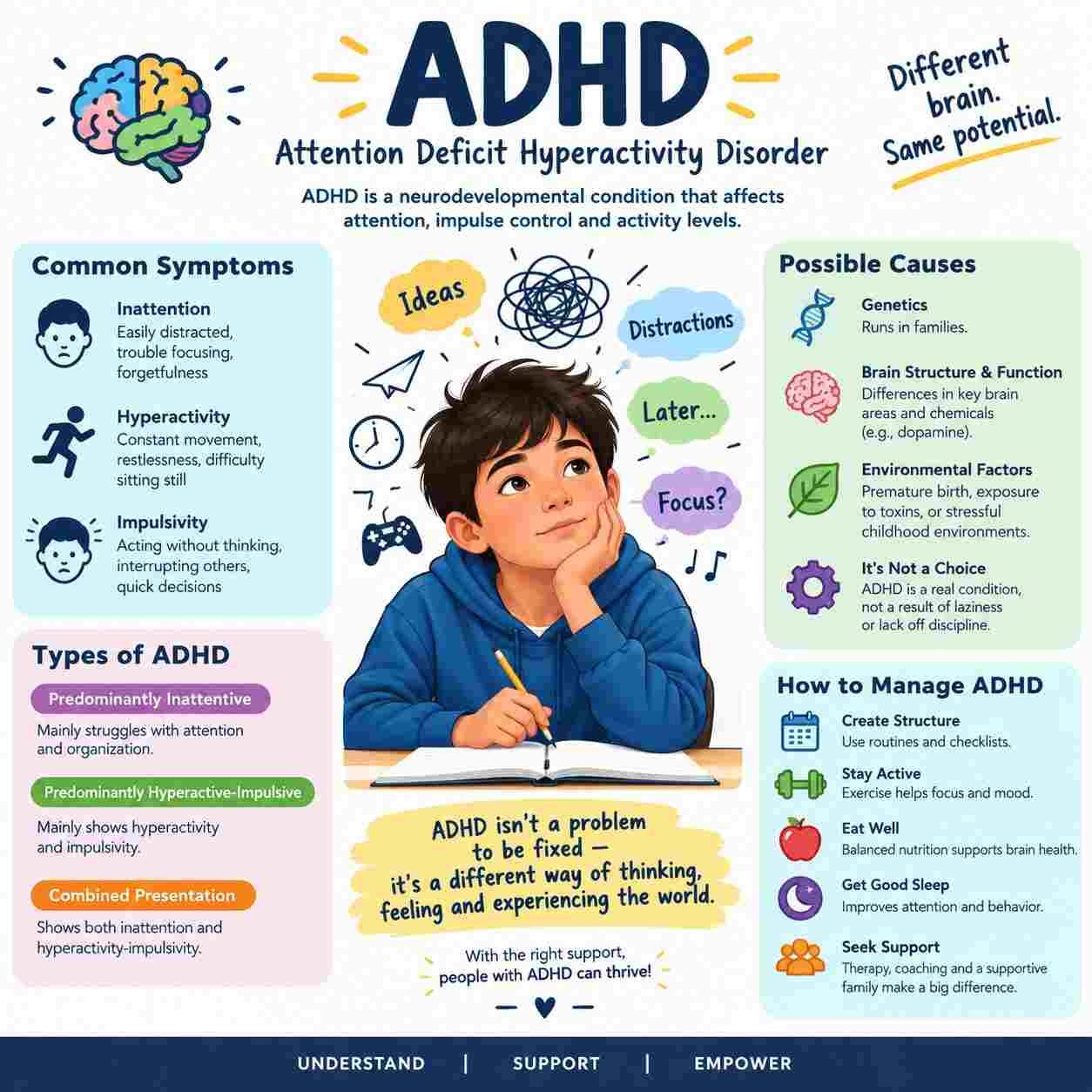
What Is ADHD?
Attention-deficit/hyperactivity disorder (ADHD) is a neurodevelopmental disorder associated with ongoing patterns of inattention, hyperactivity, and impulsivity. Symptoms begin during childhood and may continue into adolescence and adulthood.
ADHD is not simply a lack of discipline or an inability to pay attention. People with ADHD can experience challenges with attention, organization, impulse control, completing tasks, and managing everyday responsibilities.
At the same time, occasionally forgetting something, becoming distracted, or feeling restless does not automatically mean someone has ADHD. A diagnosis requires a professional evaluation that considers the person’s symptoms, history, and how those symptoms affect daily life.
Managing attention and everyday responsibilities often starts with building supportive daily routines. Getting enough quality sleep can also make a difference in how you feel and function during the day. If you want to improve your nighttime routine, explore Sleep Hygiene for practical sleep habits.
What Are the Main Symptoms of ADHD?
ADHD symptoms generally fall into two major groups: inattention and hyperactivity-impulsivity.
Some people mainly experience inattentive symptoms, while others have more hyperactive and impulsive symptoms. Some people experience both.
Symptoms of Inattention
A person experiencing significant inattentive symptoms may:
- Have difficulty paying attention to details
- Make careless mistakes
- Struggle to stay focused on lengthy tasks
- Have difficulty following through on instructions
- Find organization challenging
- Frequently lose important items
- Become easily distracted
- Forget everyday responsibilities
- Have difficulty listening during conversations
These difficulties can occur at school, at work, at home, or in other settings.
Symptoms of Hyperactivity and Impulsivity
Hyperactive or impulsive symptoms may include:
- Fidgeting or frequent movement
- Difficulty sitting still for long periods
- Feeling restless
- Talking excessively
- Interrupting conversations
- Difficulty waiting for a turn
- Acting quickly without considering the consequences
- Having difficulty participating quietly in some activities
Symptoms can look different from one person to another and can also change with age.
What Are the Three Types of ADHD?
ADHD is commonly described using three presentations.
1. Predominantly Inattentive Presentation
In this presentation, symptoms of inattention are more prominent.
Someone may struggle with organization, concentration, remembering responsibilities, completing tasks, or following conversations.
2. Predominantly Hyperactive-Impulsive Presentation
Here, hyperactive and impulsive symptoms are more prominent.
A person may experience restlessness, difficulty sitting still, interrupting others, or difficulty waiting.
3. Combined Presentation
A person has significant symptoms of both inattention and hyperactivity-impulsivity.
The presentation can change over time as symptoms and life circumstances change.
ADHD in Children
ADHD is often identified during childhood because symptoms can affect schoolwork, friendships, family life, and everyday activities.
Children with the condition may have difficulty:
- Staying focused during schoolwork
- Following multi-step instructions
- Waiting their turn
- Sitting still
- Remembering school materials
- Completing assignments
- Managing impulses
- Organizing their belongings
However, children naturally have periods when they are energetic, distracted, or forgetful.
For that reason, occasional behavior does not automatically indicate the condition. A healthcare professional evaluates whether symptoms are persistent, occur in more than one setting, and significantly interfere with functioning.
ADHD in Adults
ADHD can continue into adulthood, although symptoms may appear differently than they did during childhood.
Adults may struggle with:
- Staying organized
- Managing time
- Completing large projects
- Meeting deadlines
- Remembering appointments
- Maintaining attention during lengthy tasks
- Managing distractions
- Controlling impulsive behavior
- Keeping up with everyday responsibilities
Hyperactivity may become less obvious with age and can sometimes feel more like internal restlessness.
Adult the condition can affect work, relationships, finances, household responsibilities, and other areas of everyday life.
What Causes ADHD?
Researchers do not have one single explanation for the condition.
Genetic factors appear to play an important role, and researchers are also studying differences in brain development and other biological and environmental factors.
ADHD is not caused simply by being lazy, having poor discipline, or spending too much time on a phone.
Because the condition has multiple contributing factors, it is important to avoid simplistic explanations or claims that one food, habit, or lifestyle change causes or cures the condition.
How Is ADHD Diagnosed?
There is no single test that can diagnose ADHD.
Diagnosis is usually based on a detailed assessment by a qualified healthcare or mental-health professional.
An evaluation may involve:
- Discussing current symptoms
- Reviewing childhood history
- Looking at behavior in different settings
- Using standardized symptom questionnaires
- Discussing school or work difficulties
- Reviewing medical and mental-health history
- Considering other possible explanations for symptoms
Conditions such as sleep problems, anxiety, depression, and certain learning difficulties can produce symptoms that overlap with the condition.
This is why taking an online quiz alone is not enough to establish a diagnosis.
Can Adults Be Diagnosed With ADHD?
Yes.
Some people are diagnosed during childhood, while others are not recognized until adolescence or adulthood.
Adults seeking an the condition evaluation may be asked about childhood behavior, school experiences, work history, relationships, and current difficulties.
Because the condition symptoms begin during childhood, information about earlier life can be an important part of an adult assessment.
Regular physical activity is another important part of a healthy lifestyle. If walking is an activity you enjoy, 6-6-6 Walking Trend explores a simple walking routine designed to make daily movement more consistent.
How Is ADHD Treated?
ADHD can often be managed with appropriate treatment and support.
Treatment varies depending on the person’s age, symptoms, health history, circumstances, and preferences.
Possible approaches include:
Medication
Healthcare professionals may prescribe stimulant or non-stimulant medications for the condition.
Medication can help reduce symptoms for some people, but it should be taken only under appropriate medical supervision.
Behavioral Approaches
Behavioral strategies can help people develop practical systems for managing everyday challenges.
These may include organization techniques, routines, time-management strategies, and structured approaches to completing tasks.
Therapy
Psychotherapy or other behavioral interventions may help some people manage difficulties associated with the condition.
For children, parent-focused behavioral approaches and school-based support may also be part of treatment.
The best approach can differ from one person to another.
Everyday Habits That May Support ADHD Management
Healthy lifestyle habits do not cure the condition, but they can contribute to overall well-being and may make everyday symptom management easier.
1. Maintain a Consistent Sleep Schedule
Try to keep a regular sleep and wake routine.
Poor sleep can make concentration, mood, and daily functioning more difficult.
2. Stay Physically Active
Regular physical activity is beneficial for overall health.
Choose an activity that you enjoy and can maintain consistently, such as walking, cycling, swimming, dancing, or another form of exercise.
3. Create Simple Routines
Predictable routines can reduce the number of decisions you need to make throughout the day.
For example, keeping keys, medications, work materials, or other frequently used items in consistent locations may make them easier to find.
4. Break Large Tasks Into Smaller Steps
Large projects can feel overwhelming.
Instead of thinking about an entire project at once, divide it into smaller tasks and focus on completing one step at a time.
5. Use Reminders
Digital calendars, alarms, written lists, and visual reminders can help with appointments, deadlines, and daily responsibilities.
There is nothing wrong with using tools that make everyday organization easier.
6. Reduce Unnecessary Distractions
When you need to concentrate, consider turning off unnecessary notifications or creating a quieter workspace.
The goal is not to eliminate every distraction but to make important tasks easier to complete.
For people who feel overwhelmed by constant notifications and digital distractions, taking intentional breaks from technology can be useful. Our guide to Digital Detox Trends explores why reducing screen time has become an increasingly popular wellness habit.
ADHD Is More Than Being Easily Distracted
One common misconception is that everyone who gets distracted has the condition.
Most people occasionally lose focus, forget something, procrastinate, or feel restless.
ADHD involves a persistent pattern of symptoms that began during childhood and can significantly interfere with functioning.
This distinction is important because self-diagnosing based on a few relatable social-media posts or online checklists can lead to confusion.
If symptoms are persistent and affecting your daily life, a professional evaluation is a better next step.
ADHD and Emotional Well-Being
ADHD can affect more than concentration.
Ongoing difficulties with organization, deadlines, relationships, school, or work can sometimes contribute to frustration and stress.
Some people may also experience other mental-health or behavioral conditions alongside the condition.
If emotional or psychological difficulties are persistent, discussing them with a healthcare professional can help determine what type of support may be appropriate.
When Should You Talk to a Doctor?
Consider speaking with a healthcare professional if attention, impulsivity, restlessness, or organizational difficulties are persistent and interfere with important areas of life.
For children, parents or caregivers may want to speak with a pediatrician or another qualified healthcare professional if difficulties occur repeatedly at home, school, or with peers.
For adults, an evaluation may be appropriate when symptoms affect work, relationships, household responsibilities, or other areas of everyday functioning.
A professional can determine whether the condition or another condition may explain the symptoms.
FAQs
What does ADHD stand for?
ADHD stands for attention-deficit/hyperactivity disorder. It is a neurodevelopmental disorder involving persistent patterns of inattention, hyperactivity, and/or impulsivity.
Can ADHD go away?
ADHD symptoms can change over time, and some people experience fewer or different symptoms as they get older. However, the condition is not generally described as something that simply disappears. Appropriate treatment and support can help people manage symptoms and everyday challenges.
Can adults have ADHD?
Yes. the condition can continue into adulthood. Adults may experience difficulties with organization, attention, time management, impulsivity, restlessness, work responsibilities, and relationships.
Is ADHD a mental illness?
ADHD is classified as a neurodevelopmental disorder. It can affect mental, emotional, social, academic, and occupational functioning.
Can you diagnose ADHD with an online test?
Online questionnaires may help someone recognize symptoms worth discussing with a professional, but they cannot replace a clinical evaluation or establish an the condition diagnosis by themselves.
What are the main types of ADHD?
There are three presentations: predominantly inattentive, predominantly hyperactive-impulsive, and combined presentation.
Is ADHD caused by bad parenting?
No. ADHD is a complex neurodevelopmental condition, and research indicates that genetic and biological factors play important roles. Parenting style alone does not explain the condition.
Can lifestyle changes cure ADHD?
Healthy habits such as regular physical activity, adequate sleep, nutritious eating, and structured routines can support overall well-being, but they should not be presented as a cure for the condition. Evidence-based treatment should be discussed with a qualified healthcare professional.
Conclusion
ADHD is a common neurodevelopmental disorder that can affect children, teenagers, and adults. Its symptoms may involve inattention, hyperactivity, impulsivity, or a combination of these patterns.
Understanding ADHD is important because occasional forgetfulness or distraction is normal and does not automatically mean someone has the condition. A proper diagnosis requires a professional evaluation that considers symptoms, history, and their impact on daily life.
With appropriate treatment, practical strategies, and support, many people with ADHD can manage their symptoms and work toward their personal, educational, and professional goals.
If stress and mental overload are affecting your daily routine, gentle movement may also be worth exploring. Yoga for Anxiety: 10 Simple Poses for Everyday Stress introduces simple yoga practices that can be incorporated into a broader wellness routine.
Author
Written by Hitasha — Hitasha is a wellness and lifestyle writer at Trendyopedia, creating easy-to-understand, research-informed content on health, beauty, wellness, and everyday trends.
Disclaimer
This article is for general informational and educational purposes only. It is not intended to provide medical advice, diagnosis, or treatment. If you think you or your child may have ADHD, speak with a qualified healthcare professional for an appropriate evaluation and personalized guidance.