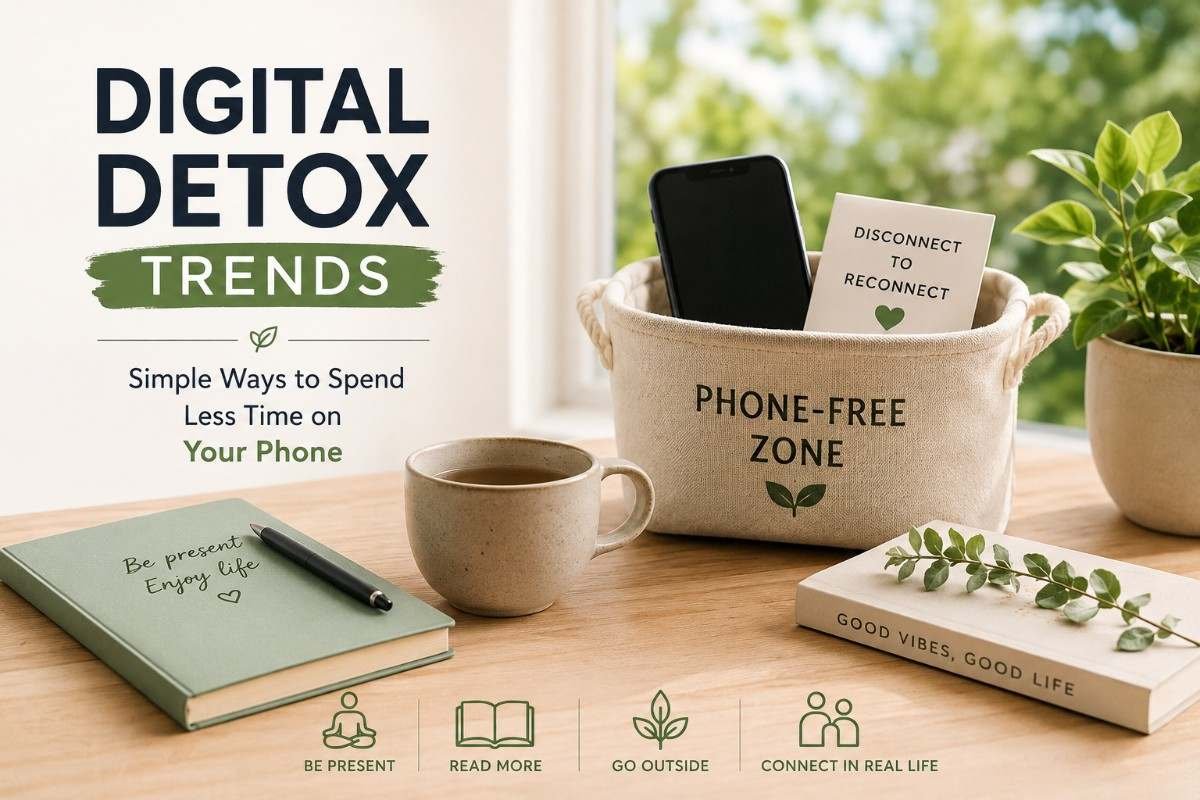
Digital Detox Trends: Your phone can be useful for almost everything—work, communication, entertainment, shopping, navigation, news and even fitness. But there is a growing problem: we often reach for our phones without even thinking about it.
A quick check can easily turn into 30 minutes of scrolling. One notification can interrupt a meal. Checking social media before bed can turn into staying awake much later than planned.
That’s why digital detox is becoming an increasingly popular lifestyle trend.
But digital detox doesn’t necessarily mean throwing your smartphone away or disappearing from the internet for a week. For most people, a more realistic approach is simply creating healthier boundaries around technology.
From phone-free mornings and screen-free meals to grayscale displays and app limits, today’s digital detox movement is less about completely disconnecting and more about using technology intentionally.
This shift toward slower living is also connected to the growing Silent Walking Trend, where people intentionally spend time walking without constant digital stimulation.
What Is a Digital Detox?
Digital Detox Trends: A digital detox is a period or routine where you intentionally reduce your use of digital devices, particularly smartphones, social media and other sources of constant notifications.
It can be as simple as:
- No phone during breakfast
- One hour without social media each evening
- Turning off unnecessary notifications
- Keeping your phone outside the bedroom
- Taking a phone-free walk
- Having one screen-free day each week
The goal isn’t to avoid technology completely.
The goal is to stop technology from controlling your attention.
Why Is Digital Detox Trending?
Digital Detox Trends: Smartphones are designed to make returning to apps easy. Notifications, endless feeds, short videos and recommendations can encourage repeated checking.
At the same time, people are increasingly interested in slower, more intentional lifestyles.
This has helped popularize trends such as:
- Digital detox
- Screen-free mornings
- Phone-free dinners
- Analog hobbies
- Offline weekends
- Reading instead of scrolling
- Walking without headphones
- No-phone bedrooms
- Social media breaks
- App-free evenings
The broader idea is simple:
Less digital noise, more real-world attention.
Signs You May Need a Digital Detox
Digital Detox Trends: You don’t have to spend an extreme amount of time online to benefit from better phone boundaries.
You may want to reconsider your habits if you:
Check your phone immediately after waking up
If your first action every morning is checking notifications or social media, your attention may be going toward other people’s content before you’ve had time to focus on your own day.
Pick up your phone automatically
Do you unlock your phone whenever you’re bored, waiting or uncomfortable?
Automatic checking is one reason reducing screen use can be difficult.
Scroll longer than planned
You may intend to watch a few videos but continue scrolling for much longer.
Use your phone during meals
Constant phone checking can make it harder to be fully present with the people around you.
Take your phone to bed
Using your phone late at night can make it easier to stay engaged with content instead of preparing for sleep.
Feel uncomfortable without your phone
Digital Detox Trends: If being away from your phone for a short period feels unusually difficult, it may be worth experimenting with intentional phone-free periods.
Constant phone use can also affect bedtime habits. Read our guide Sleep Deprivation in Gen Z to learn more about modern sleep challenges.
15 Digital Detox Trends to Try
Digital Detox Trends: You don’t need to try all of them. Start with one or two that fit your lifestyle.
1. The Phone-Free Morning
One of the simplest digital detox habits is delaying phone use after waking.
Instead of immediately checking social media:
- Get out of bed.
- Drink water.
- Open the curtains.
- Get ready for the day.
- Eat breakfast.
- Plan your priorities.
- Check your phone later.
Even a 30-minute phone-free morning can create a useful boundary.
2. Screen-Free Meals
Digital Detox Trends: Make meals a phone-free zone.
Put your phone away while eating and use the time to:
- Talk with family
- Enjoy your food
- Eat more mindfully
- Slow down
- Catch up with friends
This is one of the easiest digital detox habits because it doesn’t require changing your entire schedule.
3. The No-Phone Bedroom
Digital Detox Trends: Keeping your phone next to your pillow makes checking it incredibly easy.
Instead, try charging your phone somewhere away from your bed.
You can use a traditional alarm clock if necessary.
This simple change creates physical distance between you and your screen at bedtime.
For more sleep-related lifestyle ideas, check out Tea Before Bed: Good or Bad?.
4. Turn Off Non-Essential Notifications
Digital Detox Trends: Not every notification deserves your attention.
Consider disabling notifications from:
- Shopping apps
- Games
- Social media
- Promotional emails
- News apps
- Entertainment apps
Keep notifications for things that genuinely matter, such as calls, messages or important work alerts.
Fewer notifications = fewer interruptions.
5. Try Grayscale Mode
Digital Detox Trends: Colorful app icons and images can make your screen more visually appealing.
Switching your smartphone display to grayscale removes much of that visual stimulation.
It won’t magically eliminate phone addiction, but some people find the device less interesting when the screen is less visually engaging.
6. Create a Social Media Window
Digital Detox Trends: Instead of checking social media throughout the day, create specific times for it.
For example:
12:30 PM: 15 minutes
7:00 PM: 20 minutes
Outside those windows, avoid opening social media unless you have a specific reason.
This changes social media from an automatic habit into a planned activity.
7. Try an Analog Hobby
One of the most interesting parts of the digital detox movement is the return of analog hobbies.
Instead of spending your free time on a screen, try:
- Reading a physical book
- Journaling
- Drawing
- Painting
- Cooking
- Gardening
- Knitting
- Photography
- Puzzles
- Board games
- Playing a musical instrument
These activities give your brain something to do without requiring another screen.
8. Take a Phone-Free Walk
Digital Detox Trends: Walking is a great opportunity to disconnect.
Try leaving your phone at home for a short walk when it is safe and practical.
You can pay attention to:
- Your surroundings
- Sounds
- Weather
- Trees and buildings
- Your breathing
- Your thoughts
If you prefer to carry your phone for safety, simply keep it in your pocket and avoid checking it.
This connects with the growing interest in silent walking, where people walk without music, podcasts or constant digital stimulation.
9. Use App Limits
Most smartphones include screen-time or digital-wellbeing tools.
Set limits for apps that consume the most time.
For example:
- Instagram: 30 minutes
- TikTok: 30 minutes
- YouTube: 45 minutes
- Games: 30 minutes
The goal isn’t perfection.
A limit simply gives you a reminder when you’ve crossed the amount of time you planned to spend.
10. Delete Your Most Distracting App
Digital Detox Trends: Sometimes a small experiment works better than complicated rules.
Choose the app you open most frequently and remove it from your phone for seven days.
You can always reinstall it.
During the experiment, notice:
- How often you reach for your phone
- Whether you feel less distracted
- What you do instead
- Whether you actually miss the app
You may discover that you don’t need the app as much as you thought.
11. Try a Screen-Free Evening
Digital Detox Trends: Choose one hour before bedtime as a screen-free period.
For example:
9:00 PM–10:00 PM = no phone, television, tablet or laptop.
Use that hour for:
- Reading
- Stretching
- Journaling
- Preparing for tomorrow
- Talking with family
- Taking a shower
- Listening to relaxing music without scrolling
Make it a routine rather than an occasional challenge.
12. Replace Scrolling With Reading
Whenever you feel the urge to scroll, pick up a physical book instead.
Start with just 10 pages a day.
Reading provides a simple alternative when boredom normally leads to your phone.
You don’t need to read a difficult book. Choose something you genuinely enjoy.
If you want to replace scrolling with healthier lifestyle habits, explore our Bed Rotting article to understand another Gen Z lifestyle trend and how it differs from intentional rest.
13. Have a Phone-Free Sunday
Digital Detox Trends: If you’re comfortable with a bigger challenge, try a partial digital detox once a week.
You don’t necessarily need to turn your phone off completely.
Instead:
- Avoid social media
- Avoid unnecessary browsing
- Keep calls and essential messages available
- Spend more time outdoors
- Meet friends or family
- Cook
- Read
- Exercise
- Work on hobbies
This can become a weekly reset rather than an extreme detox.
14. Keep Your Phone Out of Reach
Digital Detox Trends: Here’s a surprisingly effective trick:
Don’t keep your phone within arm’s reach.
Put it:
- In another room
- Inside a drawer
- In your bag
- On a shelf
- Across the room while working
When your phone isn’t immediately available, checking it requires an extra step.
That tiny amount of friction can help interrupt automatic checking.
15. Try the 10-Minute Rule
Digital Detox Trends: When you want to check your phone without a specific reason, wait 10 minutes.
Ask yourself:
“What am I actually looking for?”
If you still need to use your phone after 10 minutes, use it intentionally.
Sometimes you’ll realize you didn’t actually need to check it.
Digital Detox Doesn’t Mean Quitting Your Phone
Digital Detox Trends: One common misconception is that a digital detox means completely avoiding smartphones.
That’s unrealistic for many people.
Phones are essential for:
- Work
- School
- Banking
- Travel
- Emergencies
- Communication
- Navigation
- Appointments
- Family responsibilities
The goal is therefore not necessarily less technology at all costs.
It’s better control over technology.
You can still use your phone every day while reducing unnecessary scrolling.
A Simple 7-Day Digital Detox Challenge
Digital Detox Trends: Want to try it without making your lifestyle complicated?
Follow this one-week challenge.
Day 1: Check Your Screen Time
Look at your phone’s screen-time report.
Don’t judge yourself. Simply identify which apps take most of your time.
Day 2: Remove Unnecessary Notifications
Turn off notifications that aren’t important.
Day 3: Phone-Free Meals
Keep your phone away during breakfast, lunch or dinner.
Day 4: No Phone for the First 30 Minutes
Start your morning without checking your phone.
Day 5: Take a Phone-Free Walk
Spend 20–30 minutes walking without checking your screen.
Day 6: One-Hour Screen-Free Evening
Choose one hour before bed without digital entertainment.
Day 7: Social Media Break
Take one day away from your most distracting social media platform.
At the end of the week, compare how you feel and decide which habits are worth keeping.
What Can You Do Instead of Scrolling?
Digital Detox Trends: The easiest way to reduce screen time is to replace the habit.
Instead of:
Scrolling → Read a few pages
Checking notifications → Take a short walk
Watching short videos → Journal
Refreshing social media → Call a friend
Phone in bed → Read a physical book
Boredom scrolling → Try a hobby
Scrolling during meals → Talk with someone
The goal isn’t simply to remove screen time.
Replace it with something you actually enjoy.
Is a Digital Detox Good for You?
Digital Detox Trends: Reducing unnecessary phone use can create more opportunities for sleep, physical activity, hobbies, face-to-face interaction and focused work.
However, the evidence around “digital detox” as a specific medical intervention is more complicated than social-media posts often suggest.
You don’t need to completely disconnect to benefit from healthier technology habits.
Instead, focus on practical behaviors such as:
- Reducing unnecessary notifications
- Creating phone-free periods
- Limiting distracting apps
- Protecting your bedtime routine
- Spending more time on offline activities
- Being intentional about when you use social media
Digital Detox vs. Digital Minimalism
Digital Detox Trends: These terms are related but not identical.
Digital Detox
A temporary or recurring break from digital devices or specific apps.
Example: No social media for seven days.
Digital Minimalism
A broader lifestyle philosophy focused on using technology only when it meaningfully supports your goals.
Example: Keeping only essential apps on your phone.
A digital detox can be a useful experiment, while digital minimalism is more of a long-term approach.
How to Make Your Digital Detox Sustainable
Digital Detox Trends: Extreme rules can be difficult to maintain.
Instead of saying:
“I’ll never use social media again.”
Try:
“I’ll use social media for 30 minutes after dinner.”
Instead of:
“I’ll never use my phone in the bedroom.”
Try:
“My phone charges outside my bedroom every night.”
Small, specific rules are easier to follow.
Make your environment work for you
You can also:
- Remove distracting apps from your home screen
- Log out of social media
- Turn on Do Not Disturb
- Use app timers
- Keep your phone away while working
- Buy an alarm clock
- Create phone-free areas at home
The less effort required to follow your rule, the more likely you are to stick with it.
FAQs
How long should a digital detox last?
There is no universal duration. You can start with 30 minutes, one evening, one day or a weekend. The best duration is one you can realistically maintain.
Does a digital detox mean no phone at all?
No. You can create a digital detox around specific activities, apps or times of day rather than completely avoiding your phone.
What is the easiest digital detox habit?
Turning off unnecessary notifications is one of the easiest places to start because it reduces interruptions without requiring you to stop using your phone.
Is screen time always bad?
No. Screen time can include productive activities such as work, education, communication and exercise. The more useful question is what you’re doing on the screen and whether it is interfering with other priorities.
What should I do instead of scrolling?
Try reading, walking, cooking, exercising, journaling, gardening, drawing, listening to music or spending time with friends and family.
Can I use my phone during a digital detox?
Absolutely. A realistic digital detox can focus on reducing unnecessary use rather than eliminating essential phone activities.
Conclusion
Digital Detox Trends: The digital detox trend isn’t really about hating smartphones.
It’s about taking back control of your attention.
You don’t need to delete every app, switch off your phone for a month or move to a remote cabin.
Start small.
Try a phone-free breakfast. Turn off unnecessary notifications. Keep your phone away from your bed. Take a walk without scrolling. Spend one evening doing something offline.
The goal isn’t to use technology less just for the sake of using it less.
The goal is to make more room for the things that matter when the screen is turned off.
Author
Hitasha is a health and lifestyle writer at Trendyopedia, covering wellness trends, nutrition, beauty, everyday habits and practical lifestyle ideas.
Disclaimer
This article is for general informational and educational purposes only. It is not medical or mental-health advice. If excessive technology use is significantly affecting your sleep, work, relationships or wellbeing, consider speaking with a qualified healthcare professional.
2 thoughts on “Digital Detox Trends: Simple Ways to Spend Less Time on Your Phone”