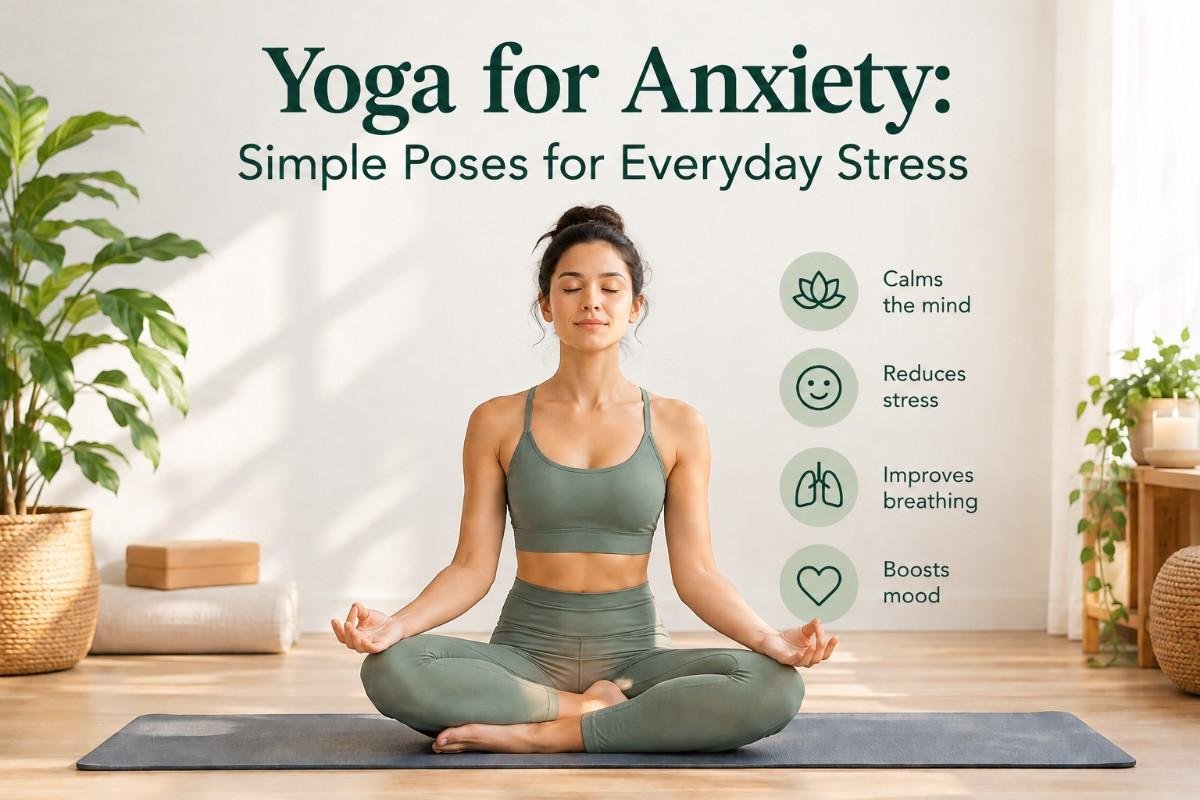
Feeling tense, overwhelmed, or mentally exhausted? Yoga for anxiety is becoming a popular way to add gentle movement, breathing, and relaxation to everyday routines.
Unlike intense workouts, yoga can be adapted to different fitness levels. Simple poses combined with slow breathing may help you create a calming pause during a stressful day.
In this guide, we’ll look at how yoga may support relaxation, beginner-friendly poses to try, and how to create a simple yoga routine for everyday stress.
Yoga combines gentle movement, breathing, and mindfulness. If you’re interested in another mind-body approach, Somatic Yoga is also gaining attention for its focus on body awareness and slow, intentional movement.
What Is Yoga for Anxiety?
Yoga for anxiety refers to using yoga practices such as gentle poses, controlled breathing, mindfulness, and relaxation to support emotional well-being.
Anxiety can involve feelings such as worry, nervousness, restlessness, and physical tension. Yoga does not replace professional treatment for an anxiety disorder, but it may be a useful complementary wellness practice for some people.
The goal isn’t to perform complicated poses. Instead, a yoga session can focus on:
- Slow, comfortable movement
- Relaxed breathing
- Body awareness
- Mindfulness
- Gentle stretching
- A few minutes of quiet relaxation
Can Yoga Help With Anxiety?
Yoga for Anxiety: Research suggests that yoga may have a beneficial effect on stress and anxiety symptoms, although results can vary from person to person.
One reason yoga may feel calming is that it combines physical movement with breathing and attention to the present moment. This can encourage you to slow down and become more aware of your body.
Regular physical activity in general is also associated with mental-health benefits.
However, yoga should be viewed as supportive rather than a cure for anxiety. People experiencing persistent or severe anxiety should consider speaking with a qualified healthcare professional.
10 Simple Yoga Poses for Anxiety
You don’t need an advanced yoga routine to get started. The following poses are generally gentle options that can be incorporated into a relaxation-focused practice.
1. Child’s Pose
Yoga for Anxiety: Child’s Pose is one of the most familiar restorative yoga positions.
To practice it:
- Kneel on a comfortable mat.
- Bring your hips toward your heels.
- Fold your upper body forward.
- Rest your forehead on the mat or a cushion.
- Let your arms relax.
- Take slow, comfortable breaths.
Stay for several breaths if the position feels comfortable.
This pose can be useful when you want to slow down and take a short break.
2. Cat-Cow Stretch
Yoga for Anxiety: Cat-Cow is a gentle movement that can help loosen the spine and encourage awareness of your breathing.
Start on your hands and knees.
As you inhale, gently lift your chest and tailbone. As you exhale, round your back and allow your head to relax naturally.
Move slowly instead of trying to stretch as far as possible.
3. Legs Up the Wall
Legs Up the Wall is a simple restorative position.
Sit sideways next to a wall and carefully bring your legs upward as you lie back.
Allow your arms to rest comfortably beside you.
You can stay in this position for a few minutes if it feels comfortable.
If you experience discomfort, dizziness, or pressure, come out of the pose.
4. Easy Seated Pose
A comfortable seated position can be enough for a short mindfulness practice.
Sit on a cushion or folded blanket if needed. Keep your spine comfortably upright and relax your shoulders.
Close your eyes if that feels comfortable.
Then take slow breaths and pay attention to how the breath feels moving in and out.
You don’t need to force your breathing to be deep. Comfortable, natural breathing is enough.
5. Standing Forward Fold
Standing Forward Fold can provide a gentle stretch while giving you an opportunity to slow your movements.
Stand with your feet comfortably apart.
Bend forward from the hips and allow your upper body to relax.
Keep your knees slightly bent if that feels better.
Don’t force yourself to touch your toes.
If you feel dizzy, come out of the pose slowly.
6. Mountain Pose
Mountain Pose looks simple, but it can be useful for practicing body awareness.
Stand comfortably with your feet grounded.
Relax your shoulders and let your arms rest naturally.
Take a few slow breaths while noticing your posture and the sensation of your feet touching the floor.
This makes it an easy pose to include in a short yoga for anxiety routine.
7. Seated Forward Fold
Sit with your legs extended or slightly bent.
Slowly lean forward from your hips without forcing the stretch.
You can keep your knees bent and place a cushion underneath them if needed.
Focus on relaxed breathing rather than how far you can reach.
8. Corpse Pose
Corpse Pose, or Savasana, is traditionally used toward the end of a yoga session.
Lie comfortably on your back with your arms relaxed.
Allow your legs to rest naturally.
Close your eyes and focus on your breathing.
Stay for a few minutes while allowing your body to become still.
For many people, this is one of the easiest ways to finish a calming yoga session.
9. Gentle Spinal Twist
A gentle seated or lying twist can add relaxed movement to your routine.
Keep the movement comfortable and avoid forcing your spine.
Move slowly and breathe naturally.
If you have a back or neck condition, ask a healthcare professional or qualified yoga instructor whether twisting movements are appropriate for you.
10. Butterfly Pose
Sit comfortably and bring the soles of your feet together.
Allow your knees to move outward naturally.
Hold your feet or ankles gently and sit comfortably.
There is no need to push your knees toward the floor.
Use the pose as an opportunity to relax and breathe.
A Simple 10-Minute Yoga for Anxiety Routine
You don’t need an hour-long class to create a calming routine.
Try this beginner-friendly sequence:
Minute 1: Easy seated breathing
Minutes 2–3: Cat-Cow
Minutes 4–5: Child’s Pose
Minutes 6–7: Mountain Pose and gentle forward fold
Minutes 8–9: Legs Up the Wall
Minute 10: Savasana
Move at a comfortable pace and stop if something hurts or makes you feel unwell.
The purpose is relaxation, not performance.
Yoga and Breathing for Stress
Breathing is an important part of many yoga practices.
When you’re stressed, you may notice that your breathing becomes faster or more shallow. Bringing gentle attention to your breath can help create a moment of calm.
Try this simple approach:
- Sit comfortably.
- Relax your shoulders.
- Breathe naturally through your nose if comfortable.
- Notice the inhale.
- Notice the exhale.
- Continue for one to two minutes.
Avoid holding your breath or forcing unusually deep breaths.
If breathing exercises make you feel uncomfortable or more anxious, return to normal breathing and stop the exercise.
Breathing and relaxation are also important parts of Yoga Nidra, a practice that has become popular as a calming and sleep-focused wellness routine.
When Is the Best Time to Practice Yoga for Anxiety?
There isn’t one perfect time.
You can choose a time that fits naturally into your schedule.
Morning
Morning yoga can provide gentle movement before a busy day begins.
If you prefer a morning wellness routine, you can combine gentle yoga with Morning Sunlight to create a simple start-of-day ritual.
During a Work Break
A few minutes of stretching can help break up long periods of sitting.
This can be particularly useful for people who spend much of their day at a desk.
Evening
Gentle yoga can become part of an evening wind-down routine.
You could combine it with other relaxing habits such as reading, reducing screen time, or taking a warm shower.
Before Bed
Relaxing poses such as Child’s Pose or Savasana may fit into a calming bedtime routine.
For another wellness approach, you can also explore [Yoga Nidra for Sleep] as a relaxation-focused practice.
How Often Should You Do Yoga for Anxiety?
Consistency may be more practical than long sessions.
Instead of trying to complete a one-hour yoga class every day, you might begin with 5–10 minutes several times a week.
As you become comfortable, you can gradually increase the duration.
The most useful routine is one that fits your lifestyle and that you can maintain comfortably.
Tips for Beginners
If you’re new to yoga, keep your routine simple.
Start Slowly
You don’t need to master difficult poses.
Start with comfortable movements and gradually build your practice.
Focus on Breathing
Try to coordinate gentle movement with relaxed breathing.
Don’t Compare Yourself
Yoga isn’t a competition.
Flexibility and balance differ from person to person.
Use Props
A cushion, folded blanket, yoga block, or strap can make certain positions more comfortable.
Listen to Your Body
Mild stretching can be normal, but sharp or significant pain is a reason to stop.
Yoga for Anxiety vs. Other Stress-Relief Practices
Yoga is only one option for managing everyday stress.
Some people combine yoga with:
- Walking
- Meditation
- Journaling
- Spending time outdoors
- Regular exercise
- Consistent sleep
- Breathing exercises
- Social connection
- Digital breaks
For example, walking yoga combines walking with mindful movement and can be another gentle way to stay active.
If you’re interested in newer wellness practices, you can also explore Somatic Yoga, which focuses on body awareness and slow, intentional movement.
Is Yoga a Treatment for Anxiety?
Yoga should not be considered a replacement for professional treatment.
If anxiety is persistent, severe, interfering with daily activities, affecting sleep, or making it difficult to function, talking with a qualified mental-health professional can be important.
Yoga may be used alongside professional care when appropriate.
People with injuries, medical conditions, pregnancy, or other physical limitations should ask an appropriate healthcare professional about modifications before beginning a new exercise routine.
FAQs
Can yoga reduce anxiety?
Yoga may help some people manage stress and anxiety symptoms, particularly when combined with breathing and mindfulness. However, its effects vary, and yoga should not be considered a cure for an anxiety disorder.
What is the best yoga pose for anxiety?
There isn’t one universally best pose. Child’s Pose, Savasana, Easy Seated Pose, and Legs Up the Wall are commonly used in gentle relaxation-focused practices.
How long should I do yoga for anxiety?
Beginners can start with 5–10 minutes and gradually increase the duration if comfortable. Consistency may be more realistic than trying to complete long sessions.
Can beginners do yoga for anxiety?
Yes. A beginner can start with simple poses, gentle stretches, and comfortable breathing exercises. You don’t need advanced flexibility or experience.
Can yoga help with stress and anxiety at night?
Gentle yoga may be incorporated into an evening relaxation routine. Slow movements and relaxation poses can provide a calming transition toward bedtime.
Should I do yoga every day for anxiety?
You don’t necessarily need to practice every day. A regular routine that fits your schedule can be a practical starting point.
Conclusion
Yoga for anxiety can be a simple way to introduce gentle movement, breathing, and mindfulness into your day. You don’t need an advanced yoga class or complicated poses. Even a few minutes of comfortable movement can create an intentional pause during a busy day.
Start with simple poses such as Child’s Pose, Cat-Cow, Mountain Pose, and Savasana. Keep your breathing comfortable, avoid forcing stretches, and focus on consistency rather than perfection.
Yoga can be one part of a broader approach to well-being. If anxiety is persistent or significantly affecting your everyday life, consider seeking support from a qualified healthcare professional.
Yoga can be one part of a broader wellness routine. Practices such as Yoga Snacking and Walking Yoga can also provide simple ways to incorporate mindfulness and relaxation into your day.
Author
Hitasha is a wellness and lifestyle writer at Trendyopedia, creating easy-to-understand, research-informed content about health trends, fitness, nutrition, beauty, and everyday well-being.
Disclaimer
This article is for general informational and educational purposes only. It is not medical advice and does not replace consultation with a qualified healthcare professional. Stop any exercise that causes pain, dizziness, or discomfort and seek professional guidance when appropriate.
Sources & References