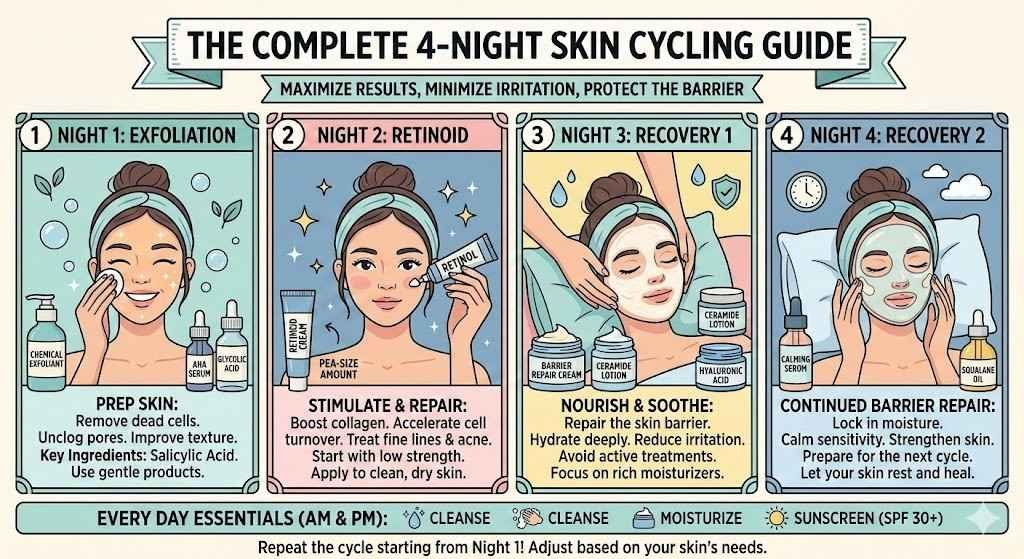
Skincare trends come and go, but every so often a routine emerges that actually simplifies skincare while delivering real results. One such trend that has taken the beauty world by storm is Skin Cycling. Popularized by dermatologists and skincare experts, skin cycling is a structured routine that alternates active ingredients and recovery days to maximize benefits while minimizing irritation.
Instead of using powerful ingredients every night and risking redness, dryness, or breakouts, skin cycling allows your skin to repair, recover, and rejuvenate.
In this comprehensive guide, you will learn:
- What skin cycling is
- How skin cycling works
- A step-by-step skin cycling routine
- The benefits of skin cycling
- Who should try skin cycling
- Common mistakes to avoid
- Tips to customize the routine for your skin type
Let’s dive in.
What is Skin Cycling?
Skin cycling is a 4-night rotating skincare routine that balances exfoliation, retinoid treatment, and recovery nights.
Instead of layering multiple strong skincare products every night, the routine strategically schedules them across several days so the skin has time to heal and rebuild its barrier.
A typical skin cycling routine looks like this:
Night 1 — Exfoliation Night
Night 2 — Retinoid Night
Night 3 — Recovery Night
Night 4 — Recovery Night
After the fourth night, the cycle repeats.
This method helps improve skin texture, reduce acne, minimize fine lines, and enhance overall skin health without overwhelming the skin.
Why Skin Cycling Works
Many people unknowingly damage their skin barrier by overusing active ingredients like retinol, AHAs, BHAs, and exfoliating acids.
While these ingredients are powerful and effective, using them too frequently can lead to:
- Skin irritation
- Redness
- Peeling
- Breakouts
- Increased sensitivity
Skin cycling solves this problem by giving the skin scheduled recovery time.
This allows the skin barrier to repair itself while still benefiting from active ingredients.
Think of it like a workout routine for your skin. Muscles grow stronger when they get rest between workouts. Similarly, your skin improves when it has time to recover between treatments.
The 4-Night Skin Cycling Routine
Here’s the standard routine recommended by dermatologists.
Night 1: Exfoliation Night
The first night of skin cycling focuses on removing dead skin cells.
Exfoliation improves skin texture, unclogs pores, and helps other skincare products penetrate better.
Best Exfoliating Ingredients
Chemical exfoliants are generally preferred over harsh scrubs.
Popular options include:
Alpha Hydroxy Acids (AHAs)
- Glycolic acid
- Lactic acid
Beta Hydroxy Acid (BHA)
- Salicylic acid
Polyhydroxy Acids (PHAs)
- Gentle exfoliants for sensitive skin
Step-by-Step Routine
- Gentle cleanser
- Chemical exfoliant
- Hydrating serum (optional)
- Moisturizer
Tips
- Avoid combining multiple exfoliants
- Do not use retinol on this night
- Use sunscreen the next day
Night 2: Retinoid Night
Retinoids are considered the gold standard ingredient in skincare.
They promote cell turnover, reduce wrinkles, fight acne, and improve skin tone.
Types of Retinoids
- Retinol
- Retinaldehyde
- Adapalene
- Prescription tretinoin
Benefits of Retinoids
- Reduces fine lines and wrinkles
- Fights acne
- Improves skin texture
- Boosts collagen production
- Helps fade dark spots
Step-by-Step Routine
- Gentle cleanser
- Moisturizer (optional buffering layer)
- Retinoid treatment
- Moisturizer
Pro Tip
Use the sandwich method:
Moisturizer → Retinoid → Moisturizer
This reduces irritation for beginners.
Night 3: Recovery Night
After using active ingredients, your skin needs time to repair itself.
Recovery nights focus on hydration and strengthening the skin barrier.
Ingredients to Use
Look for soothing and nourishing ingredients such as:
- Ceramides
- Hyaluronic acid
- Glycerin
- Niacinamide
- Panthenol
- Peptides
Step-by-Step Routine
- Gentle cleanser
- Hydrating serum
- Barrier repair moisturizer
- Facial oil (optional)
Night 4: Recovery Night
The second recovery night continues to repair and replenish the skin.
Hydration and barrier support are the main focus.
Optional Treatments
You can include gentle products such as:
- Sheet masks
- Hydrating masks
- Centella asiatica products
- Peptide serums
The goal is to soothe the skin before restarting the cycle.
Morning Routine During Skin Cycling
Your morning routine should remain simple and protective.
Recommended Routine
- Gentle cleanser
- Antioxidant serum (Vitamin C)
- Moisturizer
- Broad-spectrum sunscreen (SPF 30 or higher)
Sunscreen is especially important because exfoliants and retinoids make skin more sensitive to sunlight.
Benefits of Skin Cycling
Skin cycling offers many advantages compared to traditional skincare routines.
1. Reduces Skin Irritation
Overusing active ingredients often causes redness and peeling.
Skin cycling minimizes this by spacing out treatments.
2. Strengthens the Skin Barrier
Recovery nights allow the skin to repair its protective barrier.
A healthy skin barrier means:
- Less dryness
- Fewer breakouts
- Reduced sensitivity
3. Improves Product Effectiveness
When skin is not irritated or inflamed, active ingredients work better.
This results in clearer, smoother skin.
4. Simplifies Skincare
Many people use 10–12 products daily, which can overwhelm the skin.
Skin cycling simplifies your routine into structured steps.
5. Suitable for Beginners
People new to retinoids or exfoliating acids can start slowly with skin cycling.
It reduces the risk of irritation while allowing the skin to adapt.
Who Should Try Skin Cycling?
Skin cycling can benefit many skin types.
Ideal for:
- People with sensitive skin
- Beginners using retinol
- Acne-prone skin
- Aging skin
- People experiencing product irritation
However, it may need adjustment for certain skin types.
Skin Cycling for Different Skin Types
Oily Skin
Oily skin can sometimes tolerate stronger ingredients.
Adjustments may include:
- Using salicylic acid exfoliant
- Reducing recovery nights if skin tolerates actives
Dry Skin
Dry skin requires extra hydration.
Tips:
- Use gentle exfoliants like lactic acid
- Choose rich moisturizers
- Focus on barrier repair ingredients
Sensitive Skin
Sensitive skin benefits the most from skin cycling.
Recommendations:
- Use PHAs instead of strong acids
- Start with mild retinol
- Add extra recovery nights if needed
Acne-Prone Skin
Skin cycling can help control acne by balancing exfoliation and retinoids.
Best ingredients include:
- Salicylic acid
- Adapalene
- Niacinamide
How Long Does Skin Cycling Take to Work?
Skincare results take time and consistency.
Typical timeline:
1–2 weeks: Skin adjusts to the routine
4–6 weeks: Improved texture and fewer breakouts
8–12 weeks: Visible improvement in tone and fine lines
Patience is key.
Common Skin Cycling Mistakes
Even though skin cycling is simple, mistakes can still happen.
1. Over-Exfoliating
Using multiple exfoliating acids on exfoliation night can damage the skin barrier.
Stick to one exfoliant only.
2. Skipping Recovery Nights
Recovery nights are essential.
Without them, the skin may become irritated.
3. Using Too Many Actives
Combining vitamin C, exfoliating acids, retinol, and other strong ingredients can overwhelm the skin.
Keep the routine simple.
4. Not Wearing Sunscreen
Active ingredients make skin more sensitive to UV damage.
Daily sunscreen is non-negotiable.
5. Expecting Instant Results
Skin cycling improves skin gradually. Consistency matters more than speed.
Advanced Skin Cycling Routine
Once your skin adapts, you can modify the routine.
Example:
Night 1: Exfoliation
Night 2: Retinoid
Night 3: Retinoid
Night 4: Recovery
However, this should only be done if your skin tolerates retinoids well.
Best Ingredients for Skin Cycling
Here are some commonly used skincare ingredients for each phase.
| Routine Night | Recommended Ingredients |
|---|---|
| Exfoliation | Glycolic acid, lactic acid, salicylic acid |
| Retinoid | Retinol, adapalene, retinal |
| Recovery | Ceramides, peptides, hyaluronic acid |
Skin Cycling vs Traditional Skincare
| Skin Cycling | Traditional Routine |
|---|---|
| Structured routine | Random product use |
| Built-in recovery days | Often no recovery time |
| Lower irritation risk | Higher irritation risk |
| Beginner-friendly | Can overwhelm skin |
Can You Use Skin Cycling with Other Treatments?
Yes, but carefully.
Vitamin C
Best used in the morning.
Niacinamide
Safe on most nights, especially recovery nights.
Hyaluronic Acid
Works well on every night.
Benzoyl Peroxide
Use cautiously with retinoids.
Tips for Successful Skin Cycling
Follow these tips for best results:
✔ Start slowly
✔ Choose gentle formulations
✔ Patch test new products
✔ Keep your routine simple
✔ Be consistent
✔ Protect your skin with sunscreen
Is Skin Cycling Just a Trend?
Although skin cycling became popular on social media, dermatologists have recommended similar routines for years.
The difference is that now the concept has a simple, easy-to-follow structure that anyone can adopt.
It encourages balanced skincare instead of product overload, which makes it more sustainable long-term.
Final Thoughts
Skin cycling is one of the most effective and beginner-friendly skincare routines available today.
By alternating between exfoliation, retinoids, and recovery, the method helps maximize skincare benefits while protecting the skin barrier.
Whether you struggle with acne, sensitivity, or early signs of aging, skin cycling offers a balanced approach to healthier skin.
Consistency is the key to success. With patience and the right products, skin cycling can transform your skincare routine and help you achieve smoother, clearer, and more radiant skin.
FAQs
1.What is the main purpose of skin cycling?
The main purpose of skin cycling is to balance the use of active skincare ingredients like exfoliating acids and retinoids while allowing time for the skin to recover. This helps improve skin texture, reduce irritation, and strengthen the skin barrier.
2.Is skin cycling suitable for sensitive skin?
Yes, skin cycling is often recommended for sensitive skin because it includes recovery nights that allow the skin barrier to repair. Using gentle exfoliants and mild retinoids can make the routine even more suitable.
3.Can I do skin cycling every week?
Yes, skin cycling is designed to be repeated continuously. The four-night cycle can be followed every week as part of your regular skincare routine.
4.Can beginners start skin cycling?
Yes, skin cycling is beginner-friendly because it introduces active ingredients slowly. The recovery nights help reduce irritation and allow the skin to adapt gradually.
5.Do I need a retinol product for skin cycling?
Most skin cycling routines include a retinoid night, but if your skin is extremely sensitive, you can start with gentle alternatives or skip retinoids initially.
6.Can I use moisturizer on every night of skin cycling?
Yes, moisturizer should be used every night during skin cycling. It helps maintain hydration, supports the skin barrier, and prevents irritation from active ingredients.
7.Is sunscreen necessary during skin cycling?
Yes, sunscreen is essential during skin cycling. Exfoliating acids and retinoids increase skin sensitivity to the sun, so using SPF 30 or higher daily is very important.
8.Can skin cycling help with acne?
Yes, skin cycling can help reduce acne by incorporating exfoliation and retinoids while giving the skin enough recovery time to heal and avoid irritation.
9.How long should I follow a skin cycling routine?
You can follow skin cycling long-term. Many people use it as their regular skincare routine because it helps maintain healthy skin without overusing active ingredients.
10.Can I add serums during skin cycling?
Yes, gentle serums like hyaluronic acid, niacinamide, or peptide serums can be used, especially on recovery nights to boost hydration and support skin repair.
Also read :