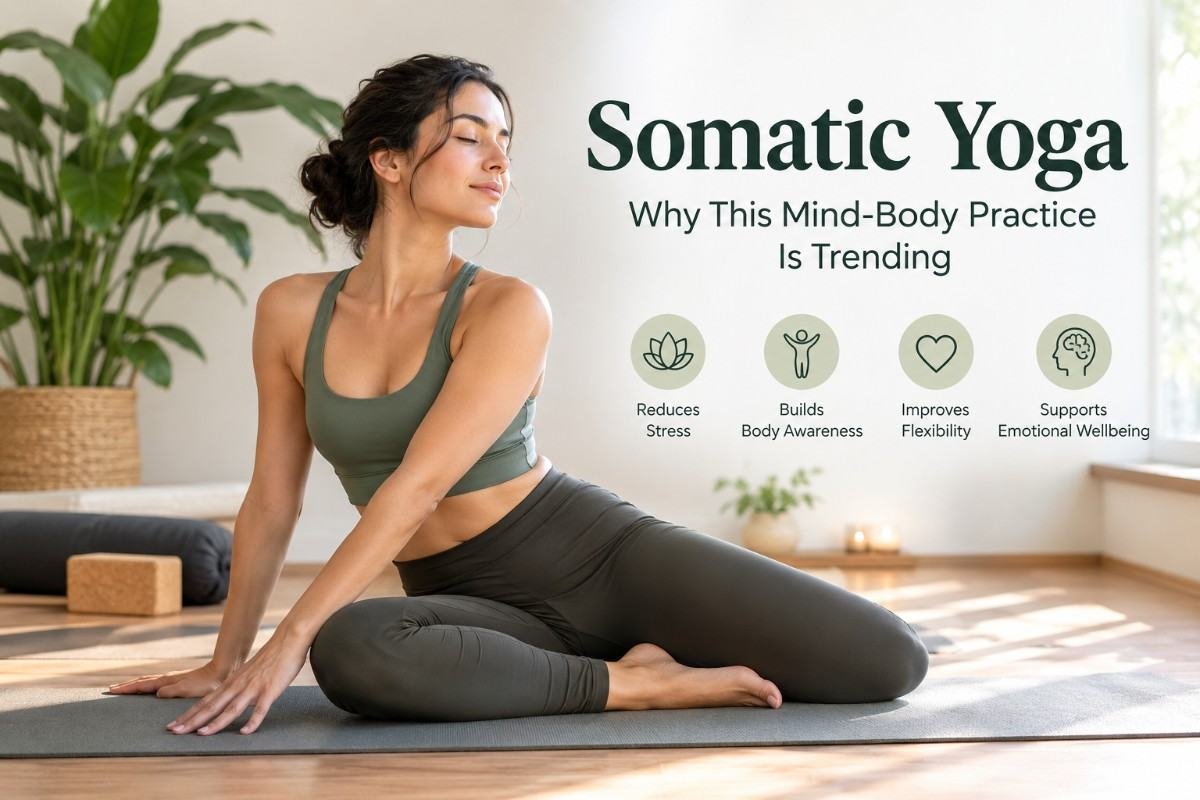
Somatic yoga is becoming a popular mind-body wellness practice for people looking for a gentler way to move, relax, and reconnect with their bodies. Unlike fitness routines that focus mainly on strength, calories, or performance, somatic yoga emphasizes body awareness, slow movements, breathing, and noticing how your body feels.
The growing interest in stress management, mindful movement, mobility, and nervous-system-friendly wellness practices has helped bring somatic yoga into the spotlight. But what exactly is somatic yoga, and why are so many people interested in it?
The rise of gentle movement practices also connects with other accessible wellness activities, such as Walking Yoga, which combines walking with mindful movement.
What Is Somatic Yoga?
Somatic yoga combines principles of somatic movement with yoga-inspired poses, breathing, and mindful body awareness.
The word somatic relates to the body as experienced from within. Instead of simply thinking about how a pose looks from the outside, somatic practices encourage you to pay attention to sensations such as tension, ease, breathing, balance, and movement.
A typical somatic yoga session may involve:
- Slow and controlled movements
- Gentle stretching
- Comfortable yoga poses
- Breath awareness
- Body scanning
- Relaxation
- Mindful transitions between movements
The goal isn’t necessarily to push your body into a deeper stretch. Instead, the focus is on moving with awareness and learning to notice your body’s signals.
Why Is Somatic Yoga Trending?
Several wellness trends are moving away from intense, performance-focused workouts toward practices that support overall well-being.
People are increasingly interested in mobility, recovery, stress management, mindfulness, and sustainable exercise. Somatic yoga fits naturally into this shift.
Social media has also helped introduce people to slow movement practices. Short videos showing gentle exercises, stretching routines, breathing techniques, and relaxing yoga flows can make somatic-style movement appear accessible even to beginners.
Another reason for its popularity is convenience. Somatic yoga doesn’t necessarily require a gym, expensive equipment, or a long workout. Many movements can be performed on a yoga mat or even in a small space at home.
This shift toward simpler, more accessible exercise can also be seen in the popularity of at-home walking workouts. The Walking Pad Trend shows how people are finding convenient ways to stay active without relying on a traditional gym.
How Does Somatic Yoga Work?
Somatic yoga encourages you to slow down and become more aware of movement.
For example, instead of quickly moving into a stretch and holding it, you might gradually move through a comfortable range of motion while paying attention to how different areas of your body feel.
You may notice:
- Where you are holding tension
- Whether one side feels different from the other
- How your breathing changes during movement
- Which positions feel comfortable
- Where you feel stiffness or restricted movement
This makes somatic yoga less about achieving a perfect pose and more about developing a stronger connection between movement, attention, and bodily sensations.
Potential Benefits of Somatic Yoga
Somatic yoga is still an evolving area of wellness, and it should not be presented as a cure for medical conditions. However, gentle mindful movement can offer several potential benefits as part of a healthy lifestyle.
1. Encourages Body Awareness
One of the main ideas behind somatic yoga is paying attention to how your body feels.
Instead of automatically moving through a routine, you become more aware of your posture, breathing, tension, and movement patterns.
This increased awareness can help you recognize when your body needs rest or when a movement feels uncomfortable.
2. Supports Relaxation
Slow movement and intentional breathing can create a calming exercise experience.
For people who find high-intensity workouts overwhelming, a slower yoga routine may feel more approachable and relaxing.
Somatic yoga can therefore fit well into a broader stress-management routine that includes adequate sleep, regular physical activity, relaxation, and healthy daily habits.
3. May Support Flexibility and Mobility
Gentle movement can help you regularly move your joints and muscles through comfortable ranges of motion.
Unlike flexibility-focused routines that emphasize getting deeper into a stretch, somatic yoga generally prioritizes controlled and comfortable movement.
This makes it particularly interesting for people who want to add more mobility work to their daily routine.
4. Encourages Mindful Movement
Many traditional workouts encourage people to count repetitions, track calories, or chase performance goals.
Somatic yoga takes a different approach.
You are encouraged to notice the movement itself.
That can make the practice feel more mindful and less focused on external results.
5. Can Be Beginner-Friendly
Somatic yoga can be adapted to different experience levels.
Beginners can start with simple movements and gradually become more comfortable with body awareness.
You don’t need to be able to perform advanced yoga poses to explore mindful movement.
Somatic Yoga vs. Traditional Yoga
Somatic yoga and traditional yoga can overlap, but they aren’t exactly the same.
Traditional yoga can include physical postures, breathing practices, meditation, and philosophical teachings. Different yoga traditions also have very different approaches.
Somatic yoga places particularly strong emphasis on internal body awareness and how movement feels.
For example, a traditional yoga class might guide you through a sequence of poses. A somatic-focused class may spend more time exploring slow movements, sensations, breathing, and comfortable ranges of motion.
Neither approach is necessarily better. The right choice depends on your goals and preferences.
Somatic Yoga vs. Stretching
Somatic yoga may look similar to stretching, but the intention can be different.
Traditional stretching often focuses on lengthening a muscle or improving flexibility.
Somatic movement focuses more heavily on awareness and control.
Instead of forcing a stretch, you might slowly move into and out of a position while noticing sensations.
This can make the practice feel less like a flexibility challenge and more like an exploration of movement.
A Simple Beginner Somatic Yoga Routine
If you are new to somatic yoga, start slowly. The following routine can be used as a gentle introduction.
Step 1: Comfortable Breathing
Sit or lie comfortably.
Take several slow breaths and notice how your chest, abdomen, and ribs move.
Don’t force your breathing. Simply observe it.
Step 2: Gentle Shoulder Movements
Slowly lift your shoulders toward your ears and then allow them to relax.
Repeat several times.
Pay attention to the difference between tension and relaxation.
Step 3: Slow Pelvic Tilts
Lie on your back with your knees bent and feet comfortably on the floor.
Gently tilt your pelvis one way and then return to a neutral position.
Move slowly rather than trying to create a large movement.
Step 4: Gentle Spinal Movement
Move your spine gradually through a comfortable range.
You can try gentle cat-cow movements if they feel comfortable.
Focus on the sensation of your spine moving rather than how the pose looks.
Step 5: Body Scan
Finish by lying or sitting comfortably.
Bring your attention slowly from your feet toward your head.
Notice areas that feel relaxed, tense, warm, heavy, or simply neutral.
You don’t need to change every sensation. Just notice it.
Can You Do Somatic Yoga at Home?
Yes. One reason somatic yoga has attracted attention is that many basic movements can be practiced at home.
You generally don’t need complicated equipment.
A yoga mat can provide a comfortable surface, while loose clothing can make movement easier. Some people also use cushions or blankets for support.
If you’re following an online class, choose an instructor who explains movements clearly and encourages you to work within a comfortable range.
Is Somatic Yoga Good for Stress?
Somatic yoga may be a useful addition to a stress-management routine because it combines gentle movement with attention and breathing.
However, it’s important not to treat somatic yoga as a guaranteed treatment for anxiety, trauma, or other mental-health conditions.
If stress is persistent or interfering with daily life, professional support may be more appropriate.
For everyday wellness, somatic yoga can be one option alongside healthy sleep habits, regular exercise, social connection, relaxation, and other strategies.
Is Somatic Yoga Good for Beginners?
Somatic yoga can be especially appealing to beginners because many movements are slow and adaptable.
You don’t need advanced flexibility or previous yoga experience.
The key is to avoid treating the practice like a competition.
Start with comfortable movements and stop if something causes pain, dizziness, or unusual discomfort.
People with injuries, significant mobility limitations, or medical conditions should consider asking a qualified healthcare professional or physical therapist whether particular movements are appropriate for them.
How Often Should You Practice Somatic Yoga?
There isn’t one perfect schedule.
A beginner might start with 5 to 15 minutes several times per week and increase gradually if the practice feels comfortable.
Some people may prefer a short routine in the morning, while others may enjoy gentle movement in the evening.
Consistency matters more than making every session long.
Why Somatic Yoga Fits the New Wellness Culture
Modern wellness is increasingly moving toward the idea that exercise doesn’t always need to be intense to be valuable.
Walking, mobility exercises, restorative practices, stretching, breathwork, and mindful movement have all become popular because they can fit into everyday life.
This yoga fits this philosophy particularly well.
Instead of asking, “How hard can I push myself?”, the practice encourages a different question:
“How does my body feel while I move?”
That simple shift can make movement feel more sustainable and approachable.
Conclusion
Somatic yoga is trending because it offers a slower, more body-aware approach to movement. It combines gentle yoga-inspired exercises with attention to breathing, sensations, relaxation, and controlled movement.
It isn’t about performing the most advanced pose or completing the hardest workout. For many people, the appeal is precisely the opposite: slowing down and paying attention.
If you’re interested in trying it, start with a short beginner routine and focus on comfortable, pain-free movement. This yoga can be a useful part of a balanced wellness routine, especially when combined with regular physical activity, adequate sleep, nutritious food, and healthy stress-management habits.
If you prefer gentle forms of daily movement, you can also explore the 6-6-6 Walking Trend, another simple approach that focuses on making regular walking part of a wellness routine.
FAQs
What is somatic yoga?
Somatic yoga is a mindful movement practice that combines yoga-inspired movements with body awareness, breathing, and slow, controlled motion.
Is somatic yoga the same as regular yoga?
Not exactly. Somatic yoga overlaps with yoga but places particular emphasis on internal body sensations, awareness, and gentle movement.
Can beginners do somatic yoga?
Yes. Many this yoga movements are gentle and can be adapted for beginners. You don’t need advanced flexibility or previous yoga experience.
Can I do somatic yoga at home?
Yes. Many basic practices can be performed at home with a comfortable surface and enough space to move safely.
How long should a somatic yoga session be?
Beginners can start with around 5–15 minutes and gradually increase the duration according to comfort and preference.
Is somatic yoga good for flexibility?
Gentle, regular movement may support mobility and flexibility, but somatic yoga focuses more on awareness and comfortable movement than on achieving deep stretches.
Can somatic yoga help with stress?
It may support relaxation and mindful awareness, but it should not be considered a medical treatment for chronic stress, anxiety, or other mental-health conditions.
Is somatic yoga better than traditional yoga?
Neither is universally better. thiis yoga may appeal to people who prefer slow, sensation-focused movement, while traditional yoga offers many different styles and practices.
Can I do somatic yoga every day?
Some people may comfortably practice gentle somatic movement daily, while others may prefer several sessions per week. Listen to your body and avoid movements that cause pain.
About the Author
Hitasha is a wellness and lifestyle writer at Trendyopedia, creating easy-to-understand, research-informed content about health trends, fitness, beauty, nutrition, and everyday wellness. Her goal is to make trending wellness topics practical, useful, and accessible for readers.
Disclaimer: This article is for general informational and educational purposes only and is not medical advice. Always consult a qualified healthcare professional before starting a new exercise or wellness routine, especially if you have an injury or medical condition.
Sources & References