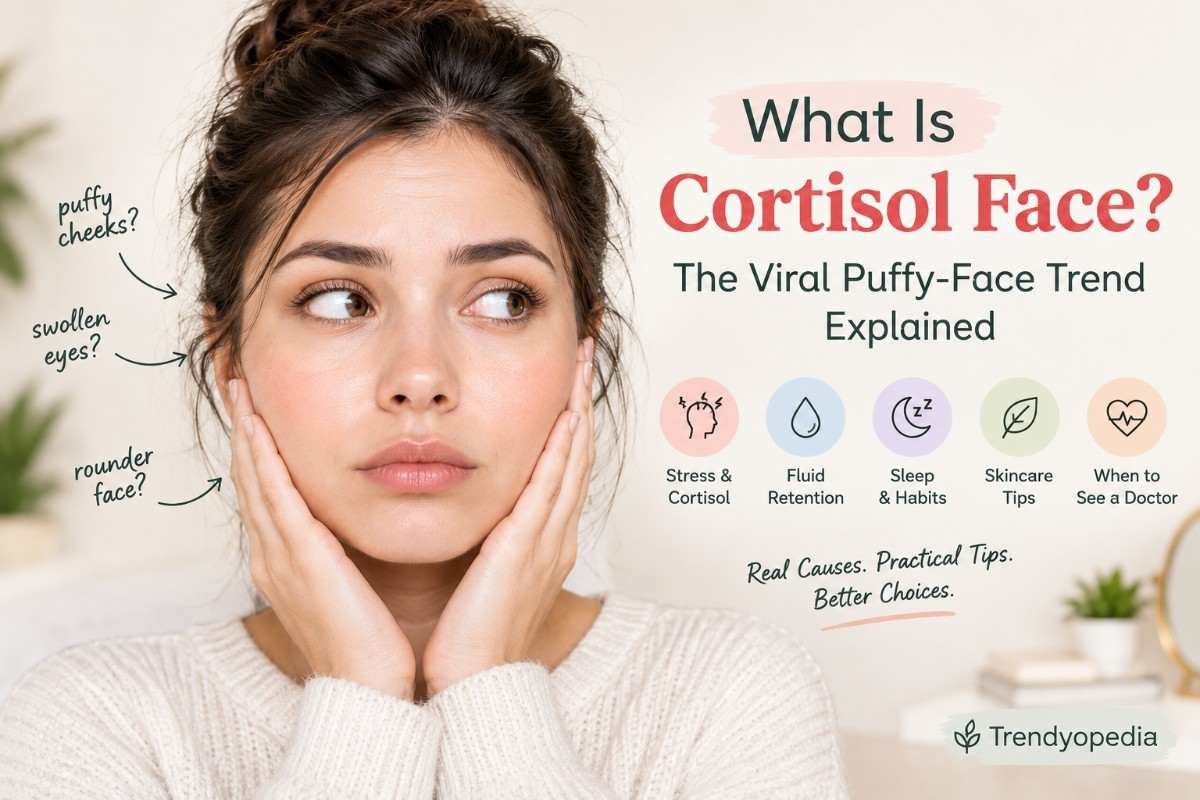
Have you noticed more people talking about a rounder face, swollen cheeks, or puffiness under the eyes on social media? One phrase appearing in online beauty and wellness discussions is Cortisol Face.
The term is often used to describe a puffy or fuller-looking face that people associate with stress and high cortisol levels. Some social media posts claim that stress hormones can change facial appearance overnight, while others promote special supplements, skincare products, or detox routines to fix the problem.
But what is Cortisol Face, really? Can stress cause your face to look puffy, and is facial puffiness always a sign of high cortisol?
The answer is more complicated than viral videos suggest. Cortisol is an important hormone, but a puffy face can have many causes, including fluid retention, allergies, medication effects, and changes in body weight.
If you want to understand the connection between stress and emotional well-being, read our guide on What Is Emotional Health? to learn more about managing emotions and supporting everyday wellness.
What Is Cortisol Face?
Cortisol Face is a popular social media term used to describe a rounder, puffier, or swollen-looking face that people attribute to stress or elevated cortisol levels.
Cortisol is a hormone produced by the adrenal glands. It helps regulate the body’s response to stress and plays important roles in metabolism, blood pressure, inflammation, and the sleep-wake cycle.
Your cortisol levels naturally change throughout the day and can rise temporarily during stressful situations. This is a normal part of how the body works.
However, the term Cortisol Face is not a recognized medical diagnosis. Looking at someone’s face cannot tell you whether their cortisol level is high.
Although certain medical conditions involving prolonged excess cortisol can cause a fuller, rounder face, everyday facial puffiness does not automatically indicate a hormone problem.
What Does Cortisol Do in the Body?
Cortisol is sometimes called the stress hormone, but its functions go far beyond stress.
Here are some of its important roles.
1. Helps the Body Respond to Stress
When you experience a stressful situation, cortisol helps your body respond by making energy available and supporting other physiological processes.
Short-term increases are normal. The concern is not simply having cortisol in your body, but whether there is a persistent hormonal problem or a broader pattern of stress affecting your health.
2. Helps Regulate Blood Sugar
Cortisol helps maintain blood glucose levels, particularly during periods of stress, fasting, or increased energy demand.
3. Supports Blood Pressure Regulation
Cortisol contributes to the body’s regulation of blood pressure and its response to other hormones.
4. Influences the Sleep-Wake Cycle
Cortisol normally follows a daily rhythm. Levels generally rise toward the morning and decline during the evening and night, although individual patterns vary.
Poor sleep and irregular schedules can affect this rhythm, but they do not prove that someone has a medical cortisol disorder.
What Causes a Puffy Face?
If your face looks fuller than usual, several explanations are possible. The cause may have nothing to do with cortisol.
1. Fluid Retention
Fluid retention is one possible reason for temporary facial puffiness.
You might notice it around your eyes or cheeks after certain lifestyle changes. Puffiness can fluctuate from one day to another.
Factors that may contribute include salty meals, changes in fluid balance, and lying flat for an extended period while sleeping.
If swelling is persistent or unexplained, it is important to consider other causes rather than assuming it is ordinary fluid retention.
2. Poor Sleep
A night of inadequate sleep may leave you looking tired, with more noticeable under-eye puffiness.
Sleep influences several body processes, including fluid regulation and the appearance of the skin around the eyes.
If your face often looks puffy in the morning, try maintaining a regular sleep schedule and getting enough rest.
For more practical advice, read our guide to Sleep Hygiene: 10 Habits for Better-Quality Sleep.
3. Ongoing Stress
Chronic stress can affect sleep, eating habits, physical activity, and overall well-being. These changes may indirectly influence how your face looks and feels.
However, stress alone does not establish that elevated cortisol is causing facial swelling.
Stress management is beneficial for general health, but it should not be treated as a guaranteed facial-slimming method.
4. High Salt Intake
Eating a particularly salty meal may contribute to temporary water retention in some people.
Packaged snacks, processed foods, restaurant meals, and salty sauces can contain substantial amounts of sodium.
If you frequently notice morning puffiness after salty dinners, consider moderating your sodium intake and following a balanced eating pattern.
There is no need to eliminate salt completely. Your body needs sodium, and individual needs vary.
5. Allergies
Allergies can cause puffiness around the eyes and face, sometimes alongside itching, watery eyes, sneezing, or a runny nose.
If you notice recurring swelling with these symptoms, consider speaking with a healthcare professional about possible allergies.
Sudden swelling of the lips, tongue, or throat, or swelling accompanied by difficulty breathing, requires emergency medical attention.
6. Hormonal Changes
Hormonal changes can influence fluid balance and other body processes. Some people notice changes in facial puffiness at particular times.
However, ordinary hormonal fluctuations are not the same as a cortisol disorder.
If swelling is persistent or accompanied by other unexplained symptoms, a clinician can help determine whether further evaluation is appropriate.
7. Medication Side Effects
Certain medications can contribute to facial swelling or a fuller-looking face.
For example, prolonged use of glucocorticoid medicines such as prednisone can cause Cushingoid changes in appearance in some people.
Do not stop prescribed medication suddenly. Ask your prescribing healthcare professional whether your symptoms could be related to a medication and what alternatives, if any, are appropriate.
8. Medical Conditions
Facial swelling can sometimes be associated with medical conditions involving the kidneys, thyroid, or other organs.
A persistent round face can also occur with Cushing syndrome, a condition involving prolonged exposure to excessive cortisol.
This is different from the informal social media concept of Cortisol Face. A healthcare professional can evaluate symptoms and decide whether testing is needed.
Can High Cortisol Really Change Your Face?
Yes, prolonged excess cortisol can change facial appearance in some medical conditions. However, this does not mean that every puffy face is caused by high cortisol.
One example is Cushing syndrome, in which the body is exposed to excessive cortisol over time. Possible features include a rounder face, increased fat around the trunk, easier bruising, purple stretch marks, and muscle weakness.
Not everyone experiences the same symptoms, and a round face alone is not enough to identify the condition.
Cortisol levels can also rise temporarily for normal reasons, including stress, exercise, and the body’s daily rhythm. A temporary rise does not mean you have Cushing syndrome.
If you are concerned about a possible hormonal problem, a healthcare professional can review your medical history, medications, and symptoms and arrange appropriate tests if necessary.
Cortisol Face vs. Ordinary Facial Puffiness
These terms are often confused online, but they are not interchangeable.
| Feature | Ordinary facial puffiness | Facial changes associated with excess cortisol |
|---|---|---|
| Possible causes | Fluid retention, allergies, sleep changes, medications, and other conditions | Prolonged exposure to excessive cortisol |
| Timing | May fluctuate during the day | May develop gradually and persist |
| Other symptoms | Depends on the underlying cause | May include easy bruising, muscle weakness, and purple stretch marks |
| Diagnosis | Depends on the suspected cause | Requires appropriate medical evaluation |
| Treatment | Depends on the cause | Depends on the underlying hormonal condition |
This comparison is for general education only. Appearance and timing cannot reliably distinguish these causes in every person.
How to Reduce Everyday Facial Puffiness
Cortisol Face: If your puffiness is mild and temporary, a few simple habits may help. These tips are not a treatment for Cushing syndrome or other medical conditions.
1. Maintain a Consistent Sleep Schedule
Try going to bed and waking up at roughly the same time each day.
Most adults need at least seven hours of sleep per night, although individual needs vary.
Adequate sleep supports general health and may help reduce the tired appearance associated with poor rest.
2. Stay Hydrated
Drink water regularly throughout the day according to your needs, activity level, and environment.
Dehydration can affect your well-being, but drinking excessive amounts of water will not flush cortisol out of your body or guarantee a less puffy face.
3. Moderate Your Sodium Intake
Pay attention to how much sodium you get from packaged foods, processed snacks, sauces, and restaurant meals.
Eating a balanced diet with vegetables, fruits, whole grains, and appropriate protein sources is generally more useful than following a restrictive detox diet.
4. Try a Cool Compress
A clean, cool compress placed gently over closed eyes for a few minutes may temporarily ease mild under-eye puffiness.
Avoid placing ice directly on your skin or using extreme cold, which can cause irritation or injury.
If swelling is painful, persistent, or unexplained, do not rely on compresses instead of medical advice.
5. Find Manageable Ways to Handle Stress
Stress management may improve your overall well-being, especially if stress is interfering with sleep or daily routines.
You could try:
- Gentle walking
- Slow breathing exercises
- Yoga or stretching
- Taking breaks from screens
- Spending time outdoors
- Maintaining social connections
- Making time for relaxing activities
These practices can support well-being, but they are not proven ways to directly remove facial fat or treat a cortisol disorder.
Relaxation practices such as gentle yoga, slow breathing, and mindfulness may help you manage everyday stress. If you are looking for simple ways to feel calmer, check out our article on Yoga for Anxiety: 10 Simple Poses for Everyday Stress for beginner-friendly ideas you can incorporate into your routine.
6. Follow a Gentle Skincare Routine
Use a gentle cleanser, a moisturizer suited to your skin, and broad-spectrum sunscreen during the day.
If you have sensitive skin, introduce new products gradually. Avoid aggressive exfoliation or combining too many active ingredients in an attempt to reduce puffiness.
Skincare can improve comfort and skin appearance, but topical products cannot diagnose or correct an underlying hormone imbalance.
7. Avoid Extreme Diets and Detox Products
You may see products advertised as cortisol-lowering supplements, hormone-balancing drinks, or facial detox solutions.
Be cautious of products promising to remove Cortisol Face quickly. There is no established facial detox that removes cortisol, and supplements marketed for hormone balance may have side effects or interact with medications.
If you suspect a medical problem, seek appropriate evaluation instead of trying to treat your hormone levels yourself.
Does Facial Massage Help Cortisol Face?
Cortisol Face: Facial massage and gentle lymphatic-style massage are popular in beauty routines.
Gentle massage may temporarily change the appearance of mild puffiness for some people. However, evidence for long-term cosmetic benefits is limited, and massage does not treat elevated cortisol or Cushing syndrome.
If you choose to try it, use clean hands and gentle pressure. Avoid vigorous massage over painful, irritated, or swollen areas.
Do not massage sudden or unexplained facial swelling without understanding its cause.
What About Cortisol Face Exercises?
Cortisol Face: Social media sometimes promotes facial exercises, jaw movements, or special routines as ways to eliminate Cortisol Face.
There is not enough evidence to show that these exercises lower cortisol or reliably remove facial puffiness caused by a medical condition.
Gentle facial movements may be part of a personal wellness routine, but they should not replace a medical assessment when symptoms persist.
Similarly, spot-reduction exercises cannot reliably remove fat from a specific area of the face.
When Should You See a Doctor?
Cortisol Face: Occasional mild puffiness may not indicate a serious problem, but persistent or unexplained swelling deserves attention.
Consider seeking medical advice if you experience:
- Facial swelling that does not improve or keeps returning
- A gradual change in facial shape along with unexplained weight gain
- Easy bruising or unusually fragile skin
- Wide purple or reddish-purple stretch marks
- Muscle weakness, especially in the upper arms or thighs
- New or difficult-to-control high blood pressure or blood sugar
- Facial swelling after starting a new medication
These symptoms do not necessarily mean you have a cortisol disorder. They are reasons to seek an appropriate assessment.
Seek emergency medical help if facial swelling occurs suddenly with difficulty breathing, throat or tongue swelling, or other signs of a severe allergic reaction.
A clinician may use a medical history, physical examination, and appropriate laboratory testing to investigate the cause. A random cortisol test or a selfie is not enough to diagnose Cushing syndrome.
FAQs on Cortisol Face
1. What is Cortisol Face?
Cortisol Face is a social media term for a puffy or rounder-looking face attributed to high cortisol. It is not a recognized medical diagnosis, and facial appearance alone cannot establish cortisol levels.
2. What causes Cortisol Face?
The term is often associated with stress and facial puffiness, but a fuller face can have many causes, including fluid retention, allergies, medications, weight changes, and certain medical conditions.
3. How do I know if my cortisol is high?
You cannot reliably tell from facial appearance alone. If you have symptoms suggesting a hormone problem, a healthcare professional can determine whether appropriate cortisol testing is needed.
4. Can stress make your face puffy?
Stress can affect sleep, habits, and overall health, which may indirectly influence your appearance. However, a puffy face does not prove that stress or cortisol is the cause.
5. How long does Cortisol Face last?
There is no standard duration because Cortisol Face is not a medical diagnosis. Temporary puffiness may change within hours or days, while persistent swelling or hormonal changes may require medical evaluation.
6. Can drinking more water reduce facial puffiness?
Maintaining normal hydration supports health, but drinking excessive amounts of water will not remove cortisol or guarantee reduced puffiness. Persistent swelling should be evaluated.
7. Does walking lower cortisol?
Walking and other forms of regular physical activity can support stress management, sleep, and general health. However, walking is not a guaranteed treatment for a cortisol disorder or a specific way to slim the face.
8. Does Cortisol Face mean I have Cushing syndrome?
No. Cushing syndrome is a medical condition involving prolonged exposure to excessive cortisol. A round face alone is not diagnostic, although a combination of symptoms may warrant medical assessment.
9. Can facial massage remove Cortisol Face?
Gentle massage may temporarily improve the appearance of mild puffiness in some people. It does not lower cortisol in a proven way or treat an underlying hormonal condition.
10. Are cortisol-lowering supplements safe?
Safety and effectiveness vary by ingredient and product. Some supplements may interact with medications or cause adverse effects. Consult a qualified healthcare professional before using supplements to change hormone levels.
Conclusion
Cortisol Face has become a popular phrase in beauty and wellness conversations, but the science is more nuanced than many social media posts suggest.
Cortisol is essential to normal body function, and a rounder or puffier face does not automatically mean your cortisol levels are too high. Sleep changes, fluid retention, allergies, medication effects, and other factors may contribute to facial puffiness.
Start with healthy everyday habits, including consistent sleep, balanced nutrition, appropriate hydration, and manageable stress-relief activities. Avoid extreme detoxes and products promising instant hormone balance.
Most importantly, pay attention to persistent or unexplained changes. If facial swelling occurs alongside other concerning symptoms, a healthcare professional can help identify the cause and recommend appropriate care.
Understanding the difference between a viral beauty trend and a medical condition is the best way to make informed decisions about your health.
Managing everyday stress, maintaining a consistent sleep schedule, and developing healthy habits can support your overall well-being. You can also explore Nervous System Yoga for gentle movement and relaxation ideas that may fit into your daily routine. Remember that persistent facial swelling should be evaluated by a healthcare professional rather than treated as a beauty trend.
Sources & References
- National Institute of Diabetes and Digestive and Kidney Diseases (NIDDK) – Cushing’s Syndrome
- MedlinePlus – Cushing Syndrome
- National Institute of General Medical Sciences (NIGMS) – Stress and the Body
- Cleveland Clinic – Cushing Syndrome
- NHS – Angioedema
Author
Written by Hitasha
Hitasha writes about beauty, skincare, wellness, and emerging lifestyle trends for Trendyopedia, with a focus on clear, practical, and easy-to-understand information.
Disclaimer
This article is for general informational and educational purposes only and is not medical advice. Cortisol Face is not a recognized medical diagnosis. Consult a qualified healthcare professional about persistent facial swelling, possible hormonal problems, or concerns about medication and supplements.