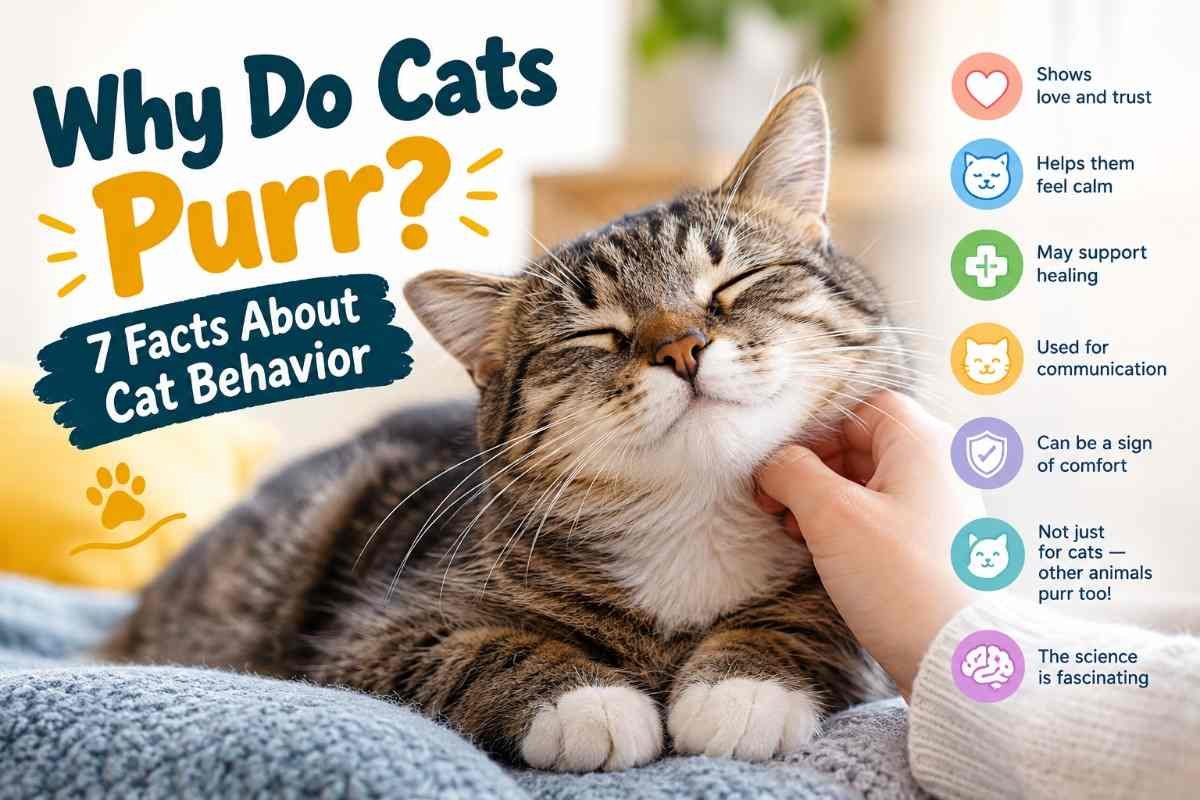
Why Do Cats Purr: Have you ever noticed your cat making a soft, vibrating sound while sitting on your lap or relaxing beside you? That familiar sound is called purring, and it is one of the most recognizable behaviors in cats.
Many people believe cats purr only when they are happy. Although happiness is one common reason, cats may also purr when they feel nervous, seek comfort, or experience pain. This makes purring a fascinating part of feline behavior.
So, why do cats purr? How do they make that sound, and what are they trying to communicate?
Explore more fascinating explanations in our article, Why Do We Get Goosebumps? The Science Explained.
In this article, we will explore the science behind cat purring, what different purrs may mean, and several interesting facts about your feline friend’s behavior.
Why Do Cats Purr?
Cats purr for several reasons, including contentment, communication, stress relief, and sometimes discomfort. The meaning often depends on the situation and the cat’s other body language.
Here are some of the most common reasons cats purr.
1. Cats Purr When They Feel Happy and Relaxed
One of the most familiar reasons cats purr is that they feel comfortable and content.
You may notice your cat purring when:
- Sitting comfortably on your lap.
- Being gently stroked.
- Resting in a favorite sleeping spot.
- Spending quiet time with a trusted person.
- Relaxing after eating or playing.
A relaxed body, soft eyes, and a comfortable posture can suggest that your cat is enjoying the moment.
However, purring alone does not always mean a cat is happy. It is important to consider the surrounding situation and other signs of body language.
2. Kittens Purr to Communicate With Their Mothers
Purring begins very early in a cat’s life. Kittens can start purring when they are only a few days old.
This early sound helps kittens and their mothers communicate during nursing and close contact. A kitten may purr while feeding, and the mother cat may also purr in response.
Because newborn kittens are vulnerable, these quiet sounds may help maintain contact between mother and kitten.
This shows that purring is not just a behavior adult cats use with humans. It is also part of early feline communication.
3. Cats May Purr When They Want Attention
Some cats learn that purring helps them get attention from their owners.
For example, your cat might purr when approaching you at breakfast time, rubbing against your legs, or settling beside you on the couch.
In some situations, cats combine purring with meowing to communicate a request. They may want food, petting, companionship, or access to a favorite place.
Every cat is different. Over time, you may begin to recognize the sounds and behaviors your own cat uses when it wants something.
4. Cats Sometimes Purr When They Feel Stressed or Afraid
Surprisingly, cats do not always purr because they feel safe and comfortable.
A cat may purr during a stressful experience, such as traveling in a carrier, visiting a veterinary clinic, or encountering an unfamiliar environment.
One explanation is that purring may help the cat self-soothe or cope with discomfort. However, researchers do not fully understand every reason cats purr in stressful situations.
If your cat is purring while hiding, crouching, keeping its ears flattened, or trying to escape, do not assume it is happy.
Look at the whole situation to understand what your cat may be feeling.
5. Cats May Purr When They Are in Pain
Cats sometimes purr when they are injured, unwell, or experiencing discomfort.
Because cats can hide signs of illness, it is important not to rely on purring as proof that everything is fine.
Pay attention to changes such as:
- Hiding more than usual.
- Eating or drinking less.
- Avoiding touch.
- Moving differently or limping.
- Becoming unusually quiet or irritable.
- Changes in litter box habits.
If your cat’s behavior changes suddenly or you suspect pain, contact a veterinarian. Purring cannot tell you by itself whether a cat is healthy or unwell.
6. Purring May Help Cats Calm Themselves
Purring is sometimes associated with self-soothing. A cat may purr during an unfamiliar or uncomfortable experience, possibly as a way to regulate its response to stress.
This is a plausible explanation, but the exact psychological purpose of purring is still being studied.
For cat owners, the practical lesson is simple: observe the cat’s surroundings, posture, facial expression, and behavior instead of interpreting the sound on its own.
How Do Cats Make the Purring Sound?
Why Do Cats Purr: Cats produce purring through coordinated activity involving their brain, breathing system, and muscles in the larynx, or voice box.
Scientists have studied feline purring for many years. Although some details of the mechanism continue to be investigated, the process is understood to involve rhythmic activity of the laryngeal muscles and airflow through the voice box.
The sound is produced in repeated vibrations, often during both inhalation and exhalation. This creates the familiar continuous rumbling sound.
Unlike a typical meow, which is usually brief, purring can continue for an extended period while the cat breathes.
The next time you feel your cat’s purr vibrating against your hand, you will know that it comes from a coordinated biological process rather than simply from the cat’s throat vibrating randomly.
Can All Cats Purr?
Why Do Cats Purr: Most domestic cats can purr, including kittens and adult cats.
However, the ability to produce a familiar purr differs among members of the cat family. Domestic cats and several smaller wild cat species can purr, while big cats such as lions and tigers have different vocal structures and are known for roaring.
The relationship between roaring and purring is more complicated than a simple size difference. The structure of the voice box and other anatomical features help determine the sounds different species can produce.
So, while your house cat can produce a gentle rumble beside you, a lion is better known for its powerful roar.
Why Does My Cat Purr and Knead at the Same Time?
Why Do Cats Purr: Some cats purr while rhythmically pushing their front paws against a blanket, pillow, or their owner’s lap. This behavior is known as kneading.
Kneading begins during kittenhood, when kittens press their paws against their mother’s mammary area while nursing. The behavior may continue into adulthood as a familiar, comforting action.
Adult cats may knead soft surfaces when they are relaxed, preparing a resting place, or interacting with someone they trust.
When a cat purrs and kneads together, it may indicate comfort and contentment. However, as with purring alone, the meaning depends on the cat and the situation.
If your cat’s claws are uncomfortable, place a thick blanket on your lap rather than pushing the cat away suddenly.
Do Cats Purr to Heal Themselves?
Why Do Cats Purr: You may have heard that a cat’s purr can heal its bones, repair injuries, or speed recovery.
This idea comes partly from research into the frequencies associated with feline purring and the effects of vibration on biological tissues. Some studies have explored how mechanical vibrations may affect bones and muscles.
However, there is not enough strong scientific evidence to conclude that purring heals a cat’s injuries or treats illness.
Purring should not be considered a replacement for veterinary care. If a cat is injured or unwell, professional examination and appropriate treatment remain important.
Researchers continue to investigate purring, and future studies may help explain more about its biological effects.
7 Interesting Facts About Why Do Cats Purr
Why Do Cats Purr: Here are seven fascinating facts about this common feline behavior.
1. Kittens Can Purr Very Early in Life
Kittens may begin purring within their first few days. The sound plays a role in early communication between kittens and their mothers.
2. Cats Can Purr While Breathing In and Out
A typical purr can continue through both inhalation and exhalation, creating a steady, rhythmic rumble.
3. Purring Does Not Always Mean Happiness
Cats may purr when relaxed, but they can also purr during stressful situations or when they are uncomfortable.
4. Every Cat Has Its Own Purring Style
Some cats produce a loud, noticeable rumble, while others make a very quiet sound. Owners may become familiar with their cat’s individual purr.
5. Cats Sometimes Purr Before Falling Asleep
A relaxed cat may purr while settling into a comfortable resting position. This can be part of its normal relaxation routine.
6. Some Cats Purr to Get Food or Attention
Cats may learn that purring helps them attract human attention. Some combine it with meowing or rubbing against their owner’s legs.
7. Purring Is Only One Part of Cat Communication
Cats also communicate through their ears, eyes, tails, posture, scent, and vocalizations. Understanding these signals together gives you a better picture of what your cat may be expressing.
How to Tell Whether Your Cat Is Happy
Why Do Cats Purr: Purring can be a positive sign, but it is more useful when considered alongside other behaviors.
Signs that may indicate a relaxed and comfortable cat include:
- A loose, relaxed body.
- Ears in a natural position.
- Soft or slowly blinking eyes.
- Choosing to sit or lie near you.
- Gently rubbing against you.
- Eating, grooming, and playing normally.
Signs of possible stress or discomfort include hiding, a tense posture, flattened ears, unusual aggression, reduced appetite, or sudden changes in routine.
No single sign provides a complete answer. If your cat’s behavior is unusual or concerning, seek advice from a veterinarian.
FAQs Why Do Cats Purr
1. Why do cats purr when you pet them?
Cats often purr when petting feels comfortable and pleasant. It may be a sign of contentment or social bonding, although the cat’s body language and the situation also matter.
2. Why does my cat purr next to me?
Your cat may feel comfortable around you, seek companionship, or want attention. Some cats also purr to soothe themselves, so consider their overall behavior.
3. Why do cats purr when they are sick?
Purring can occur during pain, stress, or illness, although scientists do not fully understand all the reasons. If your cat shows unusual behavior or other symptoms, contact a veterinarian.
4. Can cats control their purring?
Purring is generated by coordinated activity in the nervous system and voice box. Cats can produce it in different situations, but the exact degree of conscious control is not fully understood.
5. Do cats purr to communicate with humans?
Yes, purring can be part of how cats interact with people. They may purr during friendly contact or when seeking food and attention.
6. Why does my cat purr and knead a blanket?
Kneading is a behavior that begins during kittenhood and may continue into adulthood. When paired with purring, it can accompany relaxation or comfort.
7. Is a loud purr a sign that my cat is healthier?
No. The loudness of a purr does not reliably indicate a cat’s health. Changes in behavior, appetite, movement, and other symptoms are more useful reasons to seek veterinary advice.
Conclusion
Why Do Cats Purr: Cats purr for more reasons than many people realize. They may purr when they feel happy, communicate with their owners, interact with their kittens, or cope with stressful situations.
The sound is produced through a coordinated process involving the nervous system, laryngeal muscles, and breathing. Although researchers have learned a great deal about purring, some of its functions remain uncertain.
The most important thing to remember is that purring alone does not tell the whole story. By paying attention to your cat’s body language and everyday habits, you can better understand what your furry companion may be communicating.
The next time your cat curls up beside you and begins to purr, take a moment to enjoy that familiar sound—and notice what the rest of its body is telling you.
Explore more fascinating explanations in our article, Why Do We Have Different Blood Types?
Sources and References
- Cornell Feline Health Center – Cornell University College of Veterinary Medicine
- VCA Animal Hospitals – Cat Health and Behavior Resources
- International Cat Care – Cat Behavior and Welfare
- Merck Veterinary Manual – Behavior Problems of Cats
Author
Hitasha is a writer at Trendyopedia who shares easy-to-understand articles about animals, lifestyle, wellness, and interesting facts about everyday life.
Disclaimer
This article is for general informational and educational purposes only. It is not a substitute for professional veterinary advice, diagnosis, or treatment. Contact a qualified veterinarian if your cat shows signs of illness, pain, or unusual behavior.