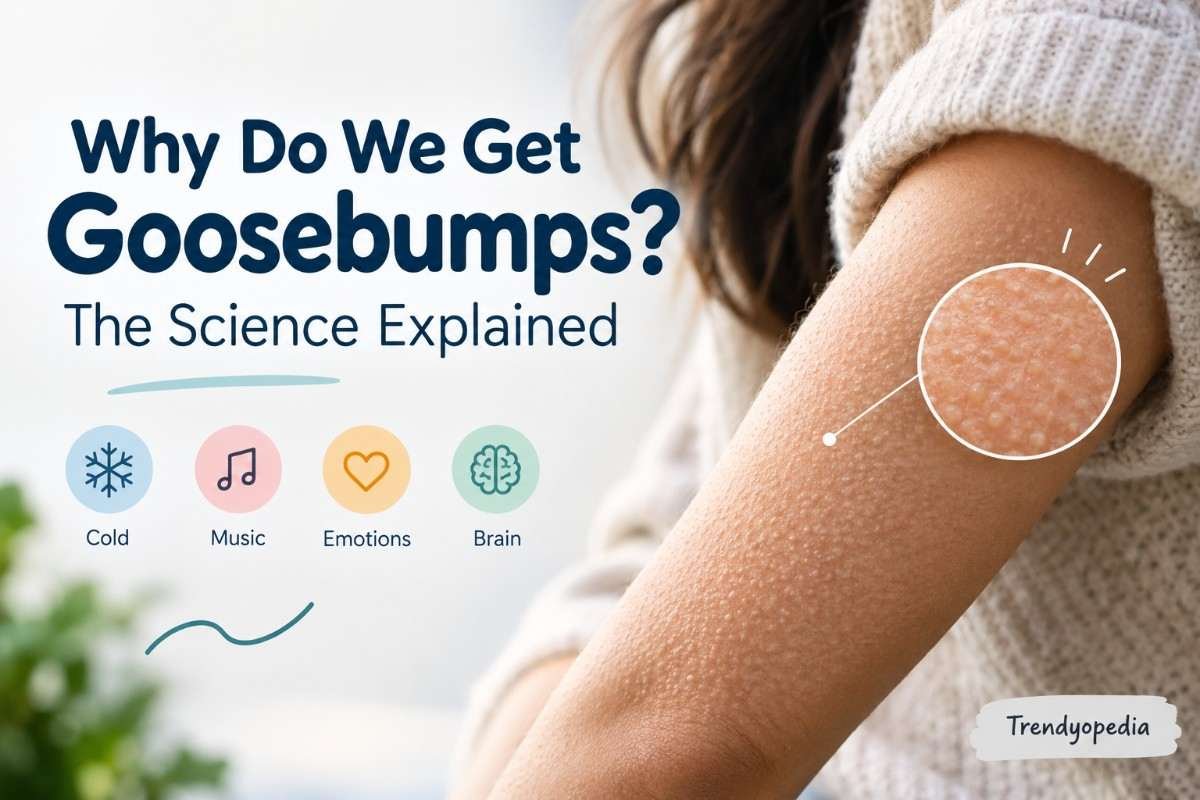
Why Do We Get Goosebumps?: Have you ever felt tiny bumps appear on your skin while listening to emotional music, watching a scary movie, or stepping outside on a cold day? These small bumps are called goosebumps, and almost everyone experiences them at some point.
Goosebumps may seem like a simple reaction, but they are connected to your nervous system, emotions, and evolutionary history. They can appear when you feel cold, frightened, excited, or deeply moved by something.
But why does your skin react this way? Do goosebumps serve a purpose, or are they just a leftover feature from our ancestors?
The human body is full of fascinating mysteries, from emotional reactions to unusual experiences during sleep. If you enjoy learning about how the brain works, explore our article on why we dream and 10 interesting facts about dreams. Like goosebumps, dreams offer an interesting look at the connection between the brain, emotions, and everyday experiences.
In this article, we will explain why we get goosebumps, what happens inside the body, and some fascinating facts about this common human experience.
What Are Goosebumps?
Goosebumps are tiny raised bumps that appear on the surface of your skin. They usually become noticeable when you are cold or experience a strong emotion.
The scientific term for this reaction is piloerection. It happens when tiny muscles attached to individual hair follicles contract, causing the hairs to stand upright and the surrounding skin to rise.
The effect resembles the skin of a plucked goose, which is where the everyday term “goosebumps” comes from.
Goosebumps commonly appear on the arms, legs, neck, and back, although they can occur on other parts of the body too.
Why Do We Get Goosebumps?
Goosebumps are an automatic response controlled by the body’s nervous system. Here are the main reasons they happen.
1. Goosebumps Help Respond to Cold
One of the most common reasons for goosebumps is exposure to cold temperatures.
When your body senses cold, your autonomic nervous system can activate the tiny muscles attached to your hair follicles. These muscles contract and make your hairs stand up.
In furry animals, raised hair traps a layer of air close to the skin, which can help retain heat. Humans have much less body hair, so this reaction does not provide significant warmth today.
Your body has other, more effective ways to stay warm, such as narrowing blood vessels near the skin and shivering.
2. Strong Emotions Can Trigger Goosebumps
Goosebumps do not happen only when you feel cold. They can also appear when you experience strong emotions.
For example, you might get goosebumps when:
- Listening to a powerful song.
- Watching an emotional movie scene.
- Hearing an inspiring speech.
- Feeling sudden excitement or surprise.
- Remembering a meaningful moment.
Strong emotional reactions can activate the autonomic nervous system, which controls many automatic bodily functions. This activation can cause the tiny muscles around your hair follicles to contract.
Some people experience goosebumps more often than others, and the same song or scene may affect different people in different ways.
3. Fear and Stress Can Cause Goosebumps
Have you ever felt goosebumps while watching a horror movie or walking through a dark, unfamiliar place?
Fear and stress can activate the body’s fight-or-flight response. This response prepares you to react to a possible threat by changing heart rate, breathing, and other automatic functions.
Goosebumps can be one result of this reaction.
In furry animals, raised fur can make the animal appear larger and potentially more intimidating to a threat. In humans, this effect is much less useful because our body hair is relatively sparse.
Even so, the underlying response remains part of our biological system.
4. Music Can Give You Goosebumps
Some people experience goosebumps while listening to music, especially during powerful or unexpected moments.
This experience is sometimes called frisson, a French word used to describe a sudden feeling of excitement or a shiver of pleasure.
It may happen during a dramatic musical change, a beautiful vocal performance, or a moment when the music builds toward an emotional peak.
Researchers believe that music-related chills involve emotional processing and the brain’s reward systems. However, not everyone experiences them, and scientists are still studying why certain musical moments create such a strong physical reaction.
Goosebumps from music show how closely physical responses can be connected to emotions.
5. Memories and Meaningful Moments Can Trigger Them
A powerful memory can sometimes cause goosebumps even when you are sitting in a comfortable, warm room.
For instance, remembering an important achievement, hearing a song associated with someone you love, or thinking about a deeply moving experience may trigger a physical reaction.
The brain does not process memories as isolated facts. Memories can also bring back emotions and bodily responses associated with the original experience.
When those emotions become strong enough, the autonomic nervous system may activate and cause goosebumps.
What Happens Inside Your Body When You Get Goosebumps?
Goosebumps involve a small but fascinating chain of events.
- A trigger occurs: Your body senses cold, or your brain processes an emotion such as fear, excitement, or awe.
- The nervous system responds: Signals from the autonomic nervous system activate tiny muscles in the skin.
- The muscles contract: These muscles, called arrector pili muscles, pull on the hair follicles.
- The skin rises: Small bumps form around the follicles, making your hairs stand upright.
- The reaction fades: When the trigger passes, the muscles relax and your skin returns to normal.
This process happens automatically. You cannot usually decide to create goosebumps simply by thinking about them, although some people report being able to trigger the sensation voluntarily.
Why Did Humans Evolve to Get Goosebumps?
Goosebumps are considered a vestigial response in humans, meaning that the reaction appears to have retained a function that was more useful in our evolutionary past.
Our furry ancestors likely benefited more from hair standing upright.
Two possible advantages were:
- Keeping warm: Raised fur can trap insulating air near the body.
- Appearing larger: Raised fur can make an animal look bigger when threatened.
Humans evolved to have much less body hair, so these advantages are limited for us today. However, the tiny muscles and nerve pathways responsible for the reaction remain.
Goosebumps are a useful example of how the human body can retain biological features even after their original function becomes less important.
Why Do We Get Goosebumps When We Are Not Cold?
Why Do We Get Goosebumps?: Goosebumps can occur even when the temperature is comfortable because cold is only one trigger.
Emotional experiences can activate the same general bodily response. Fear, excitement, awe, nostalgia, and powerful music may all lead to goosebumps in some people.
The reaction does not necessarily mean that your body is trying to warm itself. Instead, it may reflect the way your nervous system responds to a strong stimulus.
This is why you might get goosebumps during a moving speech or a dramatic scene without feeling chilly.
Can You Get Goosebumps on Purpose?
Some people say they can make themselves experience goosebumps without cold, fear, or music. This ability is sometimes described as voluntary piloerection.
Research suggests that at least some people report being able to trigger goosebumps intentionally, but the ability is not universal and is not fully understood.
For most people, goosebumps happen automatically in response to a trigger. Trying to imagine a cold environment or recalling an emotional memory may produce a sensation, but it will not work for everyone.
7 Interesting Facts About Goosebumps
Here are seven facts that make this everyday reaction especially interesting.
1. Goosebumps Have a Scientific Name
The scientific term is piloerection. It describes the raising of hair caused by the contraction of tiny muscles attached to hair follicles.
2. The Muscles Are Extremely Small
Each visible bump is linked to activity in tiny muscles in the skin. You may not notice the muscles themselves, but their contraction changes the appearance of your skin.
3. Goosebumps Are Not Limited to Cold Weather
They can appear during fear, excitement, emotional memories, and music that gives you chills.
4. Other Mammals Get Goosebumps Too
Many mammals have similar hair-raising responses. In furry animals, the reaction can help with insulation or make the animal appear larger.
5. Goosebumps Are Controlled Automatically
The autonomic nervous system manages the response without requiring a conscious decision.
6. Music-Related Goosebumps Are Not Universal
Some people regularly experience chills while listening to music, while others rarely or never do. Individual emotional responses vary.
7. Goosebumps Usually Disappear Quickly
Once the trigger passes, the tiny muscles relax and the raised bumps generally fade on their own.
Are Goosebumps a Sign of a Health Problem?
In most cases, goosebumps are a normal and harmless bodily reaction. They usually appear briefly and disappear when the cold or emotional trigger passes.
However, persistent bumps that remain when you are warm and relaxed may not be ordinary goosebumps. Small, rough bumps that stay on the skin can have other causes, such as keratosis pilaris, a common skin condition.
Seek medical advice if you have unusual or persistent skin changes, or if goosebumps occur alongside concerning symptoms such as confusion, fainting, severe pain, or difficulty breathing.
Goosebumps alone usually do not indicate a serious problem, but the circumstances and any accompanying symptoms matter.
FAQs Why Do We Get Goosebumps?
1. Why do we get goosebumps when we are cold?
Cold can activate the autonomic nervous system, causing tiny muscles attached to hair follicles to contract. This makes the hairs stand upright and the skin form small bumps.
2. Why does music give some people goosebumps?
Powerful music can trigger emotional and reward-related responses in the brain. In some people, these responses activate the nervous system and produce a sensation known as frisson.
3. Are goosebumps useful for humans?
They offer little practical benefit for warmth because humans have relatively little body hair. The reaction likely comes from ancestors for whom raised fur helped retain heat or appear larger.
4. Can emotions cause goosebumps?
Yes. Fear, excitement, awe, nostalgia, and other strong emotions can trigger goosebumps through the autonomic nervous system.
5. Why are they called goosebumps?
The raised skin resembles the appearance of a plucked goose, whose skin has small bumps around the feather follicles.
6. Can you control goosebumps?
Most people experience them automatically. Some individuals report being able to trigger goosebumps voluntarily, but this ability is not common or fully understood.
7. Are goosebumps dangerous?
Ordinary goosebumps caused by cold or emotions are harmless. If they persist or occur with other concerning symptoms, consider seeking medical advice.
Conclusion
Why Do We Get Goosebumps?: Goosebumps may look like tiny bumps on your skin, but they reveal an interesting connection between your nervous system, emotions, and evolutionary history.
They can appear when you feel cold, frightened, excited, or deeply moved by music or memories. The reaction probably played a more useful role in our furry ancestors, helping them retain heat or appear larger when threatened.
Today, goosebumps usually have little practical benefit for humans, but they remain a fascinating example of how the body responds automatically to the world around us.
The next time a song gives you chills or a cold breeze raises the hairs on your arms, you will know that a small muscle response is behind this familiar experience.
explore our article on Why Do We Have Different Blood Types? The Science Explained.
Sources and References
- Cleveland Clinic – Goosebumps: What Causes Them?
- Encyclopaedia Britannica – Goose Bumps
- National Institute of Neurological Disorders and Stroke – Brain Basics
- Cleveland Clinic – Keratosis Pilaris
Author
Hitasha is a writer at Trendyopedia who shares easy-to-understand articles about wellness, lifestyle, science, and interesting facts about everyday life.
Disclaimer
This article is for general informational and educational purposes only. It is not a substitute for professional medical advice, diagnosis, or treatment.
5 thoughts on “Why Do We Get Goosebumps? The Science Explained”