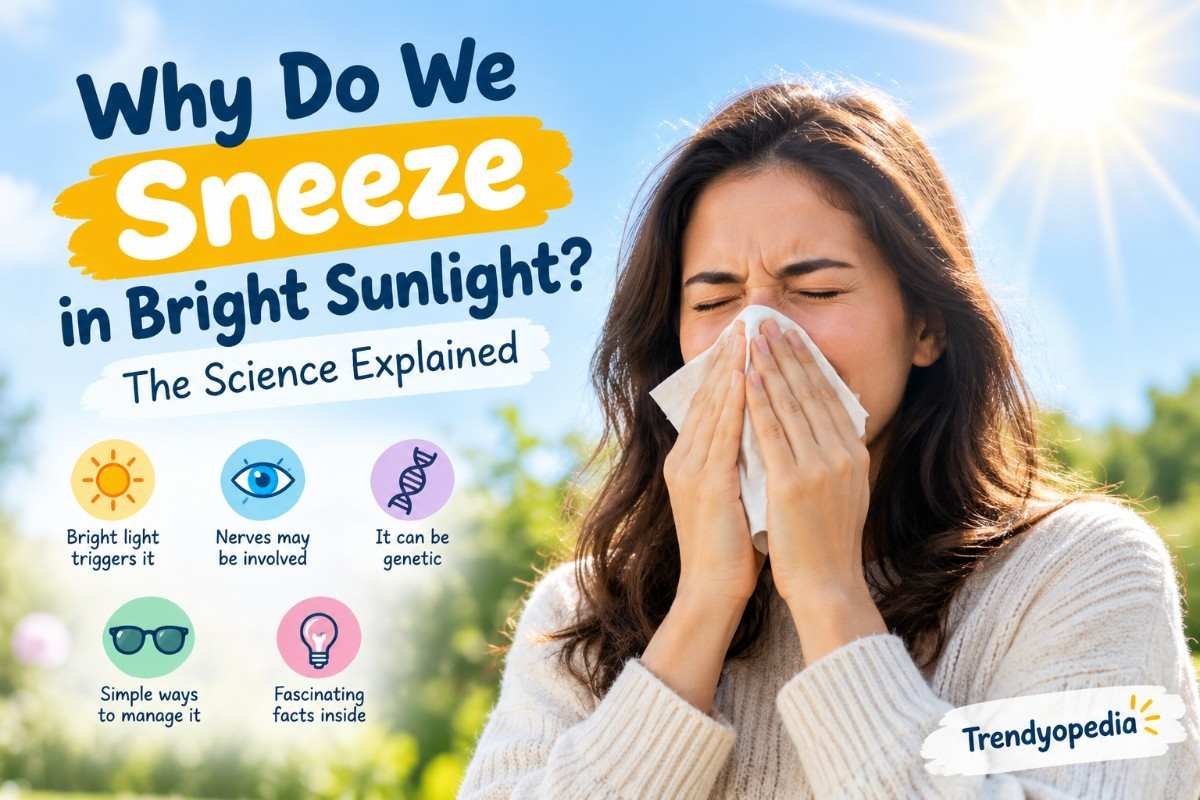
Why Do We Sneeze in Bright Sunlight: Have you ever stepped outside on a sunny day and suddenly felt the urge to sneeze? You might not have a cold or allergies, yet a bright flash of sunlight can make you sneeze once or several times.
This unusual reaction is known as the photic sneeze reflex, sometimes called sun sneezing or ACHOO syndrome. It is a real, generally harmless phenomenon that affects a portion of the population.
But why does bright light make some people sneeze while others experience no reaction at all? The answer involves the nervous system, the eyes, and a scientific mystery researchers are still investigating.
The human body has many fascinating reactions that happen automatically. For example, have you ever wondered why we get goosebumps?
In this article, we’ll explore why people sneeze in bright sunlight, what causes the reaction, whether it is inherited, and what you can do to manage it safely.
What Is the Photic Sneeze Reflex?
Why Do We Sneeze in Bright Sunlight: The photic sneeze reflex is an involuntary reaction in which exposure to bright light triggers sneezing. It often happens when someone moves from a dark or dimly lit place into bright sunshine.
For example, you might experience it when:
- Walking outside after spending time indoors.
- Leaving a movie theater during daylight.
- Driving out of a dark tunnel into sunshine.
- Turning on a bright light in a dark room.
Not everyone experiences this reflex, and the number of sneezes can vary from person to person. Some people sneeze just once, while others may sneeze several times in a row.
Importantly, sneezing in response to sunlight does not automatically mean you are allergic to the sun.
Why Do We Sneeze in Bright Sunlight?
Why Do We Sneeze in Bright Sunlight: The exact reason is not fully understood, but scientists believe the reaction involves communication between nerves responsible for vision and those involved in sneezing.
1. Bright Light Stimulates the Visual System
When bright light enters your eyes, it activates the visual system. In people who have the photic sneeze reflex, this sudden change in light may also influence nerve pathways associated with sneezing.
The result is an unexpected sneeze, even when nothing is irritating the nose.
2. The Optic and Trigeminal Nerves May Be Involved
The optic nerve carries visual information from the eyes to the brain. The trigeminal nerve helps control sensation in the face and plays an important role in the sneeze reflex.
One leading explanation is that signals in these nearby or interacting nerve pathways may overlap, causing bright light to trigger a sneeze response.
However, this is still a theory. Researchers have not established one definitive mechanism that explains every case.
3. A Sudden Change in Light May Be the Trigger
Many people notice that they sneeze when moving from darkness into sunlight rather than after spending a long time outdoors.
This suggests that the sudden increase in brightness may matter. The response can also vary depending on the individual and the lighting conditions.
What Is ACHOO Syndrome?
Why Do We Sneeze in Bright Sunlight: ACHOO syndrome is a humorous name for the photic sneeze reflex. The acronym stands for Autosomal Dominant Compelling Helio-Ophthalmic Outburst.
Although the name sounds unusual, the phenomenon itself is well recognized. It describes the tendency of certain people to sneeze when exposed to bright light.
The term is sometimes used interchangeably with photic sneeze reflex, although the latter is the more straightforward scientific name.
Is Sneezing in Sunlight Genetic?
Why Do We Sneeze in Bright Sunlight: Research suggests that the photic sneeze reflex can run in families. If one of your parents sneezes when exposed to bright light, you may be more likely to experience it too.
The condition has traditionally been associated with an autosomal dominant inheritance pattern, meaning a genetic variant can sometimes be passed from one affected parent to a child.
However, inheritance does not mean every family member will respond in exactly the same way. The genetics and underlying biology are not completely understood.
How Common Is Sun Sneezing?
Why Do We Sneeze in Bright Sunlight: The photic sneeze reflex is relatively common. Scientific reports have often estimated that roughly one-quarter of people experience it, although published estimates vary considerably because studies use different methods.
Some people may not even realize that their reaction has a name. They simply notice that sunlight makes them sneeze.
The reflex can begin in childhood and may remain a familiar feature throughout life. Its frequency and intensity differ from one person to another.
Is Sneezing in Bright Sunlight Dangerous?
Why Do We Sneeze in Bright Sunlight: For most people, the photic sneeze reflex is harmless. A brief sneeze after stepping into sunlight usually does not require medical treatment.
However, repeated sneezing can be a safety concern when it happens during activities that require full attention, especially driving or riding a motorcycle.
If bright light triggers sneezing while you are driving, avoid looking directly toward the sun. Use the vehicle’s sun visor when appropriate, keep your windshield clean, and pull over safely if sneezing interferes with your control of the vehicle.
Never look directly at the sun to deliberately trigger a sneeze. Direct sun-gazing can damage your eyes.
When Should You Seek Medical Advice?
Why Do We Sneeze in Bright Sunlight: Consider speaking with a healthcare professional if your sneezing is persistent, has changed suddenly, or comes with other symptoms such as breathing difficulties, fever, significant nasal congestion, or severe eye discomfort.
Those symptoms may have another cause, such as an allergy, infection, or eye problem, rather than the photic sneeze reflex alone.
Can You Prevent Sun Sneezing?
Why Do We Sneeze in Bright Sunlight: There is no established treatment that permanently eliminates the photic sneeze reflex. However, a few simple steps may help you manage the trigger:
- Wear sunglasses outdoors: They can reduce glare and make bright conditions more comfortable. Choose sunglasses that provide appropriate UV protection.
- Transition into bright light gradually: If possible, pause briefly in a shaded area before moving into intense sunlight.
- Use a hat with a brim: This can help reduce the amount of direct light reaching your eyes.
- Be cautious while driving: Use a sun visor and avoid looking directly at bright light sources.
- Notice your triggers: Understanding when the reflex occurs can help you plan around situations that commonly cause it.
These measures may reduce discomfort or exposure to sudden brightness, but they will not necessarily prevent every sneeze.
5 Interesting Facts About Sun Sneezing
1. It Is Not the Same as a Sun Allergy
Why Do We Sneeze in Bright Sunlight: The photic sneeze reflex is a response to bright light, not proof of an allergy to sunlight.
2. It Can Happen Without Nasal Irritation
Ordinary sneezing often happens because of dust, pollen, or an infection. Sun sneezing can occur without an obvious irritant inside the nose.
3. It May Run in Families
Family patterns suggest that genetics can influence whether someone experiences this reflex.
4. The Mechanism Is Still Being Studied
Although scientists have proposed several explanations involving the nervous system, no single theory has been conclusively established.
5. The Name ACHOO Has a Scientific Meaning
ACHOO is an acronym for the formal name of the condition, not just a reference to the sound people make when sneezing.
FAQs Why Do We Sneeze in Bright Sunlight
Why do I sneeze when I look at the sun?
You may have the photic sneeze reflex. Bright light appears to activate nerve pathways that can trigger sneezing in susceptible people.
Is sun sneezing a sign of an allergy?
Not necessarily. The photic sneeze reflex is different from an allergy. If you also experience itchy eyes, a runny nose, or other allergy symptoms, another condition may be contributing.
Can everyone sneeze in bright sunlight?
No. Some people experience the reflex, while others never do. Its prevalence varies across studies.
Is the photic sneeze reflex inherited?
It can run in families, suggesting a genetic influence. However, researchers are still investigating the precise genetic and neurological factors involved.
Can I stop myself from sneezing in sunlight?
There is no guaranteed way to stop the reflex. Sunglasses, a brimmed hat, and gradual transitions into bright light may help some people manage their triggers.
Should I look at the sun to make myself sneeze?
No. Never stare directly at the sun to trigger a sneeze. Direct viewing can cause serious eye damage.
Conclusion
Why Do We Sneeze in Bright Sunlight: Sneezing in bright sunlight may seem strange, but it is a recognized phenomenon called the photic sneeze reflex. It happens when bright light triggers a sneeze response in some people, possibly because of interactions between the nervous system’s visual and facial sensory pathways.
The reflex is generally harmless and may run in families, although scientists still do not fully understand how it works. If you experience it, simple precautions such as wearing sunglasses and being careful when driving can help you manage bright-light triggers.
Sometimes, the human body responds in surprising ways to ordinary things—and a sunny day is one example.
Similarly, sneezing in bright sunlight shows how our bodies can react in unexpected ways. If you enjoy learning about unusual body reactions, you may also find it interesting to discover why we get hiccups and what causes this common reflex.
Sources and References
- Cleveland Clinic — Sneezing: Causes and How to Make It Stop
- Harvard Health Publishing — Does Sneezing When I Step Into Sunlight Mean I’m Allergic to It?
- PubMed Central — Stimulus Conditions Eliciting Sneezing in Response to Bright Light
Author: Hitasha
Disclaimer: This article is intended for general informational and educational purposes only. It is not a substitute for professional medical advice, diagnosis, or treatment. Consult a qualified healthcare professional if you have persistent or concerning symptoms.
3 thoughts on “Why Do We Sneeze in Bright Sunlight? The Science Explained”