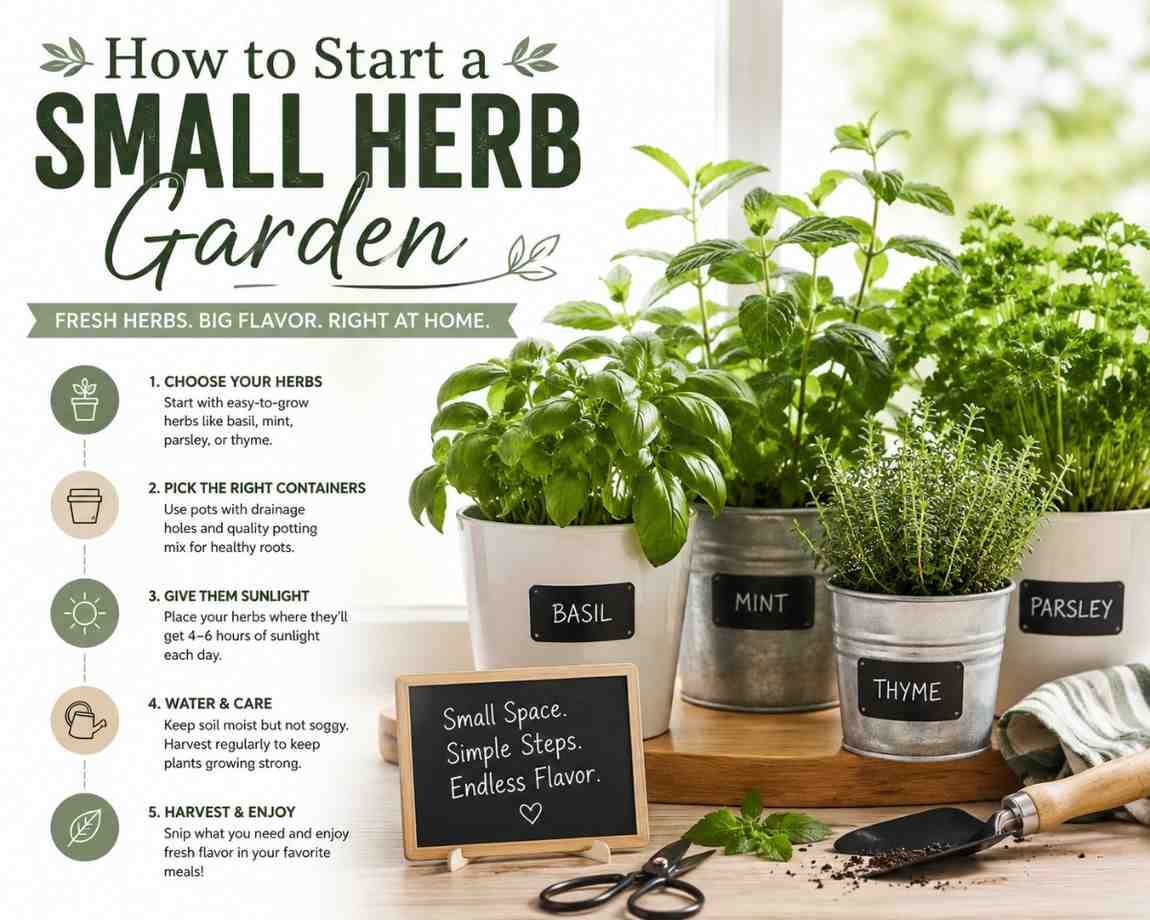
How to Start Small Herb Garden: Learning how to start a small herb garden is one of the most rewarding gardening projects for beginners. Whether you have a spacious backyard, a small balcony, a sunny windowsill, or a compact patio, growing your own herbs can provide fresh flavors for cooking, natural fragrances, and a sense of accomplishment.
Herb gardening has become increasingly popular as more people seek healthier lifestyles, sustainable food sources, and enjoyable hobbies. Fresh herbs are often expensive at grocery stores and can spoil quickly. By growing your own herbs at home, you can enjoy a continuous supply of fresh ingredients while saving money.
A small herb garden requires minimal space, basic gardening tools, and a little patience. Even first-time gardeners can successfully grow herbs such as basil, mint, parsley, cilantro, rosemary, thyme, oregano, and chives.
Starting a small herb garden is one of the easiest ways to grow fresh ingredients at home. Whether you have a balcony, backyard, or sunny windowsill, herbs can thrive with minimal care. If you’re new to gardening, you may also enjoy our guides on How to Grow Curry Leaves at Home, Aloe Vera Plant Care Guide, and Best Indoor Plants for Clean Air.
Why Start a Small Herb Garden?
How to Start Small Herb Garden: There are many benefits to growing your own herbs.
Fresh Ingredients
Homegrown herbs provide superior flavor compared to dried store-bought alternatives. Fresh basil, cilantro, and parsley can dramatically improve the taste of meals.
Cost Savings
Buying fresh herbs regularly can become expensive. A small herb garden can provide months or even years of harvests from a single plant.
Easy for Beginners
Many herbs are among the easiest plants to grow, making them ideal for people new to gardening.
Attractive and Fragrant
Herbs add beauty and pleasant aromas to indoor and outdoor spaces.
Sustainable Living
Growing herbs reduces packaging waste and transportation impacts associated with store-bought produce.
Health Benefits
Many herbs contain vitamins, minerals, antioxidants, and beneficial plant compounds.
Choosing the Best Location
How to Start Small Herb Garden: Location plays a major role in herb gardening success.
Sunlight Requirements
Most herbs thrive in full sunlight and require:
- 6 to 8 hours of sunlight daily
- Bright outdoor conditions
- Sunny windows for indoor growing
Popular sun-loving herbs include:
- Basil
- Rosemary
- Thyme
- Oregano
- Sage
Partial Shade Herbs
Some herbs can tolerate partial shade.
Examples include:
- Mint
- Parsley
- Cilantro
- Chives
Indoor Herb Gardens
How to Start Small Herb Garden:
If outdoor space is limited, herbs can grow successfully indoors near:
- South-facing windows
- East-facing windows
- Bright balconies
- Sunrooms
Grow lights can also supplement natural sunlight.
Selecting the Right Herbs
How to Start Small Herb Garden: Choosing beginner-friendly herbs increases your chances of success.
Basil
Basil is one of the most popular culinary herbs.
Uses:
- Pasta sauces
- Salads
- Pizza
- Pesto
Basil grows quickly and produces abundant leaves.
Mint
Mint is vigorous and easy to grow.
Uses:
- Tea
- Desserts
- Cocktails
- Fruit salads
Mint spreads aggressively and is best grown in containers.
Parsley
Parsley offers fresh flavor and attractive foliage.
Uses:
- Garnishes
- Soups
- Salads
- Sauces
Cilantro
Cilantro is widely used in many cuisines.
Uses:
- Salsa
- Curries
- Tacos
- Chutneys
Rosemary
Rosemary is a hardy herb with a distinctive aroma.
Uses:
- Roasted vegetables
- Meat dishes
- Bread recipes
Thyme
Thyme is low-maintenance and highly versatile.
Uses:
- Soups
- Stews
- Marinades
Chives
Chives are easy to grow and produce onion-like flavors.
Uses:
- Salads
- Eggs
- Soups
Oregano
Oregano is a favorite herb for Mediterranean cooking.
Uses:
- Pizza
- Pasta
- Sauces
Deciding Between Seeds and Seedlings
How to Start Small Herb Garden:
Starting from Seeds
Advantages:
- Affordable
- Larger variety
- Educational experience
Disadvantages:
- Slower growth
- Requires patience
Buying Seedlings
Advantages:
- Faster harvest
- Easier for beginners
- Less maintenance initially
Disadvantages:
- Higher cost
Most beginner gardeners find seedlings easier to manage.
Choosing Containers
Container gardening is ideal for small herb gardens.
Benefits of Containers
- Portable
- Space-efficient
- Better control over soil
- Reduced weed growth
Recommended Container Sizes
Small herbs:
- 6 to 8-inch pots
Larger herbs:
- 10 to 12-inch pots
Drainage Importance
Always choose containers with drainage holes.
Poor drainage can cause:
- Root rot
- Mold
- Plant death
Preparing the Soil
How to Start Small Herb Garden: Healthy soil creates healthy plants.
Characteristics of Good Herb Soil
The ideal soil should be:
- Loose
- Well-draining
- Nutrient-rich
- Moist but not waterlogged
Potting Mix
Use quality potting soil rather than garden soil in containers.
Potting mixes improve:
- Drainage
- Root development
- Moisture retention
Soil Amendments
You can improve soil with:
- Compost
- Coconut coir
- Perlite
- Organic matter
Planting Your Herbs
How to Start Small Herb Garden
Step 1: Fill Containers
Fill containers with prepared potting mix.
Step 2: Create Planting Holes
Dig holes slightly larger than root balls.
Step 3: Place Seedlings
Position herbs carefully in the soil.
Step 4: Cover Roots
Gently cover roots with soil.
Step 5: Water Thoroughly
Water immediately after planting.
Watering Your Herb Garden
How to Start Small Herb Garden: Watering is one of the most important aspects of herb care.
General Rule
Water when the top inch of soil feels dry.
Signs of Underwatering
- Wilting leaves
- Dry soil
- Slow growth
Signs of Overwatering
- Yellow leaves
- Mushy stems
- Root rot
Watering Tips
- Water deeply
- Water early in the morning
- Avoid soggy soil
Proper watering is essential for healthy herb growth. Just as plants need water to thrive, people need adequate hydration for overall health. Learn more in How Much Water Do I Need to Drink?
Fertilizing Herbs
Herbs generally require less fertilizer than vegetables.
Organic Fertilizers
Good options include:
- Compost
- Worm castings
- Fish emulsion
- Organic liquid fertilizer
Fertilizer Frequency
Apply light feeding every 4 to 6 weeks during active growth.
Over-fertilizing may reduce flavor intensity.
Providing Proper Air Circulation
How to Start Small Herb Garden: Good airflow helps prevent:
- Mold
- Mildew
- Fungal diseases
Avoid overcrowding plants and allow adequate spacing.
Herb Garden Maintenance
Pruning
Regular pruning encourages:
- Bushier growth
- More leaves
- Better harvests
Removing Dead Leaves
Remove yellow or damaged leaves promptly.
Weed Control
Containers usually have fewer weeds, but remove any that appear.
Harvesting Herbs
One of the most exciting parts of herb gardening is harvesting.
When to Harvest
Most herbs can be harvested once they are well established.
Harvesting Tips
- Use clean scissors
- Cut above leaf nodes
- Harvest regularly
- Avoid removing more than one-third of the plant
Best Time to Harvest
Morning is often the best time because essential oils are concentrated.
Storing Fresh Herbs
Refrigeration
Wrap herbs in a damp paper towel and refrigerate.
Freezing
Many herbs freeze well for long-term storage.
Drying
Dry herbs in a warm, well-ventilated area.
Store dried herbs in airtight containers.
Common Problems and Solutions
Yellow Leaves
Possible causes:
- Overwatering
- Nutrient deficiencies
- Poor drainage
Slow Growth
Possible causes:
- Insufficient sunlight
- Poor soil quality
- Lack of nutrients
Pests
Common herb garden pests include:
- Aphids
- Spider mites
- Whiteflies
Natural solutions include:
- Neem oil
- Insecticidal soap
- Hand removal
Fungal Diseases
Prevent fungal issues through:
- Proper spacing
- Good airflow
- Avoiding overwatering
Best Herbs for Indoor Gardens
How to Start Small Herb Garden: Indoor gardeners often have great success with:
- Basil
- Mint
- Chives
- Parsley
- Oregano
- Thyme
These herbs adapt well to containers and indoor conditions.
Seasonal Herb Gardening Tips
Spring
- Start seeds
- Plant new herbs
- Prepare containers
Summer
- Water regularly
- Harvest frequently
- Monitor pests
Fall
- Bring tender herbs indoors
- Dry excess herbs
Winter
- Protect herbs from frost
- Use grow lights if necessary
Small Space Herb Garden Ideas
Windowsill Garden(How to Start Small Herb Garden)
Perfect for apartments and kitchens.
Balcony Garden
Utilize containers and vertical planters.
Hanging Herb Garden
Ideal for maximizing limited space.
Vertical Herb Garden
Use wall-mounted systems or stacked planters.
Raised Herb Beds
Suitable for patios and small yards.
Benefits of Growing Herbs for Cooking
How to Start Small Herb Garden: Fresh herbs can transform ordinary meals into flavorful dishes.
Examples:
- Basil for Italian recipes
- Cilantro for Mexican dishes
- Rosemary for roasted vegetables
- Mint for beverages
- Chives for eggs and salads
Freshly harvested herbs often contain stronger flavors and aromas than dried alternatives.
Environmental Benefits
How to Start Small Herb Garden: Herb gardens contribute to sustainability by:
- Reducing food transportation
- Lowering packaging waste
- Supporting pollinators
- Encouraging greener living
Even a small herb garden can make a positive environmental impact.
Conclusion
How to Start Small Herb Garden: Starting a small herb garden is one of the easiest and most rewarding ways to begin gardening. Whether you choose to grow herbs on a sunny windowsill, balcony, patio, or backyard, the process is simple, affordable, and enjoyable.
By selecting the right herbs, providing adequate sunlight, using quality soil, watering properly, and maintaining your plants regularly, you can enjoy a steady supply of fresh herbs throughout the year. From basil and parsley to mint and rosemary, homegrown herbs add flavor, fragrance, beauty, and health benefits to everyday life.
With patience and consistent care, your small herb garden can become a productive and satisfying source of fresh ingredients while helping you develop valuable gardening skills that last a lifetime. Starting a small herb garden is a rewarding hobby that provides fresh herbs, enhances your cooking, and supports a healthier lifestyle. To continue your gardening and wellness journey, explore our related guides:
FAQs(How to Start Small Herb Garden)
What is a small herb garden?
A small herb garden is a compact gardening space dedicated to growing herbs for cooking, medicinal purposes, or decoration. It can be created in containers, raised beds, balconies, patios, or even on a sunny windowsill, making it suitable for homes of all sizes.
What are the easiest herbs for beginners to grow?
Some of the easiest herbs for beginners include basil, mint, parsley, chives, oregano, thyme, and rosemary. These herbs are generally low-maintenance, grow well in containers, and can adapt to a variety of growing conditions.
How much sunlight does a herb garden need?
Most herbs require at least six to eight hours of direct sunlight each day. Herbs such as basil, rosemary, thyme, and oregano thrive in full sun, while parsley, mint, and cilantro can tolerate partial shade.
Can I start a herb garden indoors?
Yes, many herbs grow successfully indoors when placed near a bright window that receives adequate sunlight. If natural light is limited, grow lights can help provide the necessary light for healthy growth.
What is the best soil for growing herbs?
Herbs grow best in well-draining, nutrient-rich soil. A high-quality potting mix is usually recommended for container gardening because it promotes healthy root development and prevents waterlogging.
How often should I water my herb garden?
Watering frequency depends on the type of herb, weather conditions, and container size. As a general rule, water herbs when the top inch of soil feels dry. Avoid overwatering, as excess moisture can lead to root rot and other problems.
Should herbs be grown from seeds or seedlings?
Both methods can be successful. Seeds are more affordable and offer a wider variety of choices, while seedlings provide a faster and easier start for beginners. Many new gardeners prefer seedlings because they require less time and effort initially.
Can different herbs be grown together in one container?
Yes, herbs with similar sunlight and watering requirements can be grown together. For example, basil, oregano, and thyme often grow well in the same container. However, mint is best grown separately because it spreads aggressively and can take over other plants.
How long does it take for herbs to grow?
Growth times vary depending on the herb and growing conditions. Some herbs, such as basil and cilantro, can be harvested within a few weeks, while woody herbs like rosemary may take longer to establish.
When should I harvest herbs?
Most herbs can be harvested once they have produced enough healthy leaves. It is best to harvest regularly and avoid removing more than one-third of the plant at a time. Frequent harvesting often encourages new growth.
How can I keep my herb plants healthy?
Provide adequate sunlight, use well-draining soil, water properly, and prune regularly. Removing dead leaves, ensuring good air circulation, and monitoring for pests can also help maintain healthy herb plants.
What are the common problems in a herb garden?
Common issues include overwatering, underwatering, insufficient sunlight, pests, and fungal diseases. Most problems can be prevented by providing proper care, good drainage, and adequate spacing between plants.
Can herbs survive during winter?
Some herbs, such as rosemary, thyme, and sage, can tolerate cooler temperatures, while others may need protection from frost. Indoor growing or moving containers indoors can help herbs survive during winter months.
What are the benefits of growing your own herbs?
Growing herbs at home provides fresh ingredients, saves money, reduces food waste, and adds beauty to your living space. Homegrown herbs also allow you to enjoy better flavor and fragrance compared to many store-bought options.
Do I need a large yard to start a herb garden?
No, a large yard is not necessary. Many herbs thrive in small containers, window boxes, hanging baskets, and vertical gardens. Even a sunny windowsill can provide enough space to grow several popular herbs successfully.
About the Author
Hitasha is a health, wellness, gardening, and lifestyle content writer who creates easy-to-understand articles on home gardening, natural living, nutrition, and healthy habits.
Disclaimer
This article is for informational and educational purposes only. Gardening results may vary depending on climate, soil quality, plant variety, and growing conditions. Always follow local gardening recommendations for best results.
Sources & References
- Royal Horticultural Society (RHS) – Growing Herbs Guide
- The Old Farmer’s Almanac – Herb Gardening for Beginners
- University of Minnesota Extension – Growing Herbs at Home
- University of Illinois Extension – Herb Gardening Basics
- University of Florida IFAS Extension – Herb Gardening Resources
- Missouri Botanical Garden – Herb Gardening Information
- Gardening Know How – Herb Garden Growing Tips