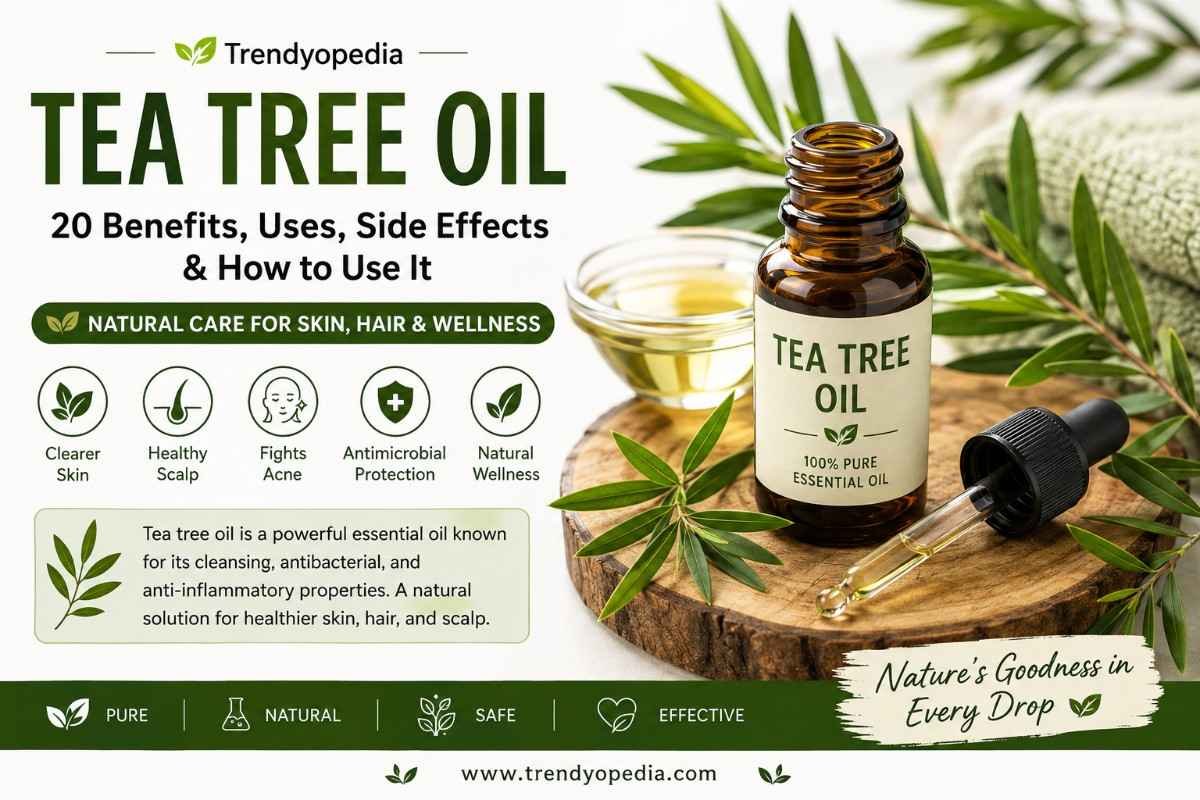
Tea tree oil is one of the most popular essential oils in natural skincare and hair care. Extracted from the leaves of the Australian tea tree (Melaleuca alternifolia), it has been used for generations for its cleansing properties and is now a common ingredient in facial cleansers, shampoos, acne treatments, soaps, and scalp care products.
Research suggests tea tree oil has antimicrobial and anti-inflammatory properties, making it a popular option for managing oily skin, acne, dandruff, and minor skin concerns. However, because it is a concentrated essential oil, it should always be diluted before applying it to the skin.
In this complete guide, you’ll learn the 20 benefits of Tea Tree Oil, how to use it safely, possible side effects, and the best ways to include it in your daily skincare and hair care routine.
If you enjoy natural oils for skincare and hair care, explore our guides on Olive Oil, Rosehip Oil, Castor Oil. Each oil offers unique benefits and can be used to create a personalized beauty routine.
What Is Tea Tree Oil?
This oil is a natural essential oil obtained through steam distillation of the leaves of the Australian tea tree (Melaleuca alternifolia).
It is widely used in:
- Facial cleansers
- Acne treatments
- Shampoo
- Conditioner
- Body wash
- Soaps
- Hair oils
- Scalp treatments
- Nail care products
Unlike cooking oils, tea tree oil is not edible and should never be swallowed.
Types of Tea Tree Oil
1. Pure Tea Tree Essential Oil
- Highly concentrated
- Best diluted before use
- Commonly used in DIY skincare
2. Organic Tea Tree Oil
- Produced from organically grown tea tree plants
- Popular among natural skincare enthusiasts
3. Tea Tree Oil Blends
- Mixed with carrier oils like Jojoba Oil, Coconut Oil, or Olive Oil
- Easier for beginners to use
Key Active Compounds
This oil naturally contains several compounds, including:
- Terpinen-4-ol
- Gamma-terpinene
- Alpha-terpinene
- Cineole (small amounts)
- Alpha-terpineol
These compounds are believed to contribute to its cleansing and antimicrobial properties.
Nutrition
This oil is used externally and is not a food, so it does not have a nutrition label like edible oils.
20 Benefits of Tea Tree Oil
1. Helps Reduce Acne
This oil is widely used in acne products. Research suggests it may help reduce mild to moderate acne when used correctly.
2. Supports Oily Skin
It may help reduce excess surface oil and leave skin feeling refreshed.
3. Cleanses the Skin
Tea tree oil is a common ingredient in facial cleansers because of its cleansing properties.
4. Helps Soothe Minor Skin Irritation
When diluted properly, tea tree oil may help calm minor skin irritation in some individuals.
5. Supports Scalp Health
Many anti-dandruff shampoos contain This oil to help keep the scalp clean.
6. Helps Reduce Dandruff
Some studies suggest This oil shampoo may improve dandruff symptoms in certain people.
7. Refreshes the Scalp
Its cooling sensation can leave the scalp feeling refreshed after washing.
8. Helps Reduce Hair Product Build-Up
Tea tree oil shampoos can help remove excess oil and styling product residue.
9. Supports Healthy Hair
A clean, healthy scalp provides a better environment for healthy-looking hair.
10. Helps Keep Nails Clean
Tea tree oil is commonly included in nail-care products for its cleansing properties.
11. Helps Freshen Feet
Many foot sprays and creams include tea tree oil because of its deodorizing qualities.
12. Supports Beard Care
Diluted This oil may help keep beard skin clean and comfortable.
13. Works Well in DIY Beauty Products
This oil blends easily with carrier oils for homemade skincare and hair care recipes.
14. Supports Daily Facial Cleansing
A few diluted drops can be added to carrier oils for cleansing routines.
15. Helps Refresh the Skin After Exercise
This oil body washes are popular after workouts because they leave the skin feeling clean.
16. Supports Healthy-Looking Skin
Its cleansing properties make it a favorite ingredient in many skincare products.
17. Helps Condition the Scalp
When mixed with carrier oils, tea tree oil can be used in scalp massage routines.
18. Helps Reduce Excess Oil on the Scalp
Useful for people with oily scalps when used in shampoo or diluted scalp treatments.
19. Supports Personal Hygiene
Tea tree oil is commonly found in natural soaps, body washes, and deodorizing products.
20. Multipurpose Essential Oil
This oil is widely used in skincare, hair care, nail care, and personal hygiene products.
Tea Tree Oil for Skin
This oil is especially popular among people with oily or acne-prone skin.
Potential benefits include:
- Cleansing the skin
- Helping reduce excess oil
- Supporting clearer-looking skin
- Refreshing the complexion
Always dilute This oil with a carrier oil before applying it to the skin.
The American Academy of Dermatology (AAD) recommends patch testing new topical products, especially for sensitive skin.
Tea Tree Oil for Acne
This oil has been studied as a topical treatment for mild to moderate acne.
To use safely:
- Dilute with a carrier oil such as Jojoba Oil or Coconut Oil.
- Apply only to affected areas.
- Avoid contact with the eyes.
- Stop use if irritation occurs.
Tea tree oil is often used alongside gentle skincare products. You can also read our How to Repair a Damaged Skin Barrier guide to learn how to protect sensitive skin while introducing active ingredients.
Tea Tree Oil for Hair
This oil is commonly added to shampoos and scalp treatments.
Potential benefits include:
- Cleaner scalp
- Reduced oil build-up
- Fresher-feeling hair
- Support for overall scalp hygiene
Tea Tree Oil for Scalp
Tea tree oil may help improve scalp comfort by reducing excess oil and keeping the scalp clean.
Mix a few drops with:
- Coconut Oil
- Olive Oil
- Jojoba Oil
Massage gently into the scalp and wash after 20–30 minutes.
Tea Tree Oil for Nails
This oil is commonly used in nail care routines.
It may help:
- Keep nails clean
- Support healthy-looking nails
- Refresh the skin around the nails
Always dilute before use.
How to Use Tea Tree Oil Safely
For Skin
- Mix 2–3 drops with 1 tablespoon of a carrier oil.
- Apply to clean skin.
- Patch test before full use.
For Hair
- Add 2–3 drops to your shampoo.
- Or dilute with coconut oil before a scalp massage.
For Feet
Mix tea tree oil with a carrier oil and apply to clean, dry feet.
MedlinePlus advises that This oil should not be swallowed and may cause skin irritation or allergic reactions in some people.
DIY Tea Tree Oil Face Serum
Ingredients
- 1 tablespoon Jojoba Oil
- 2 drops This oil
- 1 vitamin E capsule (optional)
Directions
- Mix the ingredients well.
- Apply a small amount to clean skin at night.
- Use 2–3 times per week or as tolerated.
Tea Tree Oil vs Neem Oil
| Feature | Tea Tree Oil | Neem Oil |
|---|---|---|
| Source | Melaleuca alternifolia leaves | Neem tree seeds |
| Best For | Oily skin, acne-prone skin, scalp care | Dry scalp, skin care, hair care |
| Texture | Lightweight essential oil | Thick carrier oil |
| Use | Always dilute before applying | Can often be used directly or diluted depending on the product |
Tea Tree Oil vs Coconut Oil
| Feature | Tea Tree Oil | Coconut Oil |
|---|---|---|
| Type | Essential oil | Carrier oil |
| Texture | Very light | Medium |
| Best For | Cleansing skin and scalp | Moisturizing skin and hair |
| Application | Must be diluted | Can often be applied directly to skin and hair |
Tea Tree Oil vs Jojoba Oil
| Feature | Tea Tree Oil | Jojoba Oil |
|---|---|---|
| Type | Essential oil | Carrier oil |
| Best For | Acne-prone skin | Daily facial moisturizing |
| Texture | Light | Lightweight and non-greasy |
Tea Tree Oil vs Rosemary Oil
| Feature | Tea Tree Oil | Rosemary Oil |
|---|---|---|
| Primary Use | Skin cleansing and scalp care | Hair and scalp care |
| Best For | Oily skin and dandruff | Hair care routines |
| Aroma | Fresh, medicinal | Herbal |
Best Time to Use Tea Tree Oil
Morning
- Use a tea tree facial cleanser.
- Apply a diluted spot treatment if recommended by your skincare routine.
- Wash oily hair with a tea tree shampoo.
Evening
- Apply a diluted This oil blend after cleansing.
- Massage diluted This oil into the scalp before shampooing.
- Use as part of your nighttime skincare routine if it suits your skin.
Possible Side Effects
This oil is generally safe when used correctly on the skin, but it may cause:
- Skin irritation
- Redness
- Dryness
- Itching
- Allergic contact dermatitis
- Eye irritation if accidental contact occurs
Never swallow This oil, as it can be toxic if ingested.
Safety Precautions
- Always dilute This oil with a carrier oil.
- Perform a patch test before first use.
- Keep away from children and pets.
- Avoid contact with eyes, mouth, and other sensitive areas.
- Do not apply to broken or severely irritated skin unless advised by a healthcare professional.
- Stop use immediately if irritation develops.
FAQs
Can tea tree oil be applied directly to the skin?
It is generally recommended to dilute This oil with a carrier oil such as Jojoba Oil, Coconut Oil, or Olive Oil before applying it to the skin.
Is tea tree oil good for acne?
Research suggests This oil may help improve mild to moderate acne in some people due to its antimicrobial and anti-inflammatory properties.
Can tea tree oil help with dandruff?
Some studies indicate that shampoos containing This oil may improve dandruff symptoms for certain individuals.
Can I use tea tree oil every day?
Many people use This oil products daily, but frequency depends on your skin type, product formulation, and individual tolerance.
Can tea tree oil promote hair growth?
This oil helps keep the scalp clean and healthy, but there is limited evidence that it directly stimulates hair growth. A healthy scalp may support normal hair growth conditions.
Conclusion
Tea tree oil is a versatile essential oil widely used in skincare, hair care, and personal hygiene products. Its cleansing, antimicrobial, and anti-inflammatory properties make it a popular choice for oily skin, acne-prone skin, and scalp care. Because it is highly concentrated, always dilute tea tree oil before topical use and perform a patch test to reduce the risk of irritation.
To build a complete natural beauty routine, explore our articles on Onion Oil, Hibiscus Oil, Moringa Oil, Pumpkin Seed Oil, on Trendyopedia.
Author
Author: Hitasha
Hitasha is a beauty and wellness writer at Trendyopedia, specializing in evidence-based skincare, hair care, nutrition, and natural wellness. She creates well-researched, reader-friendly articles that help people make informed health and beauty decisions.
Disclaimer
This article is for educational purposes only and should not replace professional medical advice. Tea tree oil is for external use only and should never be swallowed. Always dilute before applying to the skin and consult a healthcare professional if you have allergies, sensitive skin, or persistent skin concerns.