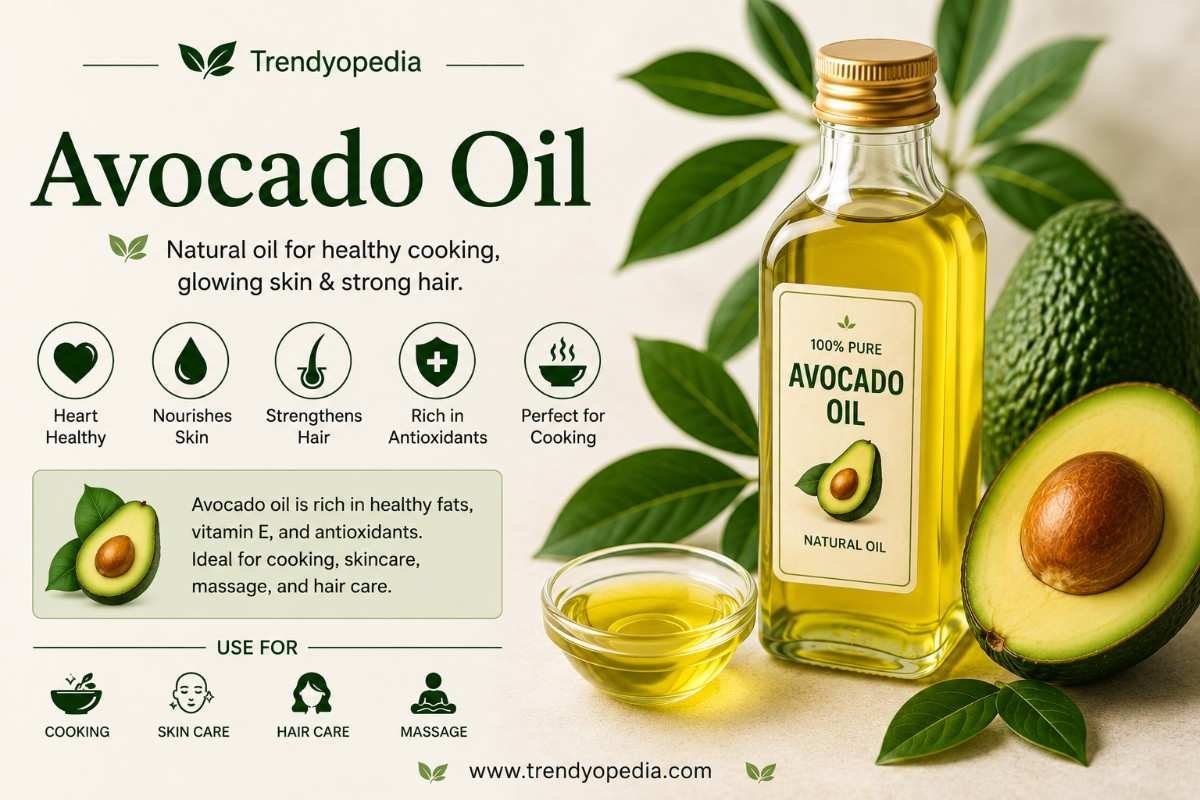
Avocado oil has become one of the most popular natural oils for cooking, skincare, and hair care. Extracted from the pulp of ripe avocados (Persea americana), it is valued for its heart-healthy fats, vitamin E, and antioxidant compounds. Thanks to its mild flavor and high smoke point, avocado oil is also a favorite choice for sautéing, grilling, roasting, and baking.
Beyond the kitchen, avocado oil is widely used in beauty products because it helps moisturize dry skin, soften hair, and support a healthy skin barrier. Whether you want a nutritious cooking oil or a nourishing addition to your beauty routine, avocado oil offers a wide range of uses.
In this guide, you’ll discover the 20 benefits of avocado oil, how to use it safely, its potential side effects, and practical ways to include it in your daily lifestyle.
If you’re interested in avocado-based nutrition and natural wellness, don’t miss our Avocado 101 guide to learn about avocado nutrition, health benefits, and storage tips. You can also explore our Avocado Toast recipe for a simple, delicious way to enjoy avocados as part of a balanced diet
What Is Avocado Oil?
Avocado oil is a plant-based oil made by pressing the flesh of ripe avocados rather than the seed. Unlike many vegetable oils, it contains naturally occurring monounsaturated fats, particularly oleic acid, which is also abundant in olive oil.
It is commonly used for:
- Cooking
- Salad dressings
- Marinades
- Baking
- Skin moisturizing
- Hair conditioning
- Massage
- DIY beauty products
Types of Avocado Oil
1. Extra Virgin Avocado Oil
- Cold-pressed
- Minimal processing
- Rich in antioxidants
- Best for salads and low-heat cooking
2. Refined Avocado Oil
- Filtered for a neutral flavor
- Higher smoke point
- Ideal for frying and grilling
3. Organic Avocado Oil
- Produced from organically grown avocados
- Popular among natural food and beauty enthusiasts
Nutrition Facts (Per 1 Tablespoon)
Approximate values:
| Nutrient | Amount |
|---|---|
| Calories | 124 |
| Total Fat | 14 g |
| Saturated Fat | 1.6 g |
| Monounsaturated Fat | ~10 g |
| Polyunsaturated Fat | ~2 g |
| Carbohydrates | 0 g |
| Protein | 0 g |
| Vitamin E | Small amounts |
| Vitamin K | Small amounts |
Key Nutrients
Avocado oil naturally contains:
- Oleic acid (monounsaturated fat)
- Vitamin E
- Vitamin K
- Lutein
- Plant sterols
- Antioxidant compounds
20 Benefits of Avocado Oil
1. Rich in Heart-Healthy Fats
Avocado oil is high in monounsaturated fats, which can be part of a heart-healthy eating pattern.
2. Supports Healthy Cholesterol Levels
Replacing saturated fats with unsaturated fats may help support healthy cholesterol levels when combined with a balanced diet.
3. Rich in Antioxidants
Vitamin E and plant compounds help protect cells from oxidative stress.
4. Supports Skin Hydration
This oil helps reduce moisture loss and leaves skin feeling soft.
5. Helps Maintain the Skin Barrier
Its nourishing fats support a healthy skin barrier.
6. Moisturizes Dry Skin
Often used in lotions, creams, and facial oils.
7. Supports Healthy Hair
Helps soften dry hair and improve manageability.
8. Adds Shine to Hair
Smooths the hair surface for a healthier appearance.
9. Helps Reduce Hair Breakage
Conditioned hair is generally less prone to breakage during styling.
10. Supports Scalp Moisture
Useful for dry scalp care when applied appropriately.
11. High Smoke Point
Suitable for high-heat cooking methods such as roasting and sautéing.
12. Versatile Cooking Oil
Works well in salads, marinades, baking, and everyday cooking.
13. Supports Healthy Aging
Its antioxidant content may help protect skin from environmental stressors.
14. Helps Soften Cuticles
Commonly used in natural nail care routines.
15. Makes an Excellent Massage Oil
Its smooth texture makes it ideal for massage.
16. Supports Beard Care
Helps moisturize beard hair and the skin underneath.
17. Suitable for DIY Beauty Products
Blends easily with essential oils and other carrier oils.
18. Helps Improve Hair Manageability
Can reduce frizz and leave hair feeling softer.
19. Multipurpose Household Oil
Useful for cooking, skincare, hair care, and massage.
20. Naturally Plant-Based
Suitable for vegetarian and vegan lifestyles.
Avocado Oil for Heart Health
This oil is rich in oleic acid, a monounsaturated fat also found in olive oil.
Potential benefits include:
- Supporting heart-healthy eating patterns
- Replacing saturated fats
- Providing healthy dietary fats
- Complementing a balanced diet
Avocado Oil for Skin
Avocado oil is commonly used in moisturizers and facial oils.
Potential benefits:
- Moisturizes dry skin
- Helps soften rough patches
- Supports the skin barrier
- Leaves skin feeling smooth
For a complete skincare routine, combine This oil with our guides on How to Repair a Damaged Skin Barrier, Rosehip Oil, to keep your skin moisturized and healthy.
Avocado Oil for Hair
Many hair products include This oil because it helps condition and soften hair.
Possible benefits:
- Reduces dryness
- Adds shine
- Helps detangle hair
- Supports scalp moisture
Avocado oil works well with other nourishing oils. Explore our Onion Oil, Moringa Oil, Amla Oil, guides for more hair care tips.
Avocado Oil for Cooking
This oil has a naturally mild flavor that complements many dishes.
It works well for:
- Stir-frying
- Roasting vegetables
- Grilling
- Salad dressings
- Marinades
- Homemade mayonnaise
- Baking
How to Use Avocado Oil
For Cooking
- Drizzle over salads.
- Use for sautéing vegetables.
- Replace butter in some recipes.
- Brush onto grilled foods.
For Skin
- Apply a few drops to clean, damp skin.
- Massage gently until absorbed.
For Hair
- Apply to the mid-lengths and ends of dry hair.
- Leave on for 20–30 minutes before shampooing.
DIY Avocado Oil Hair Mask
Ingredients
- 2 tablespoons This oil
- 1 tablespoon coconut oil
- 1 teaspoon honey (optional)
Directions
- Mix all ingredients.
- Apply from the mid-lengths to the ends of your hair.
- Leave on for 30 minutes.
- Wash with a gentle shampoo.
Avocado Oil vs Olive Oil
| Feature | Avocado Oil | Olive Oil |
|---|---|---|
| Main Fat | Monounsaturated fat (oleic acid) | Monounsaturated fat (oleic acid) |
| Smoke Point | Higher | Moderate |
| Best For | High-heat cooking, skincare | Salads, light cooking, skincare |
| Flavor | Mild, buttery | Fruity, peppery |
Avocado Oil vs Coconut Oil
| Feature | Avocado Oil | Coconut Oil |
|---|---|---|
| Main Fat | Monounsaturated fat | Saturated fat |
| Best For | Cooking, skincare, hair care | Hair care, moisturizing, cooking |
| Texture | Lightweight | Rich and creamy |
| Smoke Point | High | Moderate |
Avocado Oil vs Jojoba Oil
| Feature | Avocado Oil | Jojoba Oil |
|---|---|---|
| Type | Edible & topical oil | Topical carrier oil |
| Best For | Cooking, skin, hair | Facial skincare |
| Texture | Rich | Lightweight |
Best Time to Use Avocado Oil
Morning
- Use in smoothies or salad dressings.
- Apply a few drops to dry skin after showering.
- Smooth a small amount onto dry hair ends.
Evening
- Massage into the scalp before shampooing.
- Apply as an overnight hand or cuticle moisturizer.
- Use in your nighttime skincare routine if it suits your skin.
How Much Avocado Oil Should You Use?
For Cooking
- 1–2 tablespoons daily as part of a balanced diet.
For Skin
- 2–4 drops for the face.
- A small amount for dry areas of the body.
For Hair
- 1–2 teaspoons depending on hair length and thickness.
Possible Side Effects
Although This oil is generally well tolerated, some people may experience:
- Mild skin irritation
- Allergic reactions (especially if allergic to avocado)
- Greasy hair if overapplied
- Excess calorie intake when consumed in large amounts
- Digestive discomfort in some individuals if consumed excessively
Safety Precautions
- Perform a patch test before first topical use.
- Store in a cool, dark place.
- Use in moderation as part of a balanced diet.
- Avoid using rancid oil.
- Consult a healthcare professional if you have an avocado allergy or underlying medical condition.
FAQs
Is avocado oil healthier than olive oil?
Both oils are rich in monounsaturated fats and can be part of a healthy eating pattern. The better choice depends on your cooking method and personal preference.
Can avocado oil be used on the face?
Yes. Many people use This oil to moisturize dry skin. However, if you have oily or acne-prone skin, test it on a small area first to see how your skin responds.
Is avocado oil good for hair?
Yes. This oil can help soften dry hair, reduce frizz, and improve manageability.
Can avocado oil help with dry skin?
Yes. Its emollient properties help reduce moisture loss and keep skin feeling soft and hydrated.
Can I cook with avocado oil every day?
Yes, when used in moderation as part of a balanced diet. Its high smoke point makes it suitable for many cooking methods.
Conclusion
Avocado oil is a versatile plant-based oil that offers benefits for both the kitchen and your beauty routine. Rich in heart-healthy monounsaturated fats, vitamin E, and antioxidant compounds, it can support healthy cooking while also helping to moisturize dry skin and condition hair. Whether you’re using it in recipes, facial care, or hair treatments, This oil is a practical addition to a balanced lifestyle.
For more natural wellness and beauty inspiration, explore our guides on Tea Tree Oil, Neem Oil,Hibiscus Oil, Tulsi Oil, on Trendyopedia.
Author
Author: Hitasha
Hitasha is a beauty and wellness writer at Trendyopedia, specializing in evidence-based nutrition, skincare, hair care, and natural remedies. She creates well-researched, easy-to-understand content that helps readers make informed health and beauty decisions.
Disclaimer
This article is for informational purposes only and should not replace professional medical advice. Individual responses to avocado oil may vary. If you have an avocado allergy, persistent skin concerns, or specific dietary needs, consult a qualified healthcare professional before using avocado oil regularly.