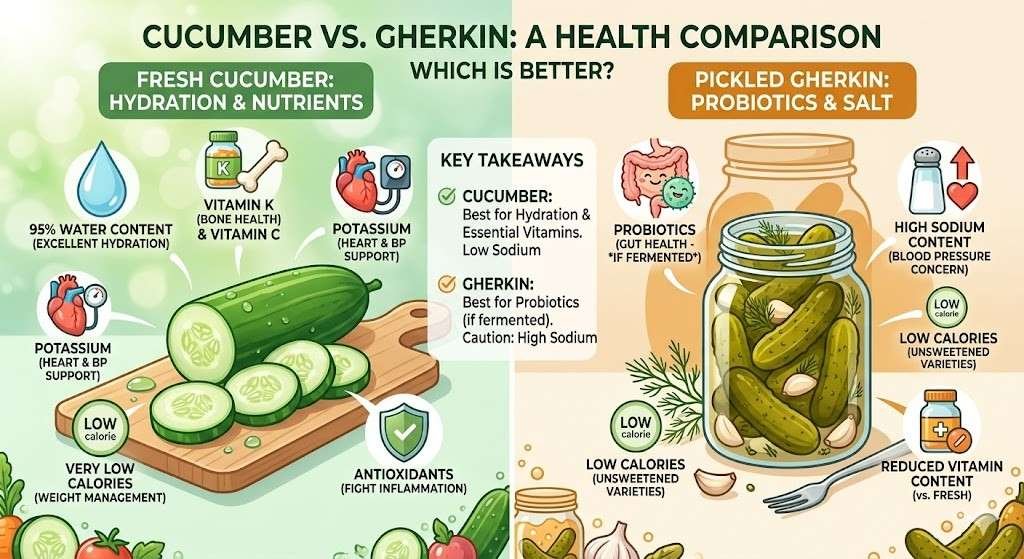
Gherkin vs Cucumber: Gherkin and cucumber are often confused because they look similar, belong to the same plant family, and are commonly used in salads, pickles, and healthy meals. However, they are not exactly the same. While cucumbers are usually eaten fresh and raw, gherkins are smaller, firmer, and often used for pickling. Both offer valuable nutrients, hydration, and low-calorie benefits, but each has unique advantages depending on your health goals.
If you want to choose the healthier option, it is important to understand how they differ in nutrition, digestion, weight management, vitamins, and daily use. For another helpful guide on nutrient-rich foods, explore Avocado 101, Pomelo .
What Is a Gherkin?
A gherkin is a small edible fruit from a cucumber-related plant, usually harvested early while still firm and crisp. It is often used in pickled form, although fresh gherkins are also available in some regions.
Gherkins are known for:
- Small size
- Crunchy texture
- Slightly stronger flavor
- Firm skin
- Excellent pickling quality
Because of their size and texture, they are highly popular in processed food, snacks, and preserved products.
What Is a Cucumber?
A cucumber is a longer green fruit commonly eaten raw in salads, sandwiches, juices, and detox water.
Cucumbers are popular because they provide:
- High water content
- Mild flavor
- Cooling effect
- Easy digestion
- Low calories
They are one of the most widely consumed vegetables in healthy diets worldwide.
Botanical Difference Between Gherkin vs Cucumber
Gherkin vs Cucumber: Although both belong to the same plant family, they are slightly different species or cultivated varieties.
Gherkin
Usually smaller and grown mainly for pickling.
Cucumber
Typically larger and grown for fresh eating.
The main visible differences include size, skin texture, and taste intensity.
Nutritional Comparison Per 100 Grams(Gherkin vs Cucumber)
| Nutrient | Gherkin | Cucumber |
|---|---|---|
| Calories | Very low | Very low |
| Water content | High | Very high |
| Fiber | Moderate | Moderate |
| Vitamin C | Present | Present |
| Vitamin K | Good amount | Good amount |
| Potassium | Moderate | Moderate |
| Sodium | Higher if pickled | Very low |
Fresh cucumber usually contains less sodium than pickled gherkins.
Which Has Fewer Calories?
Gherkin vs Cucumber: Both are excellent low-calorie foods.
Gherkin
A small serving provides very few calories.
Cucumber
Also extremely low in calories and suitable for weight-loss diets.
For calorie control, both are highly beneficial.
Which Is Better for Hydration?
Gherkin vs Cucumber: Cucumber is generally better for hydration because it contains very high water content.
Why cucumber supports hydration:
- More than 90% water
- Cooling effect
- Ideal in summer
- Helps fluid balance
This makes cucumber excellent for:
- Detox drinks
- Summer salads
- Hydrating snacks
Gherkins also contain water but usually less when preserved in vinegar or salt.
Which Is Better for Digestion?
Gherkin vs Cucumber: Both support digestion, but they work differently.
Cucumber digestion benefits:
- Gentle fiber
- High water
- Easy on stomach
- Helps bowel movement
Gherkin digestion benefits:
- Crunchy fiber
- Fermented versions may support gut bacteria
If gherkins are fermented naturally, they may provide additional digestive benefits because fermentation supports beneficial gut microbes.
Fresh vs Pickled Gherkins
Many health differences depend on whether gherkins are fresh or pickled.
Fresh gherkins:
- Low sodium
- Natural nutrients preserved
- Good fiber source
Pickled gherkins:
- Higher sodium
- Vinegar content
- Longer shelf life
Pickled versions may contain extra salt, which should be considered by people managing blood pressure.
Gherkin vs Cucumber Which Is Better for Weight Loss?
Both are excellent for weight loss.
Why cucumber helps:
- High volume
- Low calories
- Reduces hunger
Why gherkin helps:
- Crunchy snack
- Strong flavor reduces overeating
Because pickled gherkins are flavorful, some people feel satisfied with smaller portions.
Gherkin vs Cucumber Which Contains More Vitamins?
Both contain similar vitamins, but cucumber often provides more freshness-based nutrient retention when eaten raw.
Important nutrients include:
- Vitamin C
- Vitamin K
- Potassium
- Small antioxidants
Fresh produce usually provides more vitamin preservation than processed pickled foods.
Which Is Better for Blood Pressure?
Fresh cucumber is often better for blood pressure because it naturally contains low sodium.
Cucumber benefits:
- Potassium support
- Low salt
- Water-rich
Pickled gherkin caution:
- Often high sodium
- Excess salt may affect blood pressure
People with hypertension should choose fresh gherkins or limit heavily salted pickled versions.
Which Is Better for Diabetes?
Both can fit diabetic-friendly diets because they are low in carbohydrates.
Benefits for diabetes:
- Low sugar
- Low calories
- Fiber support
However, pickled gherkins should be checked for added sugar in commercial products.
Gherkin vs Cucumber Which Is Better for Skin Health?
Cucumber is especially famous for skin support.
Cucumber skin benefits:
- Hydration
- Cooling effect
- Vitamin C
- Fresh antioxidants
This is why cucumber appears often in skincare and beauty diets.
Gherkin also contributes nutrients but cucumber is more widely used for skin wellness.
Which Is Better for Gut Health?
Naturally fermented gherkins may offer extra gut support compared with fresh cucumber because they can contain beneficial bacteria. For more simple ways to support digestion, explore our guide to 15 Best Morning Drinks for Gut Health.
Fermented gherkin advantages:
- Beneficial bacteria
- Digestive support
- Improved microbial diversity
Fresh cucumber supports digestion mainly through fiber and water.
Gherkin vs Cucumber Which Is Better for Heart Health?
Heart health depends largely on sodium intake.
Fresh cucumber:
Very heart-friendly because of:
- Low sodium
- Potassium
- Hydration
Pickled gherkin:
Good in moderation, but excess sodium should be avoided.
Which Is Better for Daily Eating?
Cucumber is ideal for:
- Salads
- Juice
- Detox water
- Raw snacks
Gherkin is ideal for:
- Sandwiches
- Pickles
- Snack plates
- Fermented foods
Both can be included regularly depending on preference.
Taste Comparison
Cucumber
- Mild
- Refreshing
- Soft crunch
Gherkin
- Stronger taste
- Firmer texture
- Tangier when pickled
Taste often influences which people eat more often.
Which Is Better for Children?
Fresh cucumber is usually easier for children because of mild flavor.
Gherkins may be loved by children who enjoy pickles, but salty versions should be limited.
Which Is Better for Low-Sodium Diets?
Fresh cucumber clearly wins for low-sodium diets.
Fresh gherkins also work well, but pickled versions often contain significant salt.
Which Is Better for Sports Diets?
Athletes often prefer cucumber because hydration is critical.
However, small pickled gherkins are sometimes used for electrolyte replacement because sodium may help after heavy sweating.
Antioxidant Value Comparison(Gherkin vs Cucumber)
Both contain plant compounds that help protect cells.
Antioxidants support:
- Cell protection
- Reduced oxidative stress
- General wellness
Fresh produce usually delivers the strongest antioxidant value.
Global Food Uses
Cucumber common uses:
- Salads
- Juices
- Sandwiches
- Raita
Gherkin common uses:
- Pickles
- Burgers
- Snack jars
- Preserved products
Which Is Better for Summer?
Cucumber is usually preferred in summer because of:
- Cooling nature
- Water content
- Fresh taste
It helps support comfort during hot weather.
Which Is Better for Long Shelf Life?
Gherkins have advantage because pickling preserves them for months.
Fresh cucumbers spoil faster.
Best Choice by Health Goal
| Health Goal | Better Choice |
|---|---|
| Hydration | Cucumber |
| Low sodium | Cucumber |
| Fermented gut support | Gherkin |
| Weight control | Both |
| Skin hydration | Cucumber |
| Flavorful snack | Gherkin |
Can You Eat Both Together?
Yes, combining both adds variety.
For example:
- Fresh cucumber salad with sliced gherkins
- Sandwiches with cucumber and pickled gherkin
- Healthy snack plates
This gives both hydration and flavor.
Conclusion on Gherkin vs Cucumber
There is no single winner because both foods offer strong health value.
Choose Cucumber if you want:
- Maximum hydration
- Fresh vitamins
- Cooling effect
- Low sodium
Choose Gherkin if you want:
- Crunchy texture
- Strong flavor
- Fermented benefits
- Convenient preserved snack
For best health results, include both in a balanced diet and choose less processed versions whenever possible. If you are watching your salt intake, our guide to DASH Diet for Heart Health shares practical tips for choosing lower-sodium foods.
FAQs: Gherkin vs Cucumber
1. Is gherkin healthier than cucumber?
Both are healthy, but cucumber is better for hydration while gherkin can offer extra flavor and fermented benefits if naturally pickled.
2. Can diabetics eat gherkin and cucumber?
Yes, both are low in carbohydrates and can fit well into diabetic-friendly diets.
3. Which has fewer calories, gherkin or cucumber?
Both are very low in calories, making them excellent for weight management.
4. Is cucumber better for skin health?
Yes, cucumber is often preferred for skin health because of its high water content and cooling effect.
5. Are pickled gherkins high in sodium?
Yes, many pickled gherkins contain higher sodium because of salt used in preservation.
6. Gherkin vs Cucumber Which is better for digestion?
Cucumber supports digestion through water and fiber, while fermented gherkins may help gut bacteria.
7. Can gherkins help with weight loss?
Yes, gherkins are low in calories and can be a satisfying crunchy snack.
8. Is cucumber good for hydration?
Yes, cucumber contains over 90% water and is excellent for hydration.
9. Can children eat gherkins?
Yes, but salty pickled gherkins should be eaten in moderation.
10. Gherkin vs Cucumber Which is better for blood pressure?
Fresh cucumber is usually better because it contains very low sodium.
11. Is fresh gherkin better than pickled gherkin?
Fresh gherkin often has less sodium and more natural nutrient balance.
12. Can I eat cucumber every day?
Yes, daily cucumber consumption is generally safe and beneficial.
13. Do gherkins contain probiotics?
Only naturally fermented gherkins may contain probiotics.
14. Which tastes stronger, gherkin or cucumber?
Gherkin usually has a stronger flavor, especially when pickled.
15. Can both be eaten together?
Yes, both can be combined in salads, sandwiches, and healthy snacks.
16. What are the side effects of gherkins?
Pickled gherkins can cause bloating and indigestion due to their high sodium content. Other potential side effects include high blood pressure and water retention.
About the Author
Hitasha is a health and wellness content writer who creates easy-to-understand articles about nutrition, healthy foods, fitness, natural remedies, and balanced lifestyle habits. Her goal is to help readers make practical, informed choices for everyday wellness.
Disclaimer
This article is for informational purposes only and does not replace professional medical advice. Always consult a qualified healthcare professional before making major dietary changes, especially if you have high blood pressure, kidney concerns, food allergies, digestive conditions, or take regular medications.
Sources & References
- U.S. Department of Agriculture (USDA) FoodData Central — Nutrition information for raw cucumbers and pickled cucumber products.
- World Health Organization (WHO) — Sodium reduction guidance and recommended limits for adults.
- Harvard T.H. Chan School of Public Health – The Nutrition Source — Probiotics, fermented foods, and gut-health information.
- Mayo Clinic — Probiotics and prebiotics: what they are and how they may support digestive health.