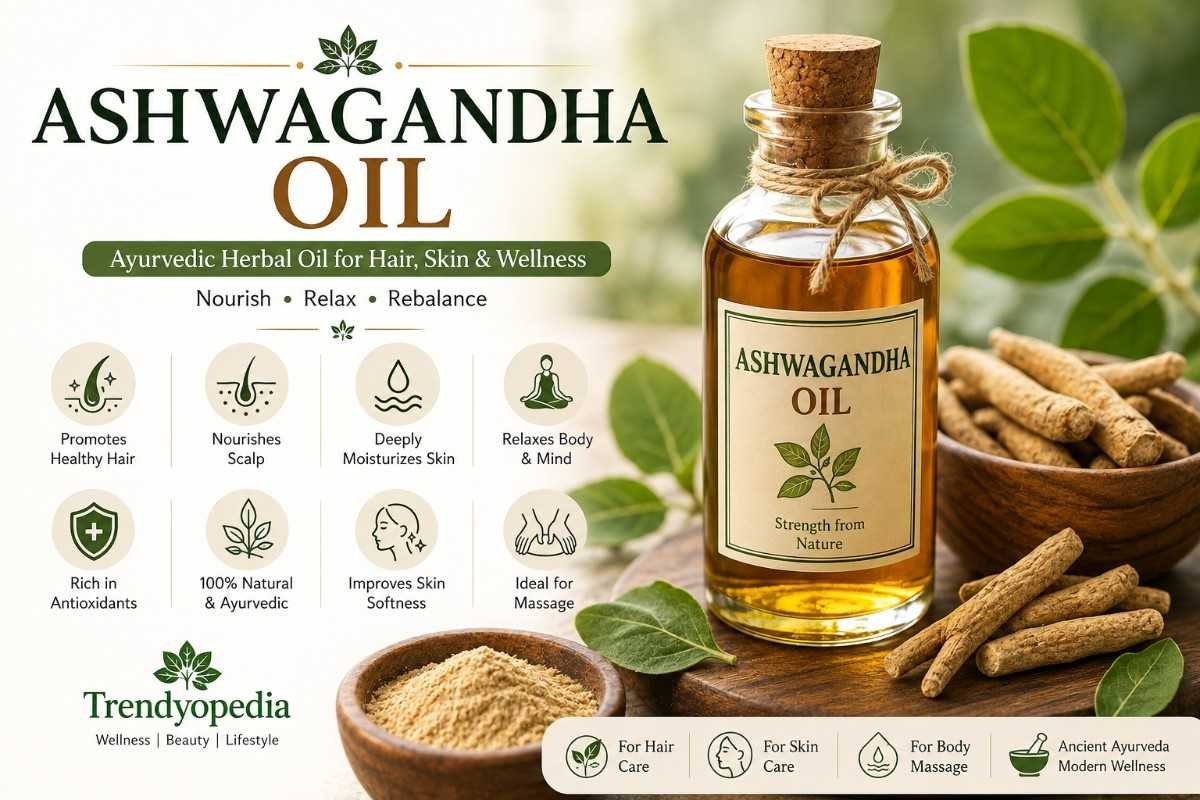
Ashwagandha Oil is a traditional Ayurvedic herbal oil made by infusing Ashwagandha (Withania somnifera) root extract into nourishing carrier oils such as sesame, coconut, or other plant-based oils. It has long been used in Ayurveda for body massage, scalp care, and skin nourishment.
Today, Ashwagandha Oil is popular in natural beauty and wellness routines because it may help moisturize the skin, condition the scalp, and support healthy-looking hair. Many people also enjoy using it during massage as part of a relaxing self-care ritual.
Although Ashwagandha is well known as an herbal supplement, Ashwagandha Oil is intended for external use only and should not be confused with oral Ashwagandha products.
In this guide, you’ll discover the 20 potential benefits of Ashwagandha Oil, how to use it safely, possible side effects, and practical ways to include it in your skincare and hair care routine. For more natural beauty oils, check out our guides on Amla Oil, Avocado Oil, Olive Oil, Tea Tree Oil,
What Is Ashwagandha Oil?
Ashwagandha Oil is an herbal-infused oil prepared by combining Ashwagandha root with a carrier oil through traditional Ayurvedic methods. Depending on the formulation, it may also include other herbs that complement scalp, skin, or massage applications.
Unlike Ashwagandha capsules or powders, this oil is designed specifically for topical use.
It is commonly used for:
- Hair oiling
- Scalp massage
- Body massage
- Dry skin care
- Relaxation massage
- Beard care
- Daily moisturizing
Although Ashwagandha Oil is made from the same herb, it should not be confused with oral Ashwagandha supplements. Read our Ashwagandha guide to understand the differences between topical and oral forms, and explore Ashwagandha Water for another way people include this herb in their wellness routines.
How Is Ashwagandha Oil Made?
Traditional Ashwagandha Oil is prepared by:
- Extracting beneficial compounds from Ashwagandha roots.
- Infusing the extract into a carrier oil such as sesame or coconut oil.
- Slowly heating the mixture using traditional Ayurvedic techniques.
- Filtering and bottling the finished oil.
The exact formulation may vary between manufacturers.
Types of Ashwagandha Oil
1. Traditional Ayurvedic Ashwagandha Oil
- Prepared using classical herbal methods
- Often contains sesame oil
- Commonly used for massage
2. Ashwagandha Hair Oil
- Designed specifically for scalp and hair care
- May include herbs like amla or bhringraj
3. Organic Ashwagandha Oil
- Made with organically sourced herbs
- Popular among natural beauty enthusiasts
Key Active Compounds
Ashwagandha contains naturally occurring plant compounds, including:
- Withanolides
- Alkaloids
- Flavonoids
- Antioxidant compounds
- Fatty acids (from the carrier oil)
The composition depends on the specific product and formulation.
20 Potential Benefits of Ashwagandha Oil
1. Helps Moisturize Dry Skin
Its nourishing carrier oils help reduce moisture loss and leave skin feeling soft.
2. Supports a Healthy Skin Barrier
Regular moisturizing may help maintain the skin’s protective barrier.
3. Conditions Dry Hair
Ashwagandha Oil may help improve the feel of dry or coarse hair.
4. Supports Scalp Hydration
Massage with Ashwagandha Oil may help relieve dryness and keep the scalp moisturized.
5. Adds Shine to Hair
Regular oiling can improve the appearance of dull hair.
6. Helps Reduce Hair Breakage
Conditioned hair is often less prone to breakage during styling.
7. Supports Beard Care
Can soften beard hair and moisturize the skin beneath.
8. Suitable for Head Massage
Frequently used in Ayurvedic scalp massage routines.
9. Ideal for Body Massage
Provides excellent glide during massage.
10. Helps Relax Tight Muscles
Massage with oil may promote relaxation after physical activity.
11. Rich in Antioxidant Plant Compounds
Ashwagandha contains naturally occurring compounds that have been studied for their antioxidant properties.
12. Supports Daily Moisturizing
Can be used on dry areas such as elbows, knees, and hands.
13. Leaves Skin Feeling Soft
Regular use may improve skin smoothness.
14. Supports Healthy-Looking Hair
Healthy hair care habits, including oiling, may improve overall hair appearance.
15. Helps Reduce Dryness After Showering
Applying oil to slightly damp skin helps lock in moisture.
16. Complements Ayurvedic Wellness Practices
Traditionally used as part of self-massage (Abhyanga).
17. Helps Improve Hair Manageability
Makes hair easier to comb and style.
18. Supports Seasonal Skin Care
Useful during colder months when skin tends to become dry.
19. Multipurpose Beauty Oil
Suitable for scalp, hair, beard, and body care.
20. Naturally Plant-Based
An excellent choice for people who prefer herbal skincare products.
Ashwagandha Oil for Hair
Ashwagandha Oil is widely used in Ayurvedic hair care routines.
Potential benefits include:
- Conditioning dry hair
- Improving softness
- Supporting scalp moisture
- Reducing frizz
- Enhancing hair shine
Ashwagandha Oil for the Scalp
A moisturized scalp is an important part of a healthy hair care routine.
To use:
- Apply a small amount to the scalp.
- Massage gently for 5–10 minutes.
- Leave on for 30–60 minutes or overnight if suitable.
- Wash with a mild shampoo.
Ashwagandha Oil for Skin
Ashwagandha Oil can be used as a body oil or moisturizer for dry skin.
Potential benefits:
- Helps soften rough skin
- Supports skin hydration
- Improves skin smoothness
- Suitable for massage
To create a complete skincare routine, combine Ashwagandha Oil with our Kumkumadi Oil articles.
Ashwagandha Oil for Massage
Traditional Ayurvedic massage, known as Abhyanga, often includes herbal oils like Ashwagandha Oil.
Potential uses:
- Relaxation massage
- Daily self-care
- Post-workout massage
- Dry skin care
How to Use Ashwagandha Oil
For Hair
- Warm 1–2 teaspoons of oil.
- Massage into the scalp.
- Apply through the hair lengths.
- Leave on for at least 30 minutes.
- Wash with a gentle shampoo.
For Skin
- Apply a small amount after showering.
- Massage into slightly damp skin.
- Focus on dry areas.
For Massage
- Warm the oil slightly.
- Massage into the body using slow, circular movements.
- Relax for 15–20 minutes before showering if desired.
DIY Ashwagandha Hair Oil Treatment
Ingredients
- 2 tablespoons This Oil
- 1 tablespoon Coconut Oil
- 1 teaspoon Amla Oil
Directions
- Mix the oils together.
- Warm slightly.
- Massage into the scalp and hair.
- Leave on for 45–60 minutes.
- Wash with a mild shampoo.
Ashwagandha Oil vs Coconut Oil
| Feature | Ashwagandha Oil | Coconut Oil |
|---|---|---|
| Type | Herbal-infused oil | Natural carrier oil |
| Best For | Massage, scalp care, dry skin | Hair care, skin moisturizing, cooking |
| Texture | Medium | Rich |
| Everyday Use | Massage and body care | Hair, skin, and multipurpose use |
Ashwagandha Oil vs Amla Oil
| Feature | Ashwagandha Oil | Amla Oil |
|---|---|---|
| Main Use | Massage and scalp care | Hair nourishment |
| Traditional System | Ayurveda | Ayurveda |
| Best For | Relaxation, skin, hair | Hair care and scalp care |
Ashwagandha Oil vs Bhringraj Oil
| Feature | Ashwagandha Oil | Bhringraj Oil |
|---|---|---|
| Traditional Use | Massage, skin, scalp | Hair and scalp care |
| Texture | Medium | Medium |
| Best For | Body massage and dry skin | Hair oiling |
Best Time to Use Ashwagandha Oil
Morning
- Apply after showering to help moisturize dry skin.
- Use for a relaxing scalp massage before washing your hair.
Evening (Recommended)
Many people prefer using This Oil at night as part of an Ayurvedic self-care routine.
Night routine:
- Warm a small amount of oil.
- Massage gently into the scalp or body.
- Leave on for 30–60 minutes or overnight if suitable.
- Wash off if desired.
Possible Side Effects
Ashwagandha Oil is generally well tolerated when used as directed, but some people may experience:
- Mild skin irritation
- Redness
- Allergic reactions
- Breakouts if the oil is too rich for oily skin
- Temporary greasiness on the scalp or hair
Safety Tips
- Perform a patch test before first use.
- Use only on healthy, intact skin.
- Avoid contact with the eyes.
- Store in a cool, dry place away from sunlight.
- Stop using the product if irritation develops.
- Consult a healthcare professional if you have a known allergy to any ingredient.
FAQs
Can Ashwagandha Oil be used every day?
Yes. Many people use it several times a week or daily for massage, depending on their skin and hair care routine.
Is Ashwagandha Oil good for hair?
This Oil is commonly used to condition hair, moisturize the scalp, and improve hair softness. However, evidence that topical This Oil directly promotes hair growth is limited.
Can Ashwagandha Oil be applied to the face?
Some formulations are suitable for facial use, while others are intended only for the body or scalp. Always follow the manufacturer’s instructions and perform a patch test first.
Can Ashwagandha Oil help with dry skin?
Yes. Like many plant-based oils, it can help reduce moisture loss and improve skin softness.
Can I leave Ashwagandha Oil overnight?
Many people leave it on overnight for hair or body care if the product directions allow. Wash it off in the morning if desired.
Conclusion
Ashwagandha Oil is a traditional Ayurvedic herbal oil valued for its nourishing and moisturizing properties. Whether used for scalp massage, body massage, or dry skin care, it can be a helpful addition to a balanced self-care routine. While traditional use supports many of its applications, scientific evidence for some topical benefits is still evolving. Choosing a quality product, patch testing before use, and following the manufacturer’s directions can help you enjoy its benefits safely.
To build a complete natural wellness routine, explore our guides on Neem Oil, Onion Oil, Hibiscus Oil, Moringa Oil on Trendyopedia.
Author
Author: Hitasha
Hitasha is a beauty and wellness writer at Trendyopedia, specializing in evidence-based skincare, hair care, nutrition, and natural remedies. She creates well-researched, reader-friendly content that helps people make informed health and beauty choices.
Disclaimer
This article is for informational purposes only and should not replace professional medical advice. Ashwagandha Oil is intended for external use only. Individual results may vary depending on your skin type and the product formulation. If you have sensitive skin, allergies, or an existing skin condition, consult a qualified healthcare professional before use.