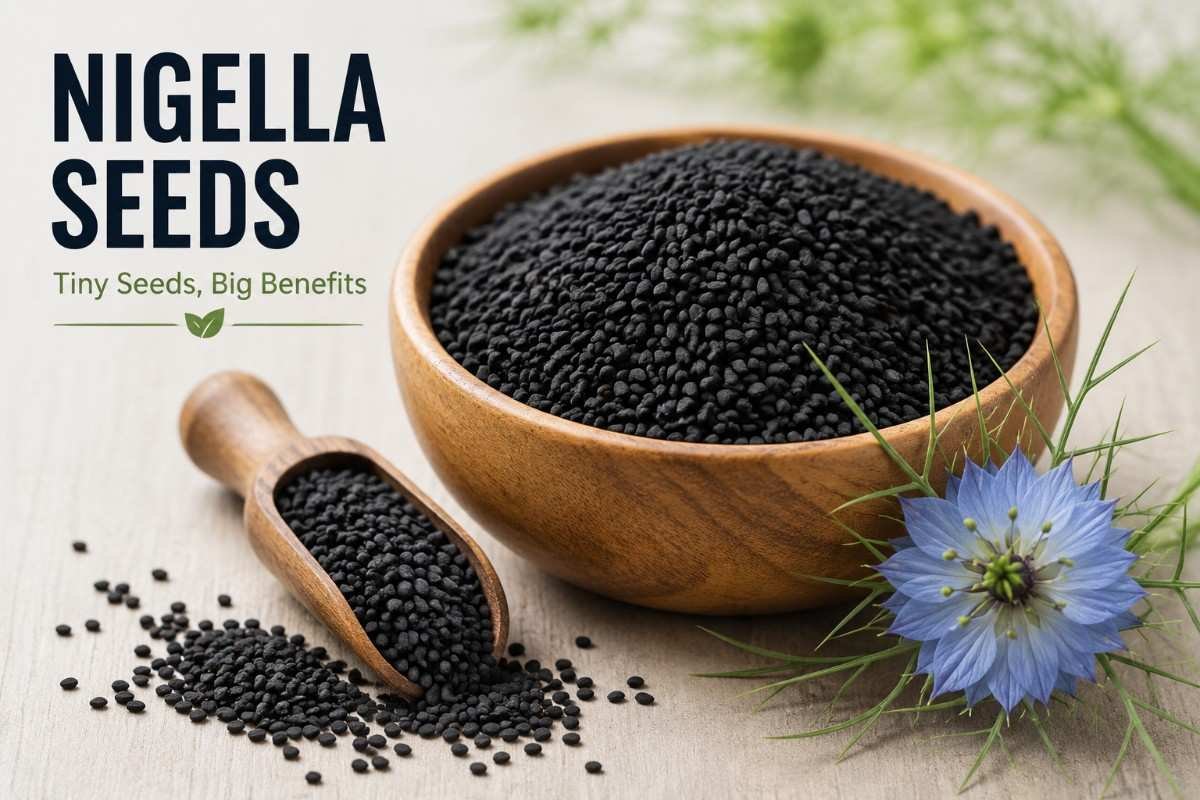
Nigella seeds, commonly known as Kalonji, are tiny black seeds obtained from the flowering plant Nigella sativa. Often referred to as black cumin in some regions (though different from true cumin), these aromatic seeds have been used for centuries in traditional cuisines and herbal practices across Asia, the Middle East, and parts of Europe.
Kalonji is valued for its slightly bitter, peppery flavor and is commonly added to breads, curries, pickles, spice blends, and vegetable dishes. In addition to its culinary uses, Nigella seeds contain plant compounds such as thymoquinone, along with healthy fats, dietary fiber, protein, vitamins, minerals, and antioxidants.
If you’re interested in nutrient-rich seeds, also explore our guides on Sunflower Seeds, and Watermelon Seeds to compare their nutrition and health benefits.
According to the Harvard T.H. Chan School of Public Health – The Nutrition Source, a diet rich in plant-based foods, including seeds, whole grains, fruits, and vegetables, supports overall health and long-term wellness.
In this complete guide, you’ll learn about Nigella seed nutrition, evidence-based health benefits, traditional uses, healthy ways to include Kalonji in your diet, possible side effects, and answers to common questions.
What Are Nigella Seeds (Kalonji)?
Nigella seeds are the small black seeds of the Nigella sativa plant. They have been used for centuries as both a culinary spice and a traditional herbal ingredient.
They are known by several names, including:
- Kalonji
- Nigella Seeds
- Black Cumin (common name in some regions)
- Black Caraway (less commonly used)
Although they are sometimes called black cumin, Nigella seeds are not the same as true cumin (Cuminum cyminum) or black sesame seeds.
Nigella Seeds vs. Black Sesame Seeds
| Feature | Nigella Seeds (Kalonji) | Black Sesame Seeds |
|---|---|---|
| Flavor | Peppery, slightly bitter | Mild, nutty |
| Botanical Name | Nigella sativa | Sesamum indicum |
| Texture | Crisp | Soft |
| Common Uses | Curries, pickles, breads | Desserts, toppings, baking |
| Key Compound | Thymoquinone | Sesamin & Sesamol |
Although they look similar, they come from different plants and have different nutritional profiles and culinary uses.
Nigella Seeds (Kalonji) Nutrition Facts
Serving Size: 100 grams (approximate values)
| Nutrient | Amount |
|---|---|
| Calories | 345 kcal |
| Protein | 16–17 g |
| Total Fat | 22 g |
| Carbohydrates | 44 g |
| Dietary Fiber | 10 g |
| Calcium | 570 mg |
| Iron | 9–10 mg |
| Magnesium | 265 mg |
| Phosphorus | 530 mg |
| Potassium | 750 mg |
| Zinc | 6 mg |
Nutrition values are approximate and may vary depending on growing conditions and processing methods. The nutrition values listed above are approximate and compiled from USDA FoodData Central, the U.S. Department of Agriculture’s official food composition database.
Why Nigella Seeds Are Considered a Functional Food
Nigella seeds contain a variety of nutrients and bioactive plant compounds, including:
- Healthy unsaturated fats
- Plant-based protein
- Dietary fiber
- Thymoquinone
- Calcium
- Magnesium
- Iron
- Zinc
- Phosphorus
- Antioxidants
They are also:
- Naturally gluten-free
- Suitable for vegetarian diets
- Low in added sugar
- Easy to incorporate into everyday cooking
1. Rich in Antioxidants
Nigella seeds contain antioxidants, including thymoquinone, that help protect cells from oxidative stress.
Research published in the journal Nutrients highlights the role of antioxidant-rich foods in supporting overall health.
2. Contains Thymoquinone
Thymoquinone is one of the most studied natural compounds found in Nigella sativa.
Scientists continue to investigate its biological properties, but more high-quality human research is needed before drawing conclusions about specific health effects.
3. Good Source of Dietary Fiber
Nigella seeds provide dietary fiber, which supports digestive health.
Fiber may help:
- Promote regular bowel movements
- Support beneficial gut bacteria
- Increase feelings of fullness
- Contribute to a balanced diet
According to the Mayo Clinic, adequate fiber intake is important for digestive health.
4. Supports Healthy Digestion
The fiber and naturally occurring plant compounds in Kalonji make it a flavorful addition to meals that include other fiber-rich foods.
5. Good Source of Plant-Based Protein
Nigella seeds provide plant protein that contributes to muscle maintenance and overall nutrition.
They can be added to breads, salads, yogurt, and vegetable dishes for extra nutrition.
6. Rich in Essential Minerals
Nigella seeds provide important minerals such as:
- Calcium
- Magnesium
- Iron
- Zinc
- Phosphorus
These nutrients play important roles in maintaining normal body functions.
7. Supports Heart Health
Nigella seeds contain healthy fats and antioxidants that can be included as part of a heart-healthy eating pattern.
The American Heart Association recommends emphasizing nutrient-rich plant foods as part of an overall heart-healthy lifestyle.
8. Supports Bone Health
The calcium, magnesium, and phosphorus in Nigella seeds contribute to maintaining healthy bones.
The National Institutes of Health (NIH) explains that these minerals are essential for bone strength and normal body function.
9. Supports Healthy Skin
The antioxidants and healthy fats found in Nigella seeds contribute to healthy skin as part of a balanced diet.
For more skincare nutrition tips, check out our guide on Best Anti-Aging Ingredients.
10. May Promote Healthy Hair
Nigella seeds provide nutrients that support healthy hair as part of an overall nutritious eating pattern.
For more natural hair care ideas, read our guide on Silica for Hair.
11. Supports Healthy Immune Function
Nigella seeds contain antioxidants, vitamins, and minerals that contribute to normal immune function.
For more immune-supporting nutrition tips, explore our guide on 8 Immune Boosting Drinks to Keep You Healthy Year-Round.
12. May Support Healthy Blood Sugar Management
Some studies have explored the relationship between Nigella sativa and blood sugar management. While early research is promising, more high-quality human studies are needed to confirm these effects. People with diabetes should continue following their healthcare provider’s advice and prescribed treatment plan.
13. May Support Healthy Weight Management
Nigella seeds contain dietary fiber and healthy fats that may help increase feelings of fullness when included as part of a balanced diet.
Healthy Tips
- Sprinkle over salads.
- Mix into yogurt.
- Add to whole-grain bread dough.
- Use in homemade spice blends.
For more healthy eating ideas, read our guides on Sugar-Free Diet .
14. Supports Overall Digestive Wellness
Including fiber-rich foods like Nigella seeds in your meals can support healthy digestion and regular bowel movements as part of an overall healthy eating pattern.
15. Rich in Healthy Fats
Nigella seeds contain beneficial unsaturated fats that contribute to a balanced diet and support overall health.
16. Supports Healthy Cholesterol Levels
Replacing highly processed snacks with nutrient-rich foods such as Nigella seeds may help improve the overall quality of your diet, which supports heart health.
17. Supports Healthy Brain Function
Healthy fats and antioxidant compounds found in Nigella seeds contribute to normal brain function when consumed as part of a nutritious diet.
18. May Support Healthy Aging
Antioxidants, including thymoquinone, help protect cells from oxidative stress. Eating a variety of antioxidant-rich foods may support healthy aging.
19. Supports Plant-Based Diets
Nigella seeds are naturally vegan and suitable for vegetarian meal plans.
If you’re interested in plant-based nutrition, read our guides on Raw Vegan Diet .
20. Naturally Gluten-Free
Plain Nigella seeds (Kalonji) are naturally gluten-free, making them suitable for people with celiac disease or gluten sensitivity. Choose products labeled gluten-free if cross-contamination is a concern.
21. Easy to Add to Everyday Meals
Nigella seeds (Kalonji) have a unique flavor that works well in many dishes.
Try adding them to:
- Whole-grain bread
- Naan
- Curries
- Soups
- Salads
- Roasted vegetables
- Yogurt dips
- Rice dishes
- Pickles
- Homemade spice mixes
22. Traditional Culinary Uses
Kalonji has been used for centuries in South Asian, Middle Eastern, and Mediterranean cooking.
It is commonly used to season:
- Flatbreads
- Vegetable dishes
- Lentils
- Chutneys
- Savory pastries
23. Convenient Pantry Staple
Because only a small amount is needed to enhance flavor, Nigella seeds (Kalonji) are easy to keep in your pantry and use regularly in home cooking.
24. Naturally Flavorful
Their peppery, slightly bitter taste adds depth to many recipes without adding sugar or excessive sodium.
25. Long Shelf Life
Store Nigella seeds (Kalonji) in an airtight container in a cool, dry place away from direct sunlight.
Proper storage helps preserve their flavor and aroma for several months.
Are Nigella Seeds Good for Weight Loss?
Nigella seeds may support weight management when included in a balanced eating pattern because they provide dietary fiber and healthy fats that promote satiety.
Tips
- Limit portions to ½–1 teaspoon daily unless advised otherwise by a healthcare professional.
- Use them as a seasoning rather than relying on them as a supplement.
- Combine them with plenty of vegetables, whole grains, lean proteins, and regular physical activity.
Can Nigella Seeds Help with Diabetes?
Some research has investigated the effects of Nigella sativa on blood sugar control. However, current evidence is not sufficient to recommend Nigella seeds (Kalonji) as a treatment for diabetes. They should never replace prescribed medications or medical care.
The American Diabetes Association recommends focusing on an overall healthy eating pattern rich in nutrient-dense foods.
Best Time to Consume Nigella Seeds
Nigella seeds (Kalonji) can be enjoyed at different times of the day.
Morning
Sprinkle over whole-grain toast, yogurt, or oatmeal.
Lunch
Add to salads, soups, or curries.
Dinner
Use in vegetable dishes, rice recipes, or homemade bread.
Recommended Daily Serving Size
For most healthy adults:
½ to 1 teaspoon (about 2–5 grams) daily is generally enough to enjoy the flavor and nutritional benefits as part of a balanced diet.
Avoid excessive intake unless advised by a healthcare professional.
Healthy Ways to Use Nigella Seeds
Enjoy Nigella seeds (Kalonji) in:
- Whole-grain bread
- Homemade crackers
- Salads
- Vegetable curries
- Yogurt dips
- Rice dishes
- Smooth savory spreads
- Roasted vegetables
- Soup toppings
- Spice blends
Easy Kalonji Yogurt Dip
Ingredients
- 1 cup plain yogurt
- ½ teaspoon Nigella seeds (Kalonji)
- Chopped mint
- Lemon juice
- Black pepper
Instructions
- Mix all ingredients.
- Chill for 15 minutes.
- Serve with vegetables or whole-grain crackers.
Possible Side Effects
Although Nigella seeds (Kalonji) are generally safe in culinary amounts, some people may experience:
- Allergic reactions
- Digestive discomfort if consumed in excess
- Possible interactions with certain medications
- Skin irritation from concentrated Nigella seed oil in sensitive individuals
Consult a healthcare professional before using Nigella seed supplements, especially if you are pregnant, breastfeeding, have a medical condition, or take prescription medications.
Buying and Storage Tips
Choose Nigella seeds (Kalonji) that are:
- Fresh-smelling
- Whole and dry
- Free from mold
- Stored in airtight packaging
Store them:
- In a cool, dry place
- Away from moisture
- In an airtight container
- Away from direct sunlight
FAQs
What are Nigella seeds?
Nigella seeds (Kalonji) are the edible seeds of the Nigella sativa plant, commonly known as Kalonji. They are widely used as a spice in many cuisines.
Are Nigella seeds the same as black sesame seeds?
No. Although they look similar, Nigella seeds (Kalonji) and black sesame seeds come from different plants and have different flavors and nutritional profiles.
Can I eat Nigella seeds every day?
Yes. Most healthy adults can use ½–1 teaspoon daily in cooking as part of a balanced diet.
Are Nigella seeds gluten-free?
Yes. Plain Nigella seeds (Kalonji) are naturally gluten-free.
Can Nigella seeds replace diabetes medication?
No. Nigella seeds (Kalonji) should not replace prescribed medications or medical treatment. Speak with your healthcare provider before making changes to your treatment plan.
How do Nigella seeds taste?
They have a slightly peppery, mildly bitter flavor with hints of oregano and onion.
Conclusion
Nigella Seeds (Kalonji) are flavorful, nutrient-rich seeds that provide healthy fats, plant-based protein, dietary fiber, minerals, antioxidants, and naturally occurring compounds such as thymoquinone. While traditional medicine has long valued Kalonji, current scientific research is still evolving, and many potential health benefits require further high-quality human studies. When used as a culinary spice and enjoyed as part of a balanced diet, Nigella seeds (Kalonji) can contribute to overall wellness.
For more healthy eating inspiration, explore our guides on Flax Seeds, Hickory Nuts, to discover more evidence-based nutrition tips and healthy lifestyle ideas.
About the Author
Hitasha is a health and nutrition writer at Trendyopedia, creating simple, evidence-based content on seeds, nuts, dry fruits, superfoods, recipes, and wellness.
Disclaimer
This article is for informational purposes only and is not a substitute for medical advice. Nigella Seeds (Kalonji) should not be used to diagnose, treat, cure, or prevent any disease. If you are pregnant, breastfeeding, taking medication, or have a medical condition, consult your doctor or a registered dietitian before use.