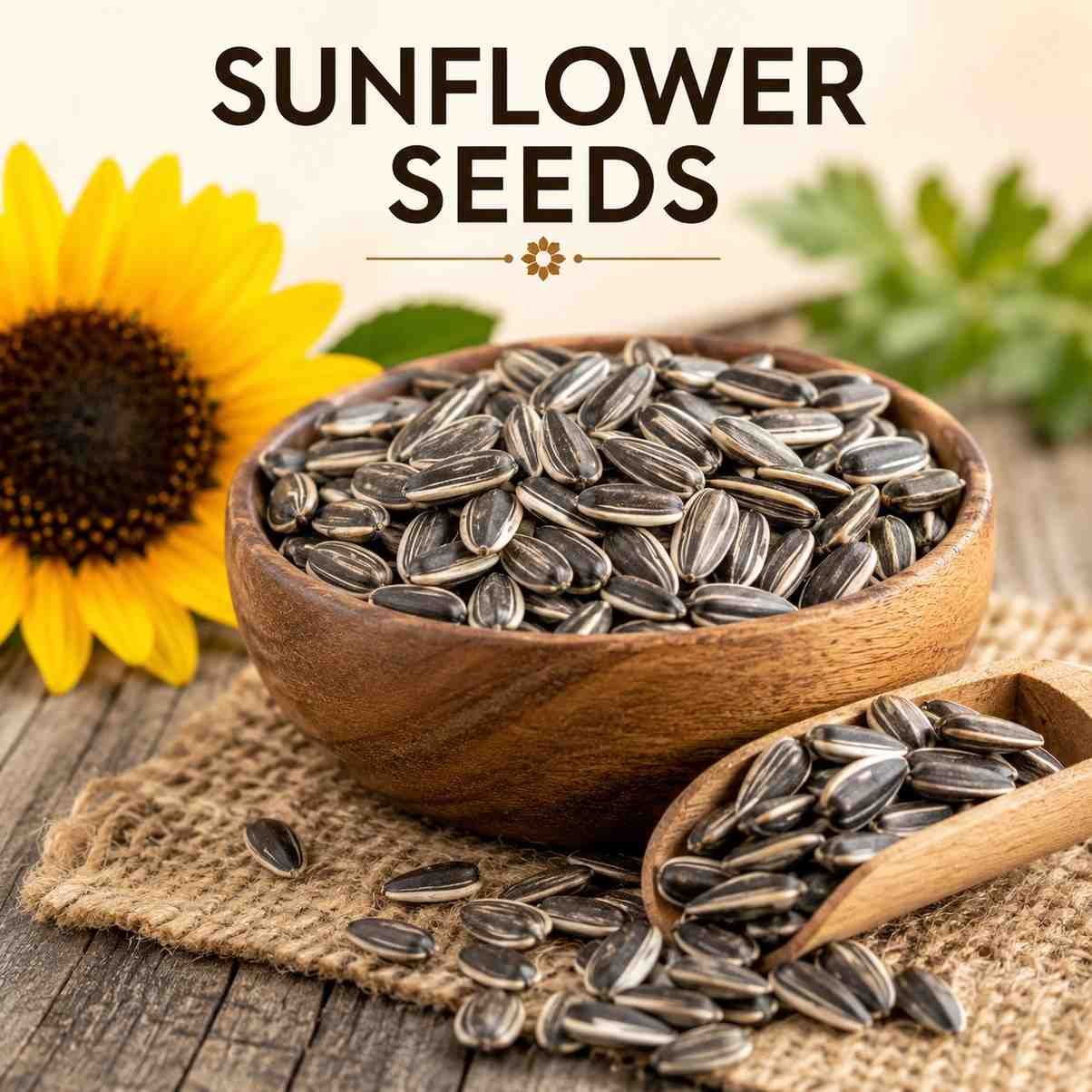
Sunflower seeds are the edible kernels of the sunflower plant (Helianthus annuus). Despite their small size, these nutrient-rich seeds are loaded with healthy fats, plant-based protein, dietary fiber, vitamin E, selenium, magnesium, and other essential nutrients that support overall health.
Enjoyed as a crunchy snack or added to salads, oatmeal, yogurt, baked goods, and trail mixes, sunflower seeds are a versatile ingredient that fits into many healthy eating patterns. Their impressive nutritional profile makes them a popular choice for supporting heart health, brain function, skin health, immune function, and weight management.
If you’re looking to include more nutritious seeds in your diet, also explore our guides on Watermelon Seeds, and Lotus Seeds (Makhana) to compare their nutrition and health benefits.
According to the Harvard T.H. Chan School of Public Health – The Nutrition Source, regularly eating nuts and seeds as part of a balanced diet may help support heart health and overall well-being.
In this complete guide, you’ll learn about sunflower seed nutrition, evidence-based health benefits, healthy ways to eat them, recommended serving sizes, possible side effects, and answers to frequently asked questions.
What Are Sunflower Seeds?
Sunflower seeds are the edible seeds harvested from the large flower heads of the sunflower plant. They have a mild, nutty flavor and are available in several forms, including:
- Raw sunflower seeds
- Roasted sunflower seeds
- Shelled sunflower kernels
- Unshelled sunflower seeds
- Unsalted sunflower seeds
- Salted sunflower seeds
Shelled, unsalted sunflower seeds are generally the healthiest option for everyday use.
Sunflower Seeds vs. Pumpkin Seeds
Both sunflower seeds and pumpkin seeds are nutrient-dense, but they differ slightly in flavor and nutrition.
| Feature | Sunflower Seeds | Pumpkin Seeds |
|---|---|---|
| Flavor | Mild, nutty | Rich, earthy |
| Protein | High | Slightly higher |
| Vitamin E | Very high | Moderate |
| Magnesium | High | Very high |
| Healthy Fats | Excellent | Excellent |
| Fiber | Good | Good |
Both can be part of a healthy diet and complement each other nutritionally.
Sunflower Seeds Nutrition Facts
Serving Size: 100 grams
| Nutrient | Amount |
|---|---|
| Calories | 584 kcal |
| Protein | 20.8 g |
| Total Fat | 51.5 g |
| Carbohydrates | 20 g |
| Dietary Fiber | 8.6 g |
| Vitamin E | 35.2 mg |
| Magnesium | 325 mg |
| Phosphorus | 660 mg |
| Potassium | 645 mg |
| Selenium | 53 mcg |
| Iron | 5.3 mg |
| Zinc | 5 mg |
Nutrition values are approximate and based on USDA FoodData Central.
Why Sunflower Seeds Are Considered a Superfood
Sunflower seeds provide many important nutrients, including:
- Healthy unsaturated fats
- Plant-based protein
- Dietary fiber
- Vitamin E
- Selenium
- Magnesium
- Zinc
- Phosphorus
- Iron
- Antioxidants
They are also:
- Naturally cholesterol-free
- Suitable for vegetarian diets
- Naturally gluten-free
- Low in added sugar
1. Rich in Healthy Unsaturated Fats
Sunflower seeds contain mostly monounsaturated and polyunsaturated fats.
Replacing foods high in saturated fat with healthier unsaturated fats supports overall cardiovascular health.
2. Excellent Source of Vitamin E
Sunflower seeds are one of the richest natural food sources of vitamin E.
Vitamin E acts as an antioxidant that helps protect cells from oxidative stress.
3. Supports Heart Health
The healthy fats, magnesium, and vitamin E found in sunflower seeds contribute to heart health when consumed as part of a balanced eating pattern.
According to the American Heart Association, replacing saturated fats with healthier unsaturated fats may help support cardiovascular wellness.
4. Rich in Dietary Fiber
Sunflower seeds provide dietary fiber that supports digestive health.
Fiber may help:
- Promote regular bowel movements
- Support beneficial gut bacteria
- Increase fullness
- Support healthy cholesterol levels
5. Supports Healthy Digestion
Fiber-rich foods like sunflower seeds help maintain a healthy digestive system.
For more digestive wellness tips, read our guide on Gut Health: Best Foods.
6. Good Source of Plant-Based Protein
Sunflower seeds provide plant protein that supports muscle maintenance and overall nutrition.
They are an excellent addition to vegetarian and vegan meal plans.
7. Rich in Antioxidants
Sunflower seeds contain vitamin E, selenium, and other antioxidants that help protect cells from oxidative stress.
Research published in the journal Nutrients highlights the importance of antioxidant-rich foods for overall health.
8. Supports Brain Health
Healthy fats and vitamin E contribute to normal brain function.
Including nutrient-rich seeds as part of a balanced diet supports long-term cognitive health.
9. Supports Bone Health
Sunflower seeds provide important minerals involved in maintaining healthy bones, including:
- Magnesium
- Phosphorus
- Calcium (small amounts)
10. Supports Healthy Skin
Vitamin E and healthy fats help maintain healthy skin by protecting cells from oxidative stress and supporting the skin’s natural barrier.
For more skincare nutrition tips, explore our guide on Best Anti-Aging Ingredients.
11. May Promote Healthy Hair
Sunflower seeds contain vitamin E, healthy fats, zinc, and protein that contribute to healthy hair as part of a balanced diet.
For more natural hair care advice, read our guide on Horsetail for Hair.
12. Supports Healthy Immune Function
Sunflower seeds contain vitamin E, selenium, zinc, and other antioxidants that contribute to the normal functioning of the immune system. These nutrients help protect cells from oxidative stress and support the body’s natural defense mechanisms.
For more wellness tips, explore our guide on 8 Immune Boosting Drinks to Keep You Healthy Year-Round.
13. May Help Support Healthy Weight Management
Although sunflower seeds are calorie-dense, they are rich in protein, healthy fats, and dietary fiber, which may help increase feelings of fullness and reduce unnecessary snacking.
Healthy Tips
- Enjoy a small handful as a snack.
- Sprinkle over salads or yogurt.
- Add to homemade trail mix.
- Practice portion control.
14. Supports Healthy Blood Sugar Management
Sunflower seeds contain healthy fats, fiber, and protein, making them a satisfying food that can fit into a balanced eating plan.
People with diabetes should choose unsalted, minimally processed This Healthy seeds and enjoy them in appropriate portions. Consult a healthcare professional for personalized dietary advice.
15. Rich in Magnesium
Magnesium is involved in hundreds of important processes in the body.
It supports:
- Muscle function
- Nerve function
- Bone health
- Energy production
16. Supports Healthy Muscles
This Healthy seeds provide plant-based protein and magnesium, both of which contribute to normal muscle maintenance and recovery.
17. Supports Healthy Cholesterol Levels
Replacing processed snacks with nutrient-rich This Healthy seeds may support healthy cholesterol levels as part of an overall heart-healthy diet.
18. Supports Healthy Aging
Vitamin E and antioxidants found in This Healthy seeds help protect cells from oxidative stress.
19. Supports Plant-Based Diets
Sunflower seeds are naturally vegan and fit easily into vegetarian and plant-based meal plans.
If you’re interested in plant-based nutrition, explore our guides on Raw Vegan Diet .
20. Naturally Gluten-Free
Plain sunflower seeds are naturally gluten-free, making them suitable for people with celiac disease or gluten sensitivity. Choose certified gluten-free products if cross-contamination is a concern.
21. Easy to Add to Everyday Meals
This Healthy seeds are incredibly versatile.
Enjoy them in:
- Oatmeal
- Yogurt
- Smoothies
- Salads
- Sandwiches
- Homemade granola
- Muffins
- Bread
- Trail mix
- Energy balls
22. Convenient Everyday Snack
A small handful of This Healthy seeds makes a portable, nutritious snack for work, school, hiking, or travel.
23. Supports Overall Healthy Eating
Including a variety of nuts and seeds in your diet helps increase your intake of healthy fats, fiber, vitamins, and minerals.
Rotate sunflower seeds with Pumpkin Seeds, Flax Seeds, Watermelon Seeds, and Chia Seeds for greater nutritional diversity.
24. Delicious Nutty Flavor
Sunflower seeds have a mild, nutty taste that complements both sweet and savory dishes.
Enjoy them:
- Raw
- Dry roasted
- Mixed into cereals
- Added to baked goods
25. Long Shelf Life
Store This Healthy seeds in an airtight container in a cool, dry place.
Refrigerating or freezing them helps preserve their healthy fats and fresh flavor.
Are Sunflower Seeds Good for Weight Loss?
This Healthy seeds can support weight management when eaten in moderation because they provide protein, healthy fats, and fiber.
Tips
- Limit portions to about one ounce (28 grams).
- Choose unsalted varieties.
- Avoid sugar-coated products.
- Pair with fresh fruit for a balanced snack.
Are Sunflower Seeds Good for Diabetes?
Many people with diabetes can include This Healthy seeds in moderation as part of a balanced eating plan.
Their healthy fats, protein, and fiber help make meals more satisfying.
The American Diabetes Association recommends emphasizing nutrient-rich, high-fiber foods as part of healthy eating.
Best Time to Eat Sunflower Seeds
This Healthy seeds can be enjoyed throughout the day.
Morning
Sprinkle over oatmeal or yogurt.
Mid-Morning Snack
Eat a small handful for lasting energy.
Before Exercise
Mix with dried fruit.
Evening
Add to salads or vegetable dishes.
How Many Sunflower Seeds Should You Eat Per Day?
For most healthy adults:
About 1 ounce (28 grams) per day fits well into a balanced diet.
Because This Healthy seeds are calorie-dense, moderation is recommended.
Healthy Ways to Eat Sunflower Seeds
Try adding This Healthy seeds to:
- Smoothies
- Overnight oats
- Yogurt bowls
- Homemade granola
- Salads
- Soups
- Bread
- Muffins
- Trail mix
- Protein pudding
Simple Sunflower Seed Trail Mix
Ingredients
- ¼ cup sunflower seeds
- ¼ cup pumpkin seeds
- ¼ cup walnuts
- 2 tablespoons raisins
- 2 tablespoons dried cranberries
Instructions
- Mix all ingredients.
- Store in an airtight container.
- Enjoy as a healthy snack.
Possible Side Effects
Although nutritious, This Healthy seeds may cause problems for some people.
Possible concerns include:
- Seed allergies
- Digestive discomfort if eaten in excess
- Extra sodium from salted varieties
- Higher calorie intake from overeating
Enjoy them in moderation as part of a balanced diet.
Buying and Storage Tips
Choose This Healthy seeds that are:
- Fresh-smelling
- Unsalted whenever possible
- Stored in airtight packaging
- Free from moisture or mold
Store them:
- In a cool, dry place
- In the refrigerator after opening
- In the freezer for long-term freshness
FAQ
Are sunflower seeds healthy?
Yes. This Healthy seeds are rich in healthy fats, protein, dietary fiber, vitamin E, selenium, and magnesium, making them a nutritious addition to a balanced diet.
Can I eat sunflower seeds every day?
Yes. Most healthy adults can enjoy about 1 ounce (28 grams) daily as part of a balanced eating pattern.
Are sunflower seeds good for heart health?
Their healthy fats, vitamin E, magnesium, and fiber support heart health when included in an overall healthy diet.
Are sunflower seeds gluten-free?
Yes. Plain This Healthy seeds are naturally gluten-free.
Can sunflower seeds help with weight loss?
They may help increase feelings of fullness because of their protein, fiber, and healthy fat content. Portion control remains important.
Are roasted sunflower seeds healthy?
Yes. Dry-roasted, unsalted This Healthy Seeds retain most of their nutrients and are a healthy snack option.
Conclusion
Sunflower seeds are a nutrient-rich superfood packed with healthy fats, plant-based protein, dietary fiber, vitamin E, selenium, magnesium, and antioxidants. When enjoyed in moderation, they can support heart health, brain function, immune health, healthy skin, and overall wellness as part of a balanced diet.
For even greater nutritional variety, combine sunflower seeds with Pumpkin Seeds, Flax Seeds, Watermelon Seeds, Walnut Benefits, Pistachio Nutrition Facts, and Hickory Nuts. You can also explore our guides on Protein Pudding for more evidence-based nutrition and healthy lifestyle tips.
About the Author
Hitasha is a health and nutrition writer at Trendyopedia, creating evidence-based content on nuts, seeds, dry fruits, superfoods, healthy recipes, and wellness. Her goal is to share accurate, practical, and easy-to-understand information that helps readers make healthier food and lifestyle choices.
Disclaimer
This article is for informational purposes only and is not a substitute for medical advice. While sunflower seeds are a nutritious food for many people, individual dietary needs and health conditions vary. If you have a seed allergy, are pregnant or breastfeeding, have a medical condition, or are taking prescription medications, consult a doctor or registered dietitian before making significant dietary changes.