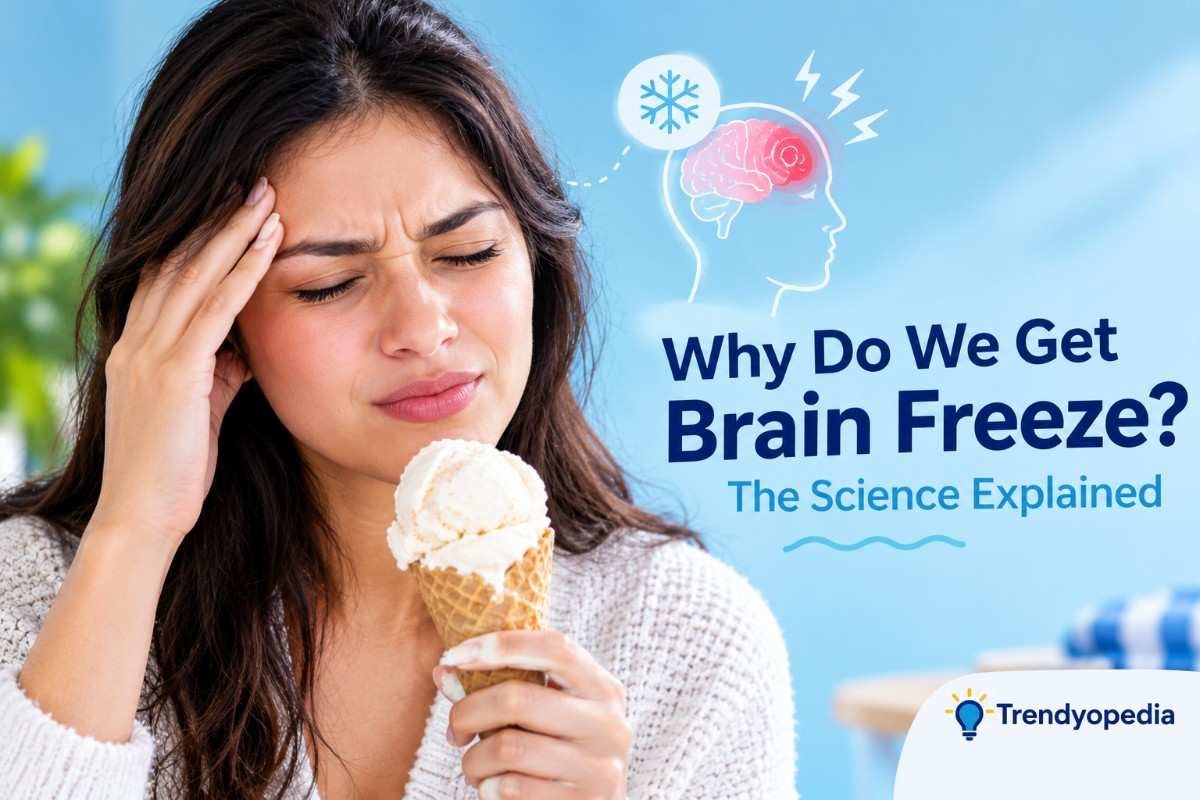
why do we get brain freeze: Have you ever taken a big bite of ice cream on a hot summer day, only to experience a sudden, sharp pain in your forehead? Perhaps you were drinking an icy smoothie or enjoying a frozen slushie when the pain appeared out of nowhere.
That uncomfortable feeling is commonly known as brain freeze. It can make you stop eating or drinking for a few seconds while you wait for the pain to disappear.
But why does something cold in your mouth cause pain in your head? Does your brain actually become cold, and is brain freeze dangerous?
The answer is fascinating. Brain freeze is a short-lived headache associated with cold stimulation of the roof of your mouth or the back of your throat. Nerves and changes in blood vessel activity are thought to play important roles in the process.
The human body has many surprising reactions to everyday experiences. For example, why do we get goosebumps? is another interesting question that reveals how our nervous system responds to different situations.
In this article, we will explain why we get brain freeze, what happens inside the body, how to make it go away faster, and how to prevent it while enjoying your favorite cold treats.
What Is Brain Freeze?
Brain freeze is a sudden, brief headache that can happen when you eat or drink something very cold. It is also called an ice cream headache or a cold-stimulus headache.
The medical term sometimes used for this condition is sphenopalatine ganglioneuralgia.
Brain freeze commonly occurs when you eat ice cream too quickly, drink an icy beverage, or swallow a large mouthful of a frozen treat.
The pain usually appears in the forehead, temples, or area behind the eyes. It may feel sharp, stabbing, or intensely uncomfortable, but it typically fades within seconds to a couple of minutes.
Although the name suggests that your brain is freezing, your brain is not actually turning cold. Instead, the cold stimulus in your mouth triggers a response involving nerves and blood vessels that can cause pain in your head.
Why Do We Get Brain Freeze?
why do we get brain freeze: The main reason we get brain freeze is that very cold food or drinks rapidly cool sensitive areas of the mouth, particularly the roof of the mouth, also known as the palate.
This sudden cooling activates sensory nerves and may cause rapid changes in the nearby blood vessels. These responses are believed to contribute to the short-lived headache.
Scientists do not yet know every detail of the mechanism, but the trigeminal nerve is an important part of the explanation.
Here is how the process is thought to work.
1. Cold Food Cools the Roof of Your Mouth
When you eat ice cream or drink a very cold beverage quickly, the cold substance may touch the roof of your mouth or the back of your throat.
These areas contain temperature-sensitive nerve endings and blood vessels. A sudden drop in temperature triggers a response as your body reacts to the cold.
This is why brain freeze is more likely when you eat or drink something extremely cold quickly rather than allowing it to warm slightly in your mouth.
2. Blood Vessels React to the Cold
why do we get brain freeze: The blood vessels in the mouth respond to sudden temperature changes. They may narrow and then rapidly widen as the body reacts to the cold stimulus.
Researchers have also observed changes in blood flow in arteries supplying the brain during cold stimulation of the mouth.
These changes may contribute to the pain, although the exact relationship between blood vessel activity and brain freeze is still being investigated.
3. The Trigeminal Nerve Sends Pain Signals
The trigeminal nerve carries sensory information from much of the face, mouth, and head to the brain.
When cold stimulation activates this nerve pathway, the resulting signals can be experienced as pain in the forehead or temples.
This leads to an interesting phenomenon called referred pain. Referred pain occurs when the source of a sensation is in one area, but you feel the pain somewhere else.
For example, the cold stimulus begins in your mouth, but the headache may feel as though it is coming from your forehead.
That is why eating ice cream can make your head hurt even though your brain is not directly exposed to the cold.
Our bodies can produce other unexpected reactions, too. Why do we get hiccups? is another fascinating example of how nerves and muscles work together to create an automatic response.
Why Does Brain Freeze Hurt Your Forehead Instead of Your Mouth?
why do we get brain freeze: One of the strangest things about brain freeze is that the pain often appears far away from the place where the cold food touches your body.
The explanation involves the way your nervous system processes sensory information.
The trigeminal nerve carries signals from different parts of the face and head. When cold stimulation activates pathways associated with this nerve, your brain may interpret the resulting pain as coming from your forehead, temples, or area behind your eyes.
In other words, the sensation you experience does not always identify the exact location where the process began.
This is why brain freeze feels like a sudden headache rather than simply an extremely cold mouth.
Scientists are still studying the precise mechanisms behind this response, so it is best to understand referred pain as part of the explanation rather than the complete answer.
How Long Does Brain Freeze Last?
why do we get brain freeze: The good news is that brain freeze usually does not last very long.
For many people, the pain disappears within several seconds to around two minutes after the cold stimulus is removed. The exact duration can vary.
You may experience the pain for only a few seconds if you stop eating the cold food immediately. If you continue taking large bites or drinking icy beverages, the discomfort may persist or return.
Unlike many other types of headaches, an ordinary brain freeze usually resolves on its own without medication.
If you experience a severe headache that does not quickly improve, keeps returning, or feels different from a typical brain freeze, do not automatically assume that cold food is the cause. Seek medical advice when appropriate.
How to Stop Brain Freeze Quickly
why do we get brain freeze: If you are experiencing brain freeze right now, there are a few simple things you can try.
1. Stop Eating or Drinking the Cold Item
The first step is to stop consuming the ice cream, slushie, or other cold food that triggered the pain.
Continuing to expose the roof of your mouth to the cold may prolong the discomfort.
Pause for a moment and allow the area to return toward its normal temperature.
2. Press Your Tongue Against the Roof of Your Mouth
One commonly recommended method is to press your tongue against the roof of your mouth.
Your tongue transfers warmth to the area and may help it warm up more quickly. Hold it there comfortably for several seconds.
Do not press hard or do anything that causes additional discomfort.
3. Sip a Room-Temperature or Warm Drink
A small sip of room-temperature water may help warm the mouth. A comfortably warm drink can also help, but avoid anything hot enough to burn your mouth.
You do not need to drink a large amount. The goal is simply to reduce the sudden cold sensation.
4. Give It a Moment
Sometimes, the easiest solution is to wait.
Brain freeze is usually brief, and the pain often disappears naturally once the cold stimulus is removed.
You generally do not need pain medication for a typical episode because it resolves so quickly.
How Can You Prevent Brain Freeze?
why do we get brain freeze: You do not have to stop eating ice cream or drinking smoothies to avoid brain freeze. A few small changes may help reduce your chances of experiencing it.
Eat Ice Cream Slowly
One of the easiest ways to prevent brain freeze is to take smaller bites and eat more slowly.
Allowing ice cream to warm slightly in your mouth before swallowing can reduce sudden cooling of the palate.
Avoid Large Sips of Icy Drinks
When drinking a smoothie, slushie, or very cold beverage, take smaller sips instead of gulping it down.
This is particularly useful on hot days when you may be tempted to drink quickly.
Let Frozen Treats Warm Slightly
If your ice cream is extremely hard or your frozen drink is particularly icy, let it soften slightly before consuming it.
A less extreme temperature change may reduce the likelihood of triggering the headache.
Pay Attention to Your Own Triggers
Some people experience brain freeze more easily than others.
Notice whether certain drinks, foods, or eating habits trigger it for you. If you repeatedly experience the pain after consuming cold foods, try slowing down and taking smaller portions.
Are Some People More Likely to Get Brain Freeze?
why do we get brain freeze: Yes. Not everyone experiences brain freeze in the same way.
Research suggests that people who experience migraines may be more susceptible to cold-stimulus headaches. However, getting brain freeze does not mean you have migraines, and not everyone who experiences migraines gets brain freeze.
Children may also experience it because they sometimes eat frozen treats quickly.
Individual differences in sensitivity, eating habits, and responses to cold may influence how often brain freeze occurs.
If cold foods repeatedly trigger significant headaches or migraine symptoms, consider discussing the pattern with a healthcare professional.
Is Brain Freeze Dangerous?
why do we get brain freeze: For most people, ordinary brain freeze is harmless. The pain is temporary and generally disappears once the cold stimulus is removed.
It does not mean that your brain is freezing, and an occasional episode is not usually a cause for concern.
However, it is important to distinguish a typical brain freeze from other headaches.
Seek urgent medical attention if you experience a sudden, extremely severe headache, weakness, confusion, fainting, vision loss, or other unusual neurological symptoms. These are not typical features of an ordinary brain freeze.
You should also consult a healthcare professional if your headaches last longer than expected, occur frequently, or interfere with daily activities.
5 Interesting Facts About Brain Freeze
1. Brain Freeze Has a Scientific Name
The term sphenopalatine ganglioneuralgia is sometimes used to describe an ice cream headache. Fortunately, most people simply call it brain freeze.
2. It Can Happen With More Than Ice Cream
Frozen drinks, slushies, ice pops, and other very cold foods can trigger the same type of headache.
3. The Pain Can Appear Almost Immediately
Brain freeze can begin within seconds of cold stimulation, particularly when you consume a cold food or drink quickly.
4. Your Brain Is Not Actually Freezing
The name is misleading. The pain is associated with responses in the mouth, nerves, and blood vessels, not the brain literally freezing.
5. Brain Freeze May Help Scientists Understand Headaches
Researchers study cold-stimulus headaches to better understand how the nervous system and blood vessels contribute to head pain. Some of these pathways also overlap with those involved in migraine, although brain freeze and migraine are different conditions.
FAQs why do we get brain freeze
1. Why do we get brain freeze when eating ice cream?
Brain freeze occurs when very cold food rapidly cools the roof of the mouth or nearby throat. This activates sensory nerves and may trigger changes in blood vessel activity that contribute to a brief headache.
2. How do you get rid of brain freeze fast?
Stop eating or drinking the cold item, press your tongue gently against the roof of your mouth, or sip a room-temperature drink. The pain usually disappears on its own within a short time.
3. How long does brain freeze usually last?
Brain freeze commonly lasts several seconds to around two minutes. If a headache continues much longer or feels unusually severe, do not assume it is ordinary brain freeze.
4. Can brain freeze damage your brain?
An ordinary brain freeze is considered harmless and does not mean your brain is freezing. However, unusual, persistent, or severe headaches should be assessed appropriately.
5. Why does brain freeze hurt behind the eyes?
The trigeminal nerve carries sensory signals from the mouth and face to the brain. Referred pain can make the discomfort feel as though it is coming from the forehead, temples, or area behind the eyes.
6. Are people with migraines more likely to get brain freeze?
Research suggests that people with migraines may be more likely to experience cold-stimulus headaches. However, brain freeze alone does not mean that someone has a migraine disorder.
7. Can drinking cold water cause brain freeze?
Yes. Drinking very cold water quickly can trigger brain freeze, particularly when the cold liquid contacts the roof of your mouth or back of your throat.
8. Why does brain freeze happen more when I eat quickly?
Eating quickly can expose the roof of your mouth to a large amount of cold food before it has time to warm up. Taking smaller bites and eating more slowly may reduce the chance of triggering the pain.
Conclusion
why do we get brain freeze: So, why do we get brain freeze? It happens when a sudden burst of cold stimulates sensitive areas in your mouth and triggers responses involving the trigeminal nerve and blood vessels. Your brain interprets these signals as a brief headache, often felt in the forehead or temples.
Although the pain can be surprisingly intense, ordinary brain freeze is usually harmless and disappears quickly.
The next time you enjoy ice cream or a frozen drink, try taking smaller bites and slowing down. If brain freeze happens anyway, stop eating, warm the roof of your mouth gently, and give the sensation time to pass.
The nervous system helps us respond to many different sensations. Some people also experience a sneeze when they look at bright sunlight. Learn why we sneeze in bright sunlight and what causes this unusual reaction.
Sometimes, understanding a small everyday mystery makes an ordinary experience much more interesting.
Author
Hitasha is a contributor to Trendyopedia, sharing easy-to-understand articles about science, everyday curiosities, lifestyle, and interesting facts.
Disclaimer
This article is for informational and educational purposes only and is not a substitute for professional medical advice, diagnosis, or treatment. Seek medical advice for persistent, severe, or unusual headaches.