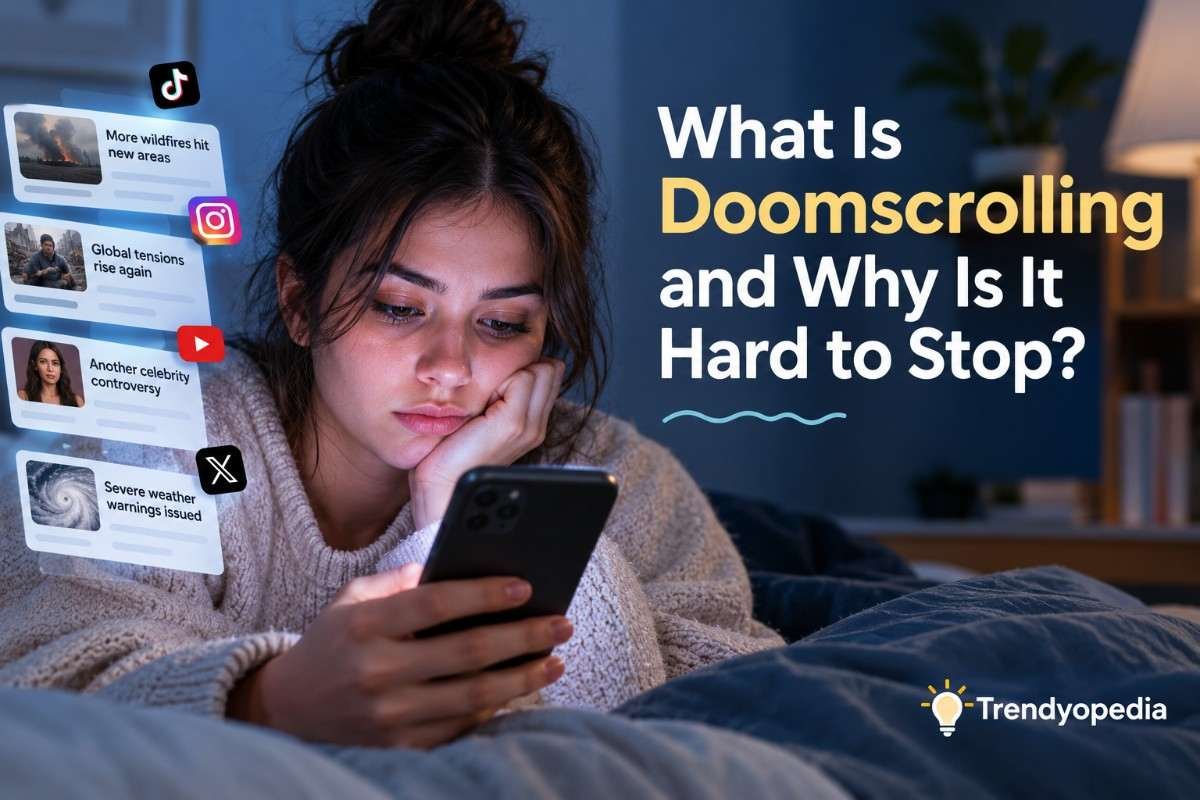
Have you ever opened Instagram, TikTok, or a news app to check one update, only to find yourself scrolling for the next 30 minutes? You might start with a simple headline, watch a few upsetting videos, and then continue looking for more information—even when the content makes you feel worried or exhausted.
This habit is known as doomscrolling, and it has become a familiar part of modern digital life.
From breaking news and celebrity controversies to worrying world events, social media feeds can expose us to an endless stream of negative information. Although staying informed is important, constantly consuming upsetting content can leave us feeling stressed, distracted, and emotionally drained.
But why is doomscrolling so hard to stop? Is it simply a bad habit, or is there something deeper behind our urge to keep scrolling?
If you find yourself spending too much time on social media, exploring digital detox trends may help you discover practical ways to take breaks from screens and build a healthier relationship with technology.
What Is Doomscrolling?
Doomscrolling is the habit of repeatedly scrolling through negative, frightening, or distressing online content, even when doing so makes you feel worse.
It often happens on social media platforms, news websites, video-sharing apps, and discussion forums. A person might begin by checking the latest headlines but continue reading one upsetting story after another.
For example, imagine opening your phone to check the weather. You notice a worrying news headline, tap it, and then start reading comments and related stories. Before you realize it, you have spent an hour consuming negative information.
That is a typical example of doomscrolling.
The term became widely recognized around 2020, when people increasingly turned to digital platforms for constant updates during the COVID-19 pandemic.
Doomscrolling does not mean that reading the news is automatically harmful. The problem arises when scrolling becomes difficult to control, continues longer than intended, or negatively affects your mood, sleep, concentration, or daily responsibilities.
Why Is Doomscrolling So Hard to Stop?
Doomscrolling can be difficult to stop because several psychological and digital habits may work together to keep you engaged.
1. Your Brain Wants to Understand Potential Threats
People naturally pay attention to information that might signal danger. Knowing about a potential threat can help us prepare, make decisions, or protect ourselves.
This tendency can be useful in everyday life. However, online feeds may present a constant stream of alarming information without giving you a clear opportunity to respond or resolve the underlying problem.
You might keep reading because you want to understand what happened, whether the situation has become worse, or what could happen next.
Unfortunately, more scrolling does not always provide more clarity or reassurance.
2. Uncertainty Makes You Want More Information
Uncertainty is another reason people may struggle to put their phones down.
When something frightening happens, you might feel compelled to check for updates repeatedly. You may hope the next headline will explain the situation or provide a reassuring answer.
For example, after hearing about a major storm, you might repeatedly refresh news websites to see whether your area is affected.
Checking reliable updates can be sensible. But when you continue refreshing even after receiving the information you need, the behavior can become an unhelpful cycle.
3. Social Media Feeds Make Continued Scrolling Easy
Many social media platforms are designed around continuous content discovery. Features such as infinite scrolling, autoplay, notifications, and personalized recommendations can make it easy to move from one post to the next.
You do not always need to make a deliberate decision to continue. Another video or headline simply appears.
When the content is upsetting, related recommendations may expose you to more stories about the same event or topic. This can make it harder to disengage.
However, not every platform or recommendation system works the same way, and the experience varies by user.
4. You May Feel Afraid of Missing Important Updates
Fear of missing out can contribute to doomscrolling.
You might worry that if you stop checking your phone, you will miss an important announcement, breaking news story, or update about something affecting your family or community.
This feeling can encourage frequent checking, even when no new information is available.
A useful reminder is that being informed does not require being informed every minute. You can stay updated by checking trustworthy sources at planned times instead of monitoring your feed continuously.
5. Scrolling Can Become an Automatic Habit
Sometimes, doomscrolling begins without a clear intention.
You might pick up your phone while waiting for coffee, sitting on the couch, or lying in bed. Opening an app becomes an automatic response to boredom, stress, or a quiet moment.
Once this pattern becomes familiar, you may find yourself scrolling before you have even decided what you want to do.
The first step toward changing the habit is noticing when it happens and identifying what usually triggers it.
What Are the Signs of Doomscrolling?
Occasionally reading negative news does not necessarily mean you are doomscrolling. The more important question is whether the behavior feels difficult to control or interferes with your life.
Common signs include:
- Checking news or social media repeatedly throughout the day.
- Scrolling much longer than you originally planned.
- Reading upsetting stories even when you know they are affecting your mood.
- Feeling anxious or frustrated when you cannot check for updates.
- Looking at negative content immediately after waking up or just before sleeping.
- Repeatedly refreshing feeds even when there is little new information.
- Finding it difficult to concentrate on work, studies, or conversations.
- Losing sleep because you continue scrolling late at night.
You do not need to experience every sign to benefit from changing your digital habits.
How Can Doomscrolling Affect Your Mental Health?
Doomscrolling is associated with several aspects of emotional well-being, although research does not establish that doomscrolling directly causes every problem linked to it.
A 2026 systematic review and meta-analysis examined research on doomscrolling and psychological well-being. It found associations between doomscrolling and higher levels of anxiety, depression, and psychological distress, as well as lower psychological well-being and life satisfaction. The researchers also emphasized that the evidence was of very low certainty and did not establish cause and effect.
Here are some possible effects worth understanding.
1. Increased Stress and Worry
Repeated exposure to frightening or upsetting stories can make the world feel more threatening than it may appear from a broader perspective.
You might begin worrying about events far away, imagining worst-case scenarios, or feeling overwhelmed by problems you cannot personally solve.
Staying informed can be helpful, but constant exposure to distressing information may make it harder to take a mental break.
2. Emotional Exhaustion
Reading negative stories for long periods can leave you feeling mentally tired.
You might feel sad, irritated, overwhelmed, or unable to enjoy activities that usually help you relax.
Taking breaks from upsetting content can give you space to process what you have read rather than immediately consuming another story.
3. Sleep Disruption
Doomscrolling at night can interfere with a healthy bedtime routine.
You may intend to check one final update but continue scrolling until much later than planned. Distressing stories can also leave you thinking about problems when you should be winding down.
To create a calmer evening routine, consider keeping your phone away from your bed and setting a time to stop reading news before sleep.
4. Reduced Focus and Productivity
Frequent checking can interrupt tasks and make it harder to return your attention to work, studying, or everyday responsibilities.
For example, you might open a social media app during a short break and return to your task much later than expected.
Setting specific times for checking news and social media can help protect periods of focused work.
5. Feeling Helpless or Overwhelmed
Doomscrolling often exposes you to problems that you cannot directly influence, such as international conflicts, disasters, or political controversies.
When you repeatedly consume information without taking a meaningful action or allowing yourself to rest, you may feel increasingly powerless.
One helpful approach is to separate what you can influence from what you cannot. If there is a practical action you can take, such as following local safety advice or supporting a credible community organization, consider doing so. Otherwise, it is reasonable to step away after getting the information you need.
How to Stop Doomscrolling: 8 Practical Tips
You do not have to abandon social media or stop reading the news to reduce doomscrolling. Small, realistic changes can help you regain control over when and how you use your phone.
1. Set a Time Limit for News and Social Media
Choose a realistic amount of time for checking updates instead of opening apps whenever you feel the urge.
For example, you could check the news for 10–15 minutes in the morning and again in the late afternoon. Adjust the schedule to fit your needs and responsibilities.
Use your phone’s built-in screen-time tools or a simple timer to remind you when it is time to stop.
The goal is not to follow a perfect rule. It is to create a boundary that prevents an occasional check from becoming an hour of scrolling.
2. Turn Off Unnecessary Notifications
Every alert creates another opportunity to pick up your phone.
Review your app notifications and disable those that are not important. You may want to keep emergency alerts and essential messages enabled while turning off nonessential breaking-news notifications, promotional alerts, and social media updates.
You can still visit trusted news sources when you choose to do so.
3. Avoid Doomscrolling Before Bed
If you frequently scroll at night, establish a simple phone-free period before bedtime.
Try reading a book, listening to relaxing music, preparing for the next day, or taking a warm shower instead.
If you use your phone as an alarm, consider placing it across the room so you are less likely to keep checking it after getting into bed.
4. Curate Your Social Media Feed
Pay attention to the accounts and topics that repeatedly leave you feeling upset.
You can mute, unfollow, or hide content that contributes to unnecessary distress. You can also follow reliable sources that provide context rather than sensational headlines.
This does not mean avoiding difficult topics altogether. It means choosing a healthier balance between staying informed and protecting your attention.
5. Ask Yourself Why You Are Opening Your Phone
Before opening a news or social media app, pause for a moment and ask yourself:
- What am I looking for?
- Is there a specific update I need?
- Am I feeling bored, stressed, or worried?
- Will checking this app help me right now?
If you have a clear reason, look for the information you need and stop when you find it.
If you are opening the app automatically, consider doing something else for a few minutes before deciding whether to continue.
6. Replace Scrolling With Another Activity
Simply telling yourself to stop may not be enough if scrolling has become your default response to boredom or stress.
Choose a replacement activity that is easy to begin, such as taking a short walk, stretching, making tea, calling a friend, or spending a few minutes outside.
You could also explore analog living as a broader lifestyle idea: making more room for offline activities, hands-on hobbies, and real-world connections.
The important part is to choose activities you genuinely enjoy rather than treating every screen break as another task.
7. Create Phone-Free Moments During the Day
Start with one or two simple boundaries.
For example:
- Keep your phone away during meals.
- Avoid checking news while talking with friends or family.
- Spend the first 15 minutes after waking up without social media.
- Put your phone away during a walk.
- Set aside time for hobbies without notifications.
Small changes can make it easier to notice when you are reaching for your phone out of habit rather than necessity.
8. Be Kind to Yourself When You Slip Back Into the Habit
You may find yourself doomscrolling again even after making changes. That does not mean you have failed.
Digital habits often take time to change, especially when they are connected to stress, boredom, or uncertainty.
Instead of criticizing yourself, notice what happened. Were you tired? Did a notification trigger the habit? Were you worried about something?
Use that information to adjust your approach. Progress can mean spending less time scrolling, stopping sooner, or recognizing the habit earlier than before.
Is Doomscrolling the Same as Being Addicted to Social Media?
Not necessarily.
Doomscrolling describes a pattern of repeatedly consuming negative or distressing content. Problematic social media use is broader and may involve difficulty controlling social media use even when it interferes with everyday life.
The two can overlap, but they are not identical. Doomscrolling by itself is not a formal psychiatric diagnosis.
If you repeatedly struggle to control your online behavior and it significantly affects your sleep, relationships, work, or emotional well-being, consider discussing your concerns with a qualified mental health professional.
You deserve support if changing the habit feels difficult.
How to Stay Informed Without Doomscrolling
The goal is not to ignore the world. It is to find a healthier way to stay informed.
Try these practical habits:
Choose reliable sources. Follow established news organizations and official sources for important updates instead of relying entirely on viral posts.
Check updates at planned times. You can stay informed without refreshing news feeds throughout the day.
Look for context. Read complete reports rather than relying only on headlines, short clips, or emotional comments.
Separate facts from speculation. Early reports may be incomplete. Wait for credible confirmation before drawing conclusions.
Take breaks after major news events. It is reasonable to step away once you have the information you need.
Focus on what you can control. Take practical action when appropriate, then allow yourself to return to everyday life.
Healthy news habits can help you remain aware of important events without allowing your feed to control your entire day.
Frequently Asked Questions About Doomscrolling
1. What is doomscrolling in simple words?
Doomscrolling means repeatedly scrolling through negative or upsetting news and social media content, often for longer than intended. It becomes a concern when the habit feels difficult to control or affects your well-being.
2. Why is doomscrolling so addictive?
Doomscrolling can be hard to stop because people want to understand threats, reduce uncertainty, and avoid missing important updates. Continuous feeds, personalized recommendations, and automatic phone-checking habits can also encourage repeated scrolling. However, doomscrolling is not automatically an addiction.
3. Can doomscrolling cause anxiety?
Research has found an association between doomscrolling and anxiety, but current evidence does not prove that doomscrolling directly causes anxiety. Repeated exposure to distressing content may contribute to worry for some people.
4. How do I stop doomscrolling at night?
Set a time to stop using news and social media before bed, disable unnecessary notifications, and keep your phone away from your sleeping area. Replace late-night scrolling with a relaxing activity that helps you wind down.
5. Is doomscrolling bad for your brain?
Doomscrolling is not known to damage the brain simply because someone scrolls through negative content. However, excessive use may contribute to stress, distraction, emotional fatigue, or sleep disruption. The effects depend on the individual and the pattern of use.
6. Should I stop watching the news to avoid doomscrolling?
No. You can stay informed without constantly checking updates. Choose reliable sources, check them at planned times, and take breaks when the information becomes overwhelming.
7. What is the difference between doomscrolling and normal scrolling?
Normal scrolling can include entertainment, learning, communication, or other activities without causing significant problems. Doomscrolling specifically involves repeatedly consuming negative or distressing content, often despite wanting to stop.
8. When should I seek help for doomscrolling?
Consider seeking professional support if you repeatedly feel unable to control your scrolling and it significantly interferes with sleep, work, relationships, or emotional well-being.
Conclusion
Doomscrolling is a common digital habit that can begin with a simple desire to stay informed. But when upsetting headlines, continuous feeds, and repeated phone checks keep you scrolling longer than intended, the habit can become emotionally exhausting.
The good news is that you do not need to give up technology to change your relationship with it. Setting time limits, turning off unnecessary notifications, choosing reliable news sources, and making time for offline activities can help you build healthier digital habits.
Remember, staying informed does not mean you have to consume every update as it happens. Sometimes, the healthiest choice is to close the app, take a breath, and focus on what is happening in your own life.
Writing
Creating a relaxing bedtime routine can also help you limit late-night phone use. Explore our guide to sleep hygiene and healthier sleep habits for practical ideas to make your evening routine more restful.
Author
Hitasha is a contributor to Trendyopedia, sharing accessible articles about lifestyle trends, digital habits, wellness, and everyday curiosities.
Disclaimer
This article is for informational and educational purposes only. It is not a substitute for professional mental health advice, diagnosis, or treatment. If online habits are significantly affecting your well-being, consider speaking with a qualified healthcare professional.
Sources and References
- Cleveland Clinic — Caught in a Doomscrolling Loop? Here’s How to Break Free
- American Psychological Association — Media Overload Is Hurting Our Mental Health
- Mental Health Foundation — Doomscrolling: Tips for Healthier News Consumption
- Frontiers in Psychology — Doomscrolling, Mental Health, and Psychological Well-Being: A Systematic Review and Meta-Analysis