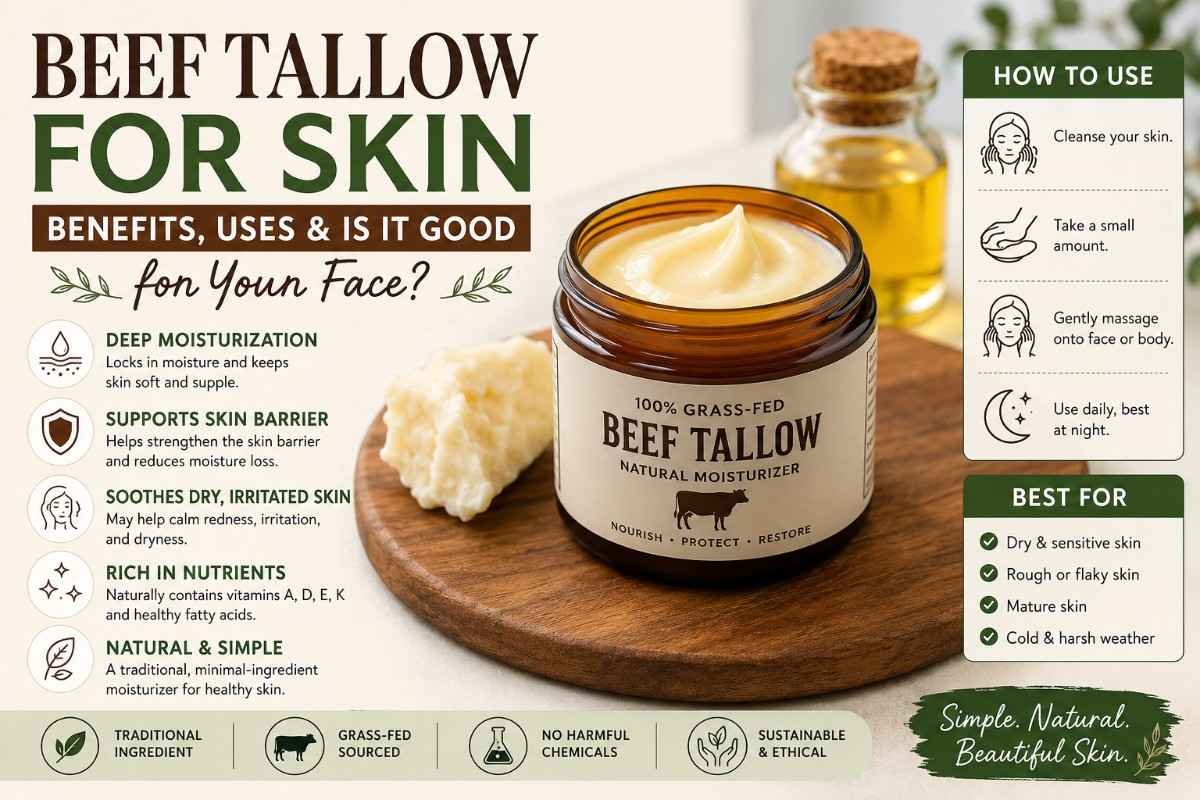
Beef Tallow for Skin: Natural skincare has made a major comeback in recent years. Alongside ingredients like shea butter, beef tallow, and plant oils, many people are searching for simple products that support the skin barrier without long ingredient lists. One ingredient gaining attention on TikTok, Instagram, and among advocates of ancestral wellness is beef tallow.
Although using animal fat on the skin may sound unusual, beef tallow has been used for centuries as a traditional moisturizer before modern cosmetic products became widely available. Today, many skincare brands are introducing purified, grass-fed beef tallow creams that claim to hydrate dry skin, strengthen the skin barrier, and reduce irritation.
Supporters say beef tallow closely resembles the natural oils produced by human skin, making it an effective moisturizer. Critics, however, question whether these claims are supported by scientific evidence and whether it is suitable for every skin type.
So, is beef tallow really good for your skin, or is it simply another viral beauty trend?
As consumers look for simpler, ingredient-focused routines, many are also exploring innovations like AI-Personalized Skincare, which uses artificial intelligence to recommend products based on individual skin needs.
What Is Beef Tallow?
Beef Tallow for Skin: Beef tallow is a rendered form of fat obtained from cattle. During the rendering process, the fat is slowly heated to remove water and impurities, leaving behind a stable, creamy fat that has been used for cooking, soap making, candles, and skincare for generations.
Modern skincare products typically use purified cosmetic-grade beef tallow, often sourced from grass-fed cattle. These products are formulated to improve texture, reduce odor, and enhance skin compatibility.
Unlike raw animal fat, properly processed cosmetic tallow undergoes purification to improve safety and stability. According to the American Academy of Dermatology (AAD), maintaining a healthy skin barrier with appropriate moisturizers is an essential part of everyday skincare.
Why Is Beef Tallow Trending?
Beef Tallow for Skin: Several factors have contributed to its recent popularity.
1. The Rise of Natural Skincare
Beef Tallow for Skin: Consumers are becoming more interested in skincare products with fewer ingredients and minimal processing.
Beef tallow appeals to people looking for traditional skincare alternatives without long lists of synthetic additives.
2. Skin Barrier Awareness
Beef Tallow for Skin: Healthy skin starts with a strong skin barrier.
Rather than focusing only on anti-aging products, many skincare enthusiasts now prioritize hydration, moisture retention, and barrier repair.
Beef tallow is often promoted as a deeply moisturizing ingredient that supports these goals. Skin barrier health has become one of the biggest priorities in modern skincare. Our guide to Skin Cycling explains how alternating active ingredients with recovery nights can help maintain a stronger, healthier skin barrier.
3. Social Media Influence
Beef Tallow for Skin: Beauty creators have shared dramatic before-and-after photos using beef tallow creams.
While these personal experiences have helped fuel interest, they should not replace evidence from well-designed scientific studies.
4. Ancestral Wellness Movement
Beef tallow has also become popular through the ancestral health movement, which encourages returning to traditional foods and personal care products.
Many supporters believe older skincare practices deserve renewed attention, although historical use alone does not prove effectiveness.
What Makes Beef Tallow Skin-Friendly?
Beef Tallow for Skin: Beef tallow contains several naturally occurring fatty acids that are also found in the skin’s protective barrier.
These include:
- Oleic acid
- Palmitic acid
- Stearic acid
- Small amounts of naturally occurring fat-soluble vitamins
These components help reduce moisture loss and soften the skin.
However, the exact nutrient content varies depending on the source, processing method, and formulation.
How Beef Tallow May Benefit the Skin
1. Deep Moisturization
Beef Tallow for Skin: One of the biggest reasons people use beef tallow is its rich moisturizing properties.
Because it forms a protective layer on the skin, it helps reduce transepidermal water loss (TEWL)—the process by which moisture naturally evaporates from the skin.
This can leave the skin feeling:
- Softer
- Smoother
- Less tight
- Better hydrated
People with dry skin often appreciate its rich texture, especially during colder months.
2. Supports the Skin Barrier
Beef Tallow for Skin: The skin barrier protects against:
- Pollution
- Irritants
- Allergens
- Excess moisture loss
When the barrier becomes damaged, skin may become dry, flaky, or irritated.
The fatty acids found in beef tallow may help support the skin barrier by providing an occlusive layer that locks in moisture. Another popular overnight moisturizing method is the Face Basting Trend, where a thick occlusive layer is applied to help reduce overnight moisture loss.
3. May Help Dry Skin
Dry skin often benefits from rich emollients.
Many users apply beef tallow to:
- Hands
- Elbows
- Knees
- Feet
- Dry facial areas
Its thick consistency makes it especially popular as an overnight moisturizer.
4. Softens Rough Skin
Beef Tallow for Skin: Areas exposed to frequent friction often become rough.
Examples include:
- Heels
- Knuckles
- Elbows
Beef tallow may help soften these areas when used consistently.
5. Supports Skin Comfort
People experiencing seasonal dryness sometimes report that beef tallow helps improve skin comfort.
Although individual experiences vary, maintaining skin hydration can reduce feelings of tightness associated with dry skin.
6. Simple Ingredient List
Beef Tallow for Skin: Many beef tallow creams contain only a few ingredients, such as:
- Purified beef tallow
- Jojoba oil
- Olive oil
- Essential oils (optional)
For individuals who prefer minimalist skincare, this simplicity can be appealing.
Can Beef Tallow Help Eczema?
Beef Tallow for Skin: One reason beef tallow has gained attention is its use among people with eczema and very dry skin.
Moisturizers play an important role in managing eczema because they help reduce moisture loss and support the skin barrier.
However, there is limited clinical research specifically evaluating beef tallow for eczema.
While some people report positive experiences, established eczema treatments recommended by dermatologists remain the first-line approach. The American Academy of Dermatology recommends fragrance-free moisturizers and dermatologist-guided treatment plans for eczema management.
Anyone with moderate or severe eczema should consult a healthcare professional before replacing prescribed treatments.
Can Beef Tallow Reduce Wrinkles?
Beef Tallow for Skin: No moisturizer can permanently eliminate wrinkles.
However, well-hydrated skin often appears:
- Plumper
- Smoother
- Healthier
- More radiant
By improving hydration, beef tallow may temporarily reduce the appearance of fine lines caused by dry skin.
For concerns such as significant sun damage or deeper wrinkles, evidence-based ingredients like retinoids and daily sunscreen remain important.
Who Can Benefit from Beef Tallow?
Beef Tallow for Skin: Beef tallow may be suitable for people with:
- Dry skin
- Very dry skin
- Rough patches
- Mature skin
- Dehydrated skin
- Skin exposed to cold weather
It may be less suitable for individuals with oily or acne-prone skin, as richer moisturizers can feel heavy and may not work well for everyone.
Is Beef Tallow Safe?
Beef Tallow for Skin: For most healthy adults, cosmetic-grade beef tallow is generally considered safe when used as directed.
However, safety depends on factors such as:
- Product quality
- Ingredient purity
- Individual skin sensitivity
- Existing allergies
Always perform a patch test before applying any new skincare product to larger areas of the skin.
How to Use Beef Tallow for Skin
Beef Tallow for Skin: If you’re trying beef tallow for the first time, start slowly and observe how your skin responds. Because it is a rich moisturizer, a small amount is usually enough.
Morning Routine
- Wash your face with a gentle cleanser.
- Apply a hydrating toner or serum (optional).
- Massage a pea-sized amount of beef tallow into slightly damp skin.
- Finish with a broad-spectrum sunscreen (SPF 30 or higher).
Using beef tallow on damp skin may help lock in moisture more effectively. If you’re concerned about acne as well as aging, our guide on Blue Light Skincare explains how different wavelengths of light can target acne-causing bacteria while complementing a balanced skincare routine.
Evening Routine
Beef Tallow for Skin: Many people prefer using beef tallow at night because of its rich texture.
- Cleanse your face.
- Apply any water-based serums first.
- Massage a small amount of beef tallow over the face and neck.
- Allow it to absorb overnight.
Nighttime application can help reduce dryness while you sleep.
Can You Use Beef Tallow Every Day?
Beef Tallow for Skin: Yes, many people use beef tallow daily, especially those with dry or mature skin.
However, how often you should use it depends on your skin type.
- Dry skin: Daily use may be beneficial.
- Normal skin: Use once daily or as needed.
- Combination skin: Apply only to dry areas.
- Oily skin: Use sparingly and monitor your skin’s response.
- Acne-prone skin: Consult a dermatologist before regular use.
Beef Tallow vs. Shea Butter vs. Petroleum Jelly
| Feature | Beef Tallow | Shea Butter | Petroleum Jelly |
|---|---|---|---|
| Main Benefit | Rich moisturizer and skin barrier support | Nourishes and softens skin | Seals in moisture |
| Texture | Thick and creamy | Rich and buttery | Thick and occlusive |
| Best For | Dry to very dry skin | Most skin types | Extremely dry or cracked skin |
| Natural Source | Animal-derived | Plant-derived | Mineral oil derivative |
| May Feel Heavy | Yes | Sometimes | Yes |
Each option has its advantages, and the best choice depends on your skin type, preferences, and skincare goals.
DIY vs. Commercial Beef Tallow Creams
Beef Tallow for Skin: Some people enjoy making their own beef tallow balm at home, while others prefer ready-made products.
DIY Beef Tallow
Pros
- Full control over ingredients
- Customizable with oils or essential oils
- Often less expensive
Cons
- Requires proper rendering and storage
- Quality may vary
- Higher risk of contamination if prepared incorrectly
Commercial Products
Pros
- Professionally processed
- Cosmetic-grade ingredients
- Better texture and consistency
- Longer shelf life
Cons
- Usually more expensive
- Ingredient quality varies between brands
For most people, high-quality commercial products are the more convenient and reliable option.
Possible Risks and Side Effects
Beef Tallow for Skin: Although beef tallow is generally well tolerated, it may not suit everyone.
1. Breakouts
Its rich texture may feel too heavy for oily or acne-prone skin.
If clogged pores or breakouts occur, discontinue use and consult a dermatologist. The U.S. Food & Drug Administration (FDA) advises consumers to use cosmetics according to their directions and purchase products from reputable manufacturers.
2. Allergic Reactions
Although uncommon, some people may experience irritation or sensitivity to ingredients in beef tallow products.
Always perform a patch test before full application.
3. Product Quality
Choose products made with cosmetic-grade, properly rendered beef tallow from reputable manufacturers.
Poor-quality products may contain impurities or develop an unpleasant odor.
4. Individual Results Vary
Not everyone will experience the same benefits.
Skin type, climate, lifestyle, and overall skincare routine all influence results.
Who Should Avoid Beef Tallow?
Beef Tallow for Skin: Beef tallow may not be the best choice for:
- People with very oily skin.
- Those with acne-prone skin who notice clogged pores.
- Individuals with known allergies to product ingredients.
- Anyone who prefers vegan or plant-based skincare products.
If you have chronic skin conditions such as eczema, psoriasis, or rosacea, consult a dermatologist before changing your skincare routine.
Tips for Choosing a Good Beef Tallow Product
When shopping for beef tallow skincare, look for products that:
- Use cosmetic-grade beef tallow.
- Clearly list all ingredients.
- Are free from unnecessary fragrances if you have sensitive skin.
- Come from reputable brands with transparent manufacturing practices.
- Have packaging that protects the product from contamination.
Reading reviews and checking ingredient lists can help you choose a product that suits your needs.
FAQs
Is beef tallow good for your face?
Beef tallow may help moisturize and support the skin barrier, particularly for people with dry or mature skin. However, it may not be suitable for oily or acne-prone skin.
Does beef tallow clog pores?
It depends on the individual. Some people tolerate it well, while others—especially those with oily or acne-prone skin—may experience clogged pores or breakouts.
Can I use beef tallow every day?
Yes. Many people with dry skin use it daily, while others may prefer using it only at night or on particularly dry areas.
Is beef tallow better than moisturizer?
Not necessarily. Beef tallow is one type of moisturizer. Whether it is the best choice depends on your skin type, preferences, and the overall formulation of the product.
Can beef tallow reduce wrinkles?
Beef tallow does not remove wrinkles, but by improving skin hydration it may temporarily reduce the appearance of fine lines caused by dryness.
Is beef tallow suitable for sensitive skin?
Some people with sensitive skin tolerate beef tallow well because of its simple ingredient profile. However, always patch-test new products first.
Conclusion
Beef tallow for skin has become a popular natural skincare trend because of its rich moisturizing properties and ability to support the skin barrier. For people with dry, mature, or dehydrated skin, it may help improve softness, reduce moisture loss, and enhance overall skin comfort when used as part of a consistent skincare routine.
While many users report positive results, scientific research specifically on topical beef tallow remains limited. It should not be considered a miracle treatment or a replacement for evidence-based skincare practices such as daily sunscreen, gentle cleansing, and dermatologist-recommended treatments. Choose high-quality cosmetic-grade products, patch-test before use, and consult a healthcare professional if you have persistent skin concerns or underlying skin conditions.
Health experts emphasize that skincare products should support—not replace—a consistent routine that includes sun protection, healthy lifestyle habits, and professional medical care when needed.
To learn more about today’s biggest beauty innovations, explore our guides on Red Light Therapy at Home, and PDRN Skincare. Together, these articles can help you build a skincare routine based on your skin type and goals.