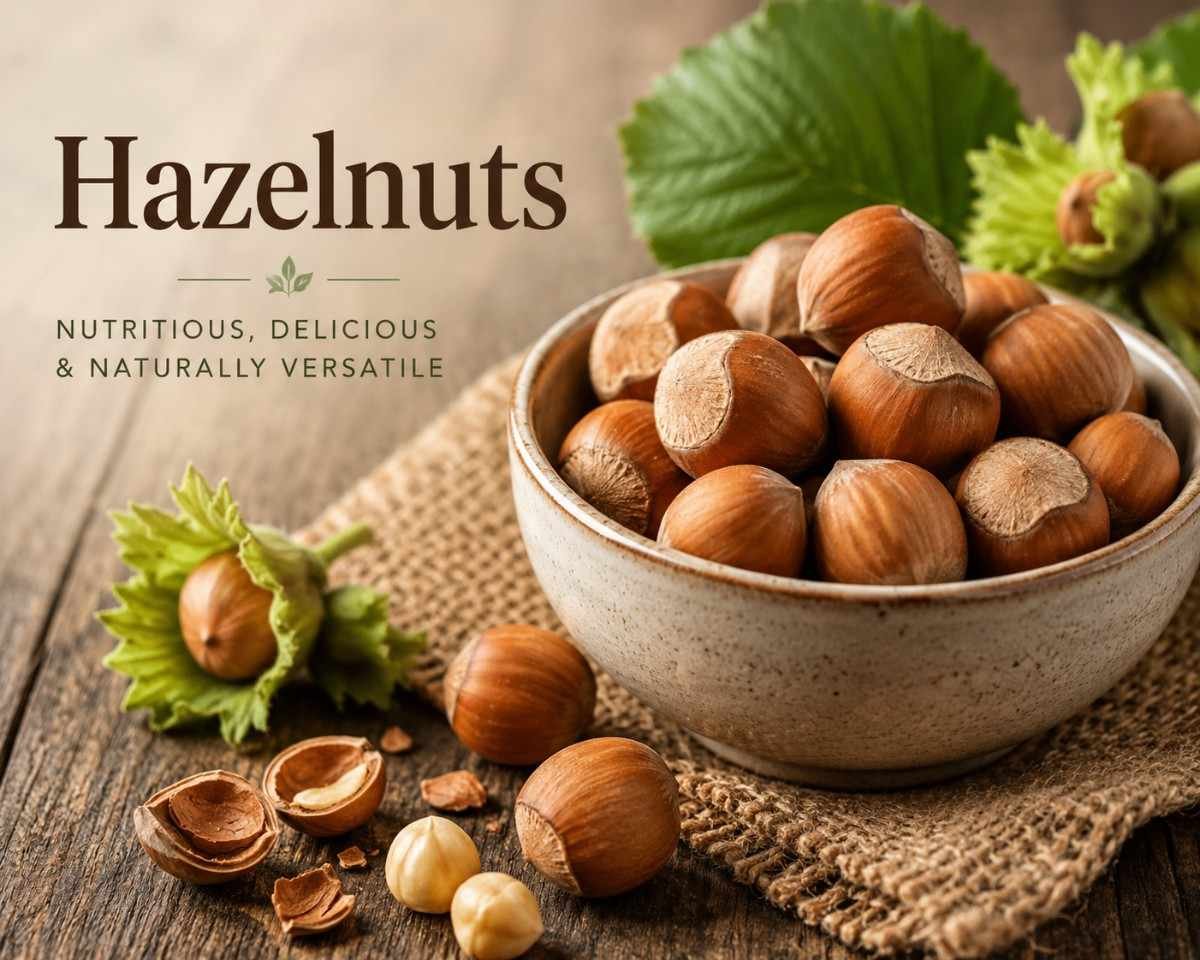
Hazelnuts are small, round tree nuts with a naturally sweet, buttery flavor. They are enjoyed raw, roasted, chopped, ground into flour, or blended into creamy spreads. Many people know them as an ingredient in chocolates and desserts, but hazelnuts can also be a nutritious part of a balanced everyday diet.
These crunchy nuts provide healthy unsaturated fats, plant protein, dietary fiber, vitamin E, copper, manganese, magnesium, and several natural antioxidant compounds. When eaten in moderate portions, they may support heart health, fullness, digestion, energy production, and overall nutrition.
Like other nuts, hazelnuts are calorie-dense, so serving size matters. They are also tree nuts and can trigger allergic reactions in some people. Choosing plain, unsalted hazelnuts and storing them properly can help you enjoy them as a healthier snack.
Hazelnuts can be enjoyed as part of a healthy diet that also includes Peanuts and Walnuts .
What Are Hazelnuts?
Hazelnuts are edible tree nuts that come from the hazel tree, mainly from plants in the Corylus family. They are also called:
- Filberts
- Cobnuts
- Hazel nuts
- Hazel kernels
Hazelnuts grow inside a leafy outer husk. Once mature, the nut has a hard brown shell and a small round kernel inside. The kernel is usually covered by a thin brown skin that can be removed after roasting.
Hazelnuts are grown in several parts of the world, including Turkey, Italy, Spain, and the United States. They are widely used in sweets, bakery products, nut butters, breakfast cereals, salads, sauces, and homemade trail mixes.
Unlike peanuts, which are legumes, hazelnuts are true tree nuts. People with tree-nut allergies should avoid them unless an allergy specialist has confirmed they are safe.
Hazelnut Nutrition Facts
Hazelnuts are nutrient-dense foods. This means they provide a high amount of energy and important nutrients in a relatively small serving.
Nutrition in 1 Ounce or 28 Grams of Hazelnuts
| Nutrient | Approximate Amount |
|---|---|
| Calories | 176 calories |
| Protein | 4.2 g |
| Total fat | 17 g |
| Carbohydrates | 4.7 g |
| Fiber | 2.7 g |
| Vitamin E | About 21% of daily needs |
| Copper | About 24% of daily needs |
| Manganese | About 87% of daily needs |
| Magnesium | About 12% of daily needs |
Hazelnuts contain mostly monounsaturated and polyunsaturated fats. They also provide small amounts of vitamin B6, folate, potassium, phosphorus, zinc, and iron.
Because they are rich in fats, hazelnuts are high in calories. A small handful is usually enough for a snack or meal topping.
Top Health Benefits of Hazelnuts
1. Rich in Healthy Fats
Hazelnuts are a good source of unsaturated fats, especially monounsaturated fats. These fats are considered more heart-friendly than saturated fats when used to replace foods such as fried snacks, processed meats, and high-fat sweets.
Healthy fats are important for cell structure, hormone production, nutrient absorption, and energy. They also help make meals more satisfying.
Instead of choosing chips or sugary biscuits, a small handful of plain hazelnuts can be a more nutrient-rich snack.
2. May Support Heart Health
Hazelnuts contain unsaturated fats, fiber, magnesium, potassium, plant sterols, and antioxidant compounds. These nutrients can support a heart-healthy eating pattern.
Research on nuts as a group suggests that regular nut intake is associated with better cardiovascular health. Nuts may help support healthy cholesterol levels when they replace snacks high in refined carbohydrates or saturated fats.
Hazelnuts should be part of a balanced diet that includes fruits, vegetables, legumes, whole grains, and regular physical activity. They are not a replacement for prescribed medication or medical care.
3. Provides Antioxidant Support
Hazelnuts contain vitamin E and plant compounds such as phenolic compounds. These antioxidants help protect cells from oxidative stress.
Oxidative stress is a normal process in the body, but it can increase due to pollution, smoking, poor diet, lack of sleep, and certain health conditions. Eating a variety of antioxidant-rich foods may support overall health.
Hazelnuts are not the only source of antioxidants. Colorful fruits, vegetables, beans, seeds, green tea, and whole grains are also useful additions to an antioxidant-rich diet. You can also include antioxidant-rich drinks in your routine, such as fig water for hydration and wellness.
4. May Help You Feel Full
Hazelnuts provide a combination of healthy fats, protein, and fiber. This combination can make snacks and meals more satisfying.
Feeling full for longer may help reduce frequent cravings for highly processed foods. For example, adding chopped hazelnuts to yogurt, oats, or fruit can make a light meal more filling.
However, because hazelnuts are calorie-dense, portion control is important. Eating directly from a large packet can make it easy to consume more than planned. For another filling high-protein snack option, explore our guide to Protein pudding and its health benefits.
5. Supports Digestive Health
Hazelnuts contain dietary fiber, which supports normal digestion and regular bowel movements. Fiber also helps feed beneficial gut bacteria.
A healthy digestive pattern usually includes a variety of fiber-rich foods such as vegetables, fruits, beans, lentils, whole grains, nuts, and seeds.
If you are not used to eating high-fiber foods, start with a small portion of hazelnuts. Eating too much at once may cause gas, bloating, or stomach discomfort in some people.
6. Supports Energy Production
Hazelnuts provide magnesium, copper, manganese, and vitamin B6, which play important roles in normal energy metabolism.
Your body uses carbohydrates, fats, and proteins from food to produce energy. Hazelnuts do not work like an instant energy drink, but they can be a useful snack for steady energy because they contain fat, protein, and fiber.
Try eating hazelnuts with fruit, oats, yogurt, or whole-grain toast for a more balanced snack.
7. May Support Healthy Skin
Hazelnuts are a source of vitamin E, healthy fats, and antioxidant compounds. Vitamin E is involved in protecting cells from oxidative damage, while healthy fats support normal skin structure.
A nutritious diet can support skin health, but hazelnuts cannot replace sunscreen, skincare products, treatment for acne, or medical care for skin conditions. For more natural beauty tips, read our detailed guide on Rice water for skin and hair.
8. Supports Brain and Nerve Function
Hazelnuts contain vitamin E, magnesium, healthy fats, and B vitamins. These nutrients are important for normal body functions, including the nervous system.
A healthy brain-supportive diet should include many foods, not just one nut. Try including walnuts, almonds, seeds, leafy vegetables, berries, legumes, and whole grains in your weekly meal plan.
9. May Support Bone Health
Hazelnuts provide minerals such as magnesium, manganese, phosphorus, and copper. These nutrients are involved in bone structure and other normal body processes.
For strong bones, focus on an overall lifestyle that includes calcium-rich foods, enough vitamin D, protein, resistance exercise, and regular movement. Hazelnuts can be one small part of this approach.
10. A Convenient Plant-Based Snack
Hazelnuts are naturally plant-based and easy to carry. They can be useful for people following vegetarian, vegan, Mediterranean-style, or flexitarian diets.
They can be added to snacks, meals, and desserts without much preparation. Keep a small container of plain hazelnuts in your bag, office drawer, or kitchen cabinet for a quick snack option.
11. May Support Blood Sugar Balance
Hazelnuts are relatively low in carbohydrates and contain fats, protein, and fiber. When eaten as part of a balanced meal, these nutrients may help slow digestion and support steadier blood sugar responses than sugary snacks.
For example, combining hazelnuts with an apple, pear, or unsweetened yogurt can be more balanced than eating cookies or candy alone.
People with diabetes can often include nuts in their eating plan, but total calorie intake, portion size, and individual medical advice are important. Speak with a doctor or registered dietitian for personalized guidance.
12. Adds Flavor Without Excess Sugar
Hazelnuts have a rich flavor that can make healthy meals taste more enjoyable. Toasted and chopped hazelnuts can add crunch to salads, oats, roasted vegetables, and yogurt.
Using nuts for flavor may reduce the need for sugary toppings or heavily processed sauces. Choose plain hazelnuts instead of chocolate-covered, caramel-coated, or heavily salted varieties for everyday use.
Types of Hazelnuts
Hazelnuts are sold in several forms. The healthiest choice depends on the ingredients and how you use them.
Raw Hazelnuts
Raw hazelnuts have not been roasted. They are crunchy and mild in flavor. You can eat them as a snack or use them in homemade recipes.
Roasted Hazelnuts
Roasting brings out a deeper, nuttier flavor. Dry-roasted hazelnuts without added salt, sugar, or oil are a good everyday option.
Blanched Hazelnuts
Blanched hazel nuts have had their thin brown skin removed. They are commonly used in baking, desserts, and nut pastes.
Chopped Hazelnuts
Chopped hazel nuts are convenient for sprinkling over oats, salads, yogurt, smoothie bowls, and desserts.
Hazelnut Butter
Hazelnut butter is made by blending hazel nuts into a smooth paste. Choose varieties with minimal ingredients and no unnecessary added sugar or hydrogenated oils.
Hazelnut Flour
Hazelnut flour is made from ground hazel nuts. It can be used in baking, pancakes, cookies, energy balls, and gluten-free recipes.
Hazelnut Oil
Hazelnut oil has a rich aroma and is often used in salad dressings or drizzled over cooked vegetables. It is calorie-dense, so use small amounts.
How Many Hazelnuts Should You Eat Per Day?
For most people, a healthy serving is around:
- 1 ounce or 28 grams
- A small handful
- About 18 to 22 whole hazel nuts
This serving provides healthy fats, fiber, protein, and important micronutrients without adding too many calories.
People with higher energy needs may eat more, while those trying to manage weight may prefer to measure their portion. If you are adding hazel nuts to meals, reduce other calorie-dense toppings such as cheese, butter, or creamy sauces.
Best Time to Eat Hazelnuts
Hazel nuts can be eaten at any time of day. The best time is the time that helps you enjoy them as part of a balanced eating routine.
In the Morning
Add chopped hazel nuts to oats, porridge, yogurt, smoothie bowls, or whole-grain toast.
As a Midday Snack
A small handful of hazel nuts with fruit can be a satisfying snack between meals.
Before or After Exercise
Hazel nuts can provide energy and some protein. Pair them with a banana, yogurt, milk, or a whole-grain snack for a more balanced option.
In the Evening
Hazel nuts can be added to salads, soups, roasted vegetables, or desserts. Avoid large portions close to bedtime if rich foods cause indigestion.
Healthy Ways to Eat Hazelnuts
Here are simple ways to enjoy hazelnuts:
- Eat plain raw or dry-roasted hazel nuts
- Add chopped hazel nuts to oats or porridge
- Sprinkle them over yogurt and fruit
- Blend them into homemade nut butter
- Add them to salads for crunch
- Mix them with seeds and dried fruit
- Use hazelnut flour in baking
- Add crushed hazel nuts to roasted vegetables
- Make homemade energy balls with dates and oats
- Add a spoon of hazelnut butter to smoothies
- Use hazelnut oil in small amounts for salad dressing
Try to limit hazelnut products that contain lots of chocolate, sugar, palm oil, or added salt.
Hazelnuts for Weight Loss
Hazelnuts can fit into a weight-loss plan, but they should be eaten in measured portions.
Their protein, fiber, and healthy fats may help you feel full and satisfied. This can make it easier to avoid less nutritious snacks. However, hazel nuts are high in calories, so large portions may make weight loss harder.
Tips for Eating Hazelnuts During Weight Loss
- Measure one small handful instead of eating from the packet
- Choose raw or dry-roasted hazelnuts
- Avoid sugar-coated and chocolate-covered versions
- Pair hazelnuts with fruit or yogurt
- Use chopped hazel nuts as a topping instead of large amounts
- Include them in a balanced diet with vegetables, protein, and whole grains
You may also like our guide on How intermittent fasting may support weight loss.
Are Hazelnuts Good for Diabetes?
Hazel nuts may be a suitable snack for many people with diabetes because they are low in carbohydrates and provide fiber, protein, and unsaturated fats.
They can be a better choice than sugary biscuits, sweets, or refined snack foods. However, flavored hazelnut spreads and chocolate products may contain high amounts of sugar and calories.
Choose plain hazel nuts, unsweetened hazelnut butter, or dry-roasted hazel nuts. Monitor your portion size and follow the advice of your doctor or dietitian.
Hazelnut Side Effects and Risks
Hazel nuts are healthy for many people, but they may not be suitable for everyone.
1. Tree-Nut Allergy
Hazel nuts can cause allergic reactions in people with tree-nut allergies. Symptoms may include:
- Itching or hives
- Swelling of the lips, tongue, or throat
- Stomach pain, nausea, or vomiting
- Wheezing or difficulty breathing
- Dizziness or fainting
A severe allergic reaction can be life-threatening. Anyone with a known tree-nut allergy should avoid hazel nuts. Seek emergency medical care if serious allergy symptoms occur.
2. High Calorie Content
Hazel nuts are nutritious but calorie-dense. Eating large amounts regularly may contribute to unwanted weight gain.
Stick to a small handful and avoid eating directly from a large bag.
3. Added Sugar and Salt
Chocolate-covered hazel nuts, sweet spreads, and heavily salted hazel nuts may contain extra sugar, sodium, and calories.
For daily eating, choose raw or dry-roasted unsalted hazel nuts.
4. Digestive Discomfort
Some people may experience bloating, gas, or stomach discomfort after eating nuts. Start with a small amount, especially if you are not used to high-fiber foods.
5. Storage and Freshness
Because hazel nuts contain oils, they can become stale or rancid if stored in warm, humid conditions. Keep them in an airtight container in a cool, dry place. For longer storage, refrigerate or freeze them.
Avoid hazel nuts that smell sour, stale, or moldy.
Hazelnuts vs Almonds: Which Is Better?
Both hazel nuts and almonds are healthy tree nuts. The better option depends on your taste, budget, nutrition needs, and allergies.
| Feature | Hazelnuts | Almonds |
| Flavor | Sweet and buttery | Mild and slightly sweet |
| Vitamin E | High | Very high |
| Healthy fats | High | High |
| Protein | Moderate | Higher |
| Fiber | Good source | Good source |
| Best use | Baking, spreads, salads | Snacks, milk, flour, baking |
Hazel nuts are especially popular for their rich flavor and healthy fats, while almonds are often chosen for their protein and vitamin E content. Including different nuts and seeds can give your diet a wider range of nutrients.
To learn more, read our complete guide on Almonds: benefits, nutrition, and side effects.
FAQ
Are hazelnuts healthy?
Yes, hazel nuts can be healthy when eaten in moderate amounts. They provide unsaturated fats, fiber, protein, vitamin E, minerals, and antioxidants.
How many hazelnuts should I eat daily?
A small handful, around 18 to 22 hazel nuts or 28 grams, is a common serving size for most adults.
Are raw or roasted hazelnuts better?
Both can be nutritious. Raw hazel nuts are simple and minimally processed, while dry-roasted hazel nuts have a stronger flavor. Choose versions without added sugar, salt, or oil.
Can I eat hazelnuts every day?
Many people can eat a small serving daily as part of a balanced diet. Avoid them if you have a tree-nut allergy.
Are hazelnuts good for weight loss?
They may help with fullness because they contain protein, fiber, and healthy fats. However, they are calorie-dense, so portion control is important.
Are hazelnuts good for skin?
Hazel nuts provide vitamin E, healthy fats, and antioxidants that support overall nutrition and normal skin health. They are not a treatment for skin conditions.
Is hazelnut spread healthy?
It depends on the ingredients. Many commercial hazelnut spreads contain large amounts of sugar and added oils. Choose unsweetened hazelnut butter or make a simple homemade version for a healthier option.
Can people with diabetes eat hazelnuts?
Many people with diabetes can include plain hazel nuts in a balanced meal plan. Choose unsweetened products and watch portion sizes.
Conclusion
Hazelnuts are flavorful, nutrient-rich tree nuts that can be a healthy addition to a balanced diet. They provide healthy fats, plant protein, fiber, vitamin E, minerals, and antioxidant compounds.
Eating a small handful of raw or dry-roasted hazel nuts may support fullness, heart health, digestion, energy, and overall nutrition. They are easy to add to oats, yogurt, salads, smoothies, baking recipes, and homemade trail mixes.
Because hazel nuts are calorie-dense, it is best to enjoy them in moderate portions. Choose plain, unsalted options and limit chocolate-covered or sugar-heavy hazelnut products. People with tree-nut allergies should avoid hazel nuts completely.
When combined with fruits, vegetables, legumes, whole grains, seeds, and other nuts, hazel nuts can be a delicious part of a healthy lifestyle. For more healthy dry fruit guides, explore our articles on Cashew nutrition and benefits, Pistachios, and Tiger Nuts.
Sources and References
- USDA FoodData Central: Hazelnuts Nutrition Information
- Harvard Health: Quick-Start Guide to Nuts and Seeds
- Harvard Health: Nuts and Heart Health
- Mayo Clinic: Hazelnuts, Nutrition and Heart-Healthy Eating
- Healthline: Hazelnut Benefits, Nutrition and Uses
About the Author
Hitasha is a health and wellness content writer who creates easy-to-understand articles about nutrition, healthy foods, fitness, and lifestyle habits.
Disclaimer
This article is for general educational purposes only and is not a substitute for professional medical advice, diagnosis, or treatment. Consult a qualified healthcare professional for personalized guidance, especially if you have a nut allergy, diabetes, digestive issues, or any medical condition.