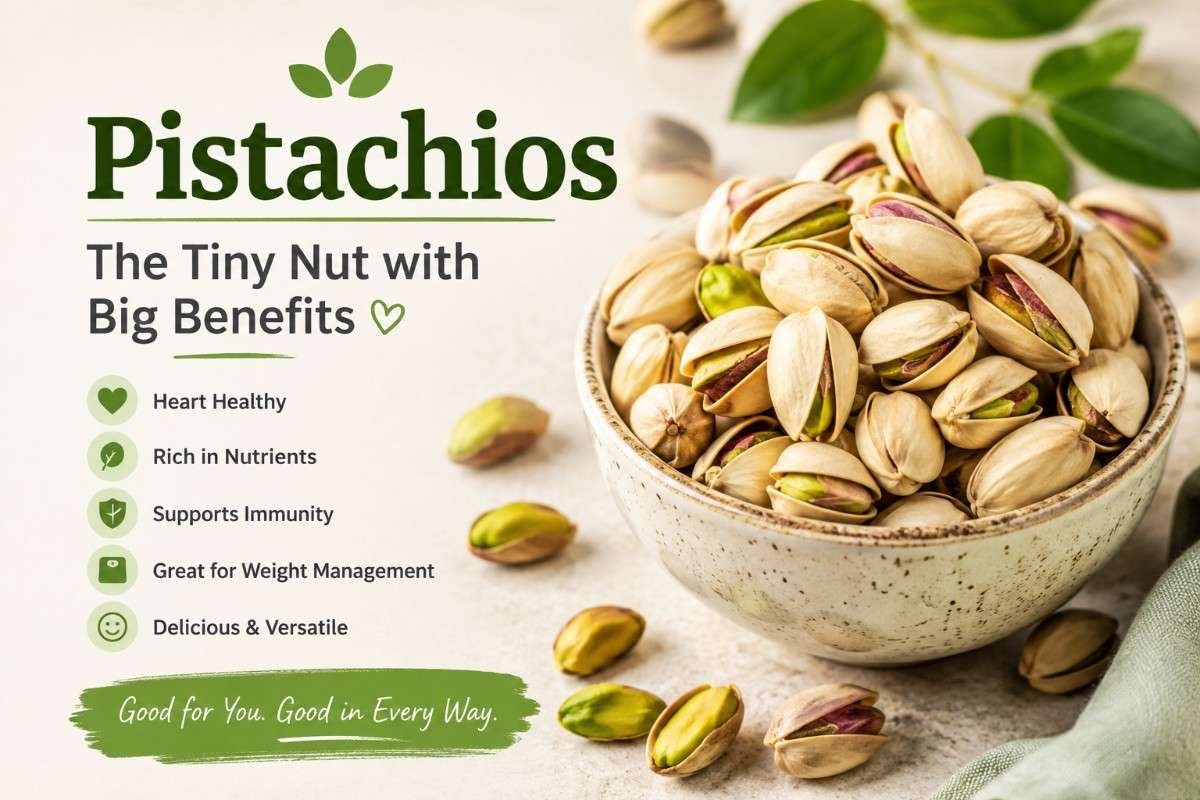
Pistachios are small green nuts with a naturally sweet, slightly buttery flavor and a crunchy texture. They are one of the most popular nuts in the world and are enjoyed as snacks, dessert toppings, salad ingredients, and additions to many traditional recipes.
Known scientifically as Pistacia vera, pistachios grow on trees and are usually sold inside their partly opened beige shells. Their green and purple color comes from natural plant compounds, including antioxidants such as lutein, zeaxanthin, and anthocyanins.
Although pistachios are small, they offer a powerful combination of plant protein, fiber, healthy fats, vitamins, minerals, and antioxidants. They can be a satisfying snack and may support heart health, digestion, weight management, blood sugar balance, and overall nutrition when eaten as part of a balanced diet.
Pistachios are small green nuts with a naturally sweet, slightly buttery flavor and a crunchy texture. Like other Almonds, they can be included in a balanced diet that contains a variety of healthy foods.
What Are Pistachios?
Pistachios are edible seeds from the pistachio tree. They are commonly called nuts, although botanically they are seeds. Pistachio trees grow best in warm, dry climates and are cultivated in several countries around the world.
The outer shell of a pistachio naturally splits open as the seed matures. This is why These green-colored nuts are often sold in shells with a small opening. The shell can slow down eating, which may help some people become more mindful of portion sizes.
Pistachios are available in several forms, including:
- Raw pistachios
- Roasted pistachios
- Salted pistachios
- Unsalted pistachios
- Shelled pistachios
- Pistachio powder
- Pistachio butter
- Pistachio milk
- Pistachio ice cream
- Pistachio paste
For everyday snacking, unsalted or lightly salted These green-colored nuts are usually the best choice.
Pistachio Nutrition Facts
These green-colored nuts are calorie-dense because they contain healthy fats, but they are also rich in important nutrients. A typical serving is about 1 ounce, or around 28 grams.
One serving of These green-colored nuts generally provides approximately:
- Calories: 160
- Protein: 6 grams
- Fat: 13 grams
- Carbohydrates: 8 grams
- Fiber: 3 grams
- Potassium: around 290 mg
- Magnesium: around 30 mg
- Vitamin B6: a significant amount
- Copper: a good amount
- Phosphorus: a good amount
The exact nutrition can vary depending on whether These green-colored nuts are raw, roasted, salted, or flavored.
Pistachios contain mostly unsaturated fats, including monounsaturated and polyunsaturated fats. These fats are considered more heart-friendly than diets high in saturated fat. These green-colored nuts also contain plant protein and dietary fiber, making them more filling than many processed snacks.
15 Health Benefits of Pistachios
1. Pistachios Are Rich in Plant Protein
Protein is important for muscles, tissues, hormones, enzymes, and immune function. These green-colored nuts provide plant-based protein, making them a useful snack for vegetarians and people trying to eat more plant foods.
Adding pistachios to yogurt, oatmeal, smoothies, salads, or fruit bowls can increase the protein content of a meal. These green-colored nuts provide plant-based protein and can be included with other What Is Protein Pudding? for a filling diet.
While pistachios should not be the only protein source in your diet, they can contribute to your daily protein intake.
2. They Provide Healthy Fats
Pistachios contain mostly unsaturated fats. These include monounsaturated fats and polyunsaturated fats, which are often associated with heart-healthy eating patterns.
Replacing highly processed snacks or foods high in saturated fat with nuts may improve the overall quality of your diet.
Healthy fats are also important for:
- Hormone production
- Brain function
- Absorption of fat-soluble vitamins
- Cell health
- Energy production
3. Pistachios May Support Heart Health
Regular nut consumption is associated with better cardiovascular health. These green-colored nuts contain healthy fats, fiber, potassium, plant sterols, and antioxidant compounds that may support healthy cholesterol and blood pressure levels.
Some research suggests that eating nuts as part of a balanced diet may help improve cardiovascular risk factors, especially when they replace foods high in refined carbohydrates or saturated fats.
Pistachios are not a replacement for medical treatment, but they can be part of a heart-friendly eating plan that includes fruits, vegetables, whole grains, legumes, and other nuts. Pistachios can be included in a heart-friendly eating pattern such as the DASH Diet for Heart Health.
4. They May Help Support Healthy Cholesterol Levels
Pistachios contain plant sterols, fiber, and unsaturated fats. These nutrients may help support healthy cholesterol levels when These green-colored nuts are included in place of less nutritious snacks.
Some clinical studies have found improvements in cholesterol-related markers among people who included pistachios in their diets. However, results can vary depending on total diet, serving size, physical activity, and individual health conditions.
For best results, eat These green-colored nuts as part of a balanced diet rather than adding them on top of an already high-calorie eating pattern.
5. Pistachios May Help With Weight Management
Many people avoid nuts because they are high in calories. However, research suggests that eating nuts in reasonable portions does not necessarily cause weight gain.
These green-colored nuts contain protein, fiber, and healthy fats, which may help you feel full for longer. The shells may also slow down eating and create a visual reminder of how much you have eaten.
A handful of pistachios can be a more satisfying snack than chips, candy, or sugary biscuits. For a more active lifestyle, pair healthy eating habits with the 6-6-6 Walking Trend for Weight Loss.
For weight management, choose unsalted These green-colored nuts and keep the serving size moderate. One ounce is usually enough for a snack.
6. They May Support Better Blood Sugar Balance
Pistachios contain protein, fiber, and healthy fats. These nutrients may slow digestion and reduce how quickly carbohydrates affect blood sugar levels.
Eating These green-colored nuts with carbohydrate-rich foods may help create a more balanced meal. For example, you can add pistachios to oatmeal, fruit, yogurt, or whole-grain toast.
People with diabetes should still pay attention to total carbohydrate intake and speak with a healthcare professional about their personal meal plan.
Research suggests These green-colored nuts may have beneficial effects on certain markers related to glucose and insulin metabolism, but they should be part of an overall healthy eating pattern.
7. Pistachios Are Good for Digestion
Pistachios contain dietary fiber, which supports healthy digestion. Fiber helps add bulk to stool and may support regular bowel movements.
A diet rich in fiber may also help feed beneficial gut bacteria. Healthy gut bacteria play an important role in digestion, immune health, and overall wellness.
To avoid digestive discomfort, increase fiber gradually and drink enough water throughout the day.
8. They Contain Antioxidants
Pistachios contain several antioxidants, including vitamin E, carotenoids, polyphenols, lutein, and zeaxanthin.
Antioxidants help protect cells from oxidative stress. Oxidative stress occurs when unstable molecules called free radicals build up in the body.
While no single food can prevent disease, eating a variety of antioxidant-rich foods may support long-term health. These green-colored nuts can be part of an antioxidant-rich diet along with berries, leafy greens, colorful vegetables, beans, and whole grains.
9. Pistachios May Support Eye Health
Pistachios contain lutein and zeaxanthin, two carotenoids that are important for eye health.
These natural compounds are found in the retina and may help protect the eyes from oxidative damage caused by light exposure.
Other foods rich in lutein and zeaxanthin include spinach, kale, corn, broccoli, peas, and egg yolks.
Adding These green-colored nuts to salads with leafy greens can be a delicious way to include more eye-supporting nutrients in your diet.
10. They Provide Vitamin B6
Vitamin B6 is involved in many important functions in the body. It helps with protein metabolism, brain development, immune function, and the production of neurotransmitters.
Pistachios are one of the better nut sources of vitamin B6. This makes them a useful addition to a nutrient-dense diet.
Vitamin B6 is also found in foods such as bananas, chickpeas, potatoes, poultry, fish, and fortified cereals.
11. Pistachios Contain Potassium
Potassium is an essential mineral that supports fluid balance, nerve function, muscle contraction, and heart function.
These green-colored nuts provide potassium, which is important because many people do not get enough potassium-rich foods in their daily diet.
A diet rich in fruits, vegetables, beans, dairy products, and nuts can help support healthy potassium intake.
People with kidney disease or those taking certain medications may need to limit potassium. In that case, it is important to follow medical advice.
12. They May Support Healthy Blood Pressure
Pistachios contain potassium, magnesium, fiber, and healthy fats. These nutrients are often included in dietary patterns designed to support healthy blood pressure.
Some studies suggest pistachio consumption may help improve blood pressure markers, especially when These green-colored nuts replace less nutritious snack foods.
However, salted These green-colored nuts can contain a lot of sodium. If you are managing high blood pressure, choose unsalted or low-sodium These green-colored nuts .
13. Pistachios Can Support a Plant-Based Diet
These green-colored nuts are naturally vegan and can add nutrition, texture, and flavor to plant-based meals.
They work well in:
- Vegan yogurt bowls
- Smoothies
- Vegetable curries
- Grain bowls
- Salads
- Homemade energy bites
- Dairy-free desserts
- Plant-based pesto
They provide protein, healthy fats, and minerals that can help make plant-based meals more satisfying. Pistachios are naturally plant-based and can be included in meal plans such as a Vegan vs Vegetarian Diet.
14. They May Help Reduce Unhealthy Snacking
Pistachios are crunchy, flavorful, and satisfying. This can make them a helpful alternative to processed snacks like fried chips, cookies, candy, and sugary cereal bars.
Because they contain protein, fiber, and fat, they may help reduce hunger between meals.
For a balanced snack, pair These green-colored nuts with:
- Fresh fruit
- Greek yogurt
- Unsweetened tea
- Roasted chickpeas
- Whole-grain crackers
- Cottage cheese
- A boiled egg
15. Pistachios Are Easy to Add to Meals
One of the best things about These green-colored nuts is that they are versatile. You can eat them plain, roasted, chopped, blended, or ground into powder.
They can add crunch to both sweet and savory dishes.
Try sprinkling chopped These green-colored nuts over:
- Oatmeal
- Smoothie bowls
- Salads
- Soups
- Rice dishes
- Pasta
- Yogurt
- Fruit salads
- Ice cream
- Homemade desserts
How Many Pistachios Should You Eat Per Day?
A standard serving of These green-colored nuts is about 1 ounce, or 28 grams. This is approximately 49 pistachio kernels, depending on their size.
For many people, one serving per day can fit into a balanced diet. However, your ideal portion depends on your calorie needs, activity level, health goals, and total diet.
A good daily serving is usually:
- 1 small handful of pistachios
- Around 28 grams
- Around 45 to 50 pistachio kernels
If you are trying to lose weight, measure your portion instead of eating directly from a large bag.
Best Time to Eat Pistachios
There is no single best time to eat pistachios. You can enjoy them whenever they fit into your daily routine.
As a Mid-Morning Snack
These green-colored nuts can help control hunger between breakfast and lunch.
Before or After Exercise
They provide protein and healthy fats. Pair them with fruit for carbohydrates if you need more energy.
In the Evening
A small serving of These green-colored nuts can be a more nutritious alternative to chips or sweets.
With Breakfast
Add These green-colored nuts to oatmeal, yogurt, smoothies, or fruit bowls for extra protein and crunch.
Raw vs Roasted Pistachios: Which Is Better?
Both raw and roasted pistachios can be healthy choices.
Raw Pistachios
Raw These green-colored nuts are minimally processed and contain no added oil or salt. They are a good choice for people who prefer natural foods.
Roasted Pistachios
Dry-roasted These green-colored nuts can also be healthy. They often have a stronger flavor and crunchier texture.
Salted Pistachios
Salted These green-colored nuts can be enjoyable, but they may contain high amounts of sodium. Eating too much sodium may not be suitable for people with high blood pressure or kidney concerns.
For everyday use, choose:
- Unsalted pistachios
- Dry-roasted pistachios
- Lightly salted pistachios
- Pistachios without added sugar or artificial flavors
Easy Ways to Eat Pistachios
Here are simple and delicious ways to include These green-colored nuts in your diet.
1. Pistachio Yogurt Bowl
Add pistachios, berries, chia seeds, and honey to plain yogurt.
2. Pistachio Oatmeal
Top warm oatmeal with chopped These green-colored nuts , banana slices, cinnamon, and milk.
3. Pistachio Smoothie
Blend banana, milk, yogurt, dates, and These green-colored nuts for a creamy smoothie.
4. Pistachio Salad Topping
Sprinkle chopped pistachios over salads with spinach, cucumber, tomatoes, apples, and feta cheese.
5. Pistachio Energy Balls
Mix dates, oats, pistachios, coconut, and peanut butter to make homemade energy balls.
6. Pistachio Rice
Add chopped pistachios to rice dishes, pulao, biryani, or quinoa bowls.
7. Pistachio Dessert Topping
Use crushed pistachios on kheer, halwa, ice cream, cakes, or fruit custard.
8. Pistachio Butter
Blend These green-colored nuts in a food processor until smooth. Spread it on toast or add it to smoothies.
Possible Side Effects of Pistachios
Pistachios are safe for most people when eaten in moderate amounts. However, some people may need to be careful.
Nut Allergies
These green-colored nuts are tree nuts and can cause allergic reactions in people with tree nut allergies.
Symptoms may include:
- Itching
- Hives
- Swelling
- Stomach pain
- Vomiting
- Difficulty breathing
Severe allergic reactions require immediate medical attention.
High Calorie Intake
These green-colored nuts are nutritious but calorie-dense. Eating large amounts regularly may contribute to excess calorie intake.
Stick to a small handful rather than eating directly from a large packet.
High Sodium in Salted Pistachios
Salted These green-colored nuts can contain a lot of sodium. Choose unsalted varieties if you are watching your salt intake.
Digestive Discomfort
Eating too many These green-colored nuts at once may cause gas, bloating, or stomach discomfort because they contain fiber and fermentable carbohydrates.
Start with a small serving if you are not used to eating nuts.
Kidney Concerns
These green-colored nuts contain potassium and phosphorus. People with kidney disease may need to monitor these nutrients. Always follow advice from a doctor or registered dietitian.
Are Pistachios Good for Weight Loss?
Pistachios can support weight management when eaten in the right portion. They contain protein, fiber, and healthy fats, which may help reduce hunger and make snacks more satisfying.
However, These green-colored nuts are not a magic weight-loss food. Weight loss depends on your total calorie intake, activity level, sleep, stress, and overall eating habits.
For a weight-friendly snack:
- Eat around 1 ounce of These green-colored nuts
- Choose unsalted varieties
- Avoid sugar-coated These green-colored nuts
- Pair them with fruit or yogurt
- Use them instead of chips, cookies, or candy
Eating These green-colored nuts in their shells may also help you eat more slowly.
Are Pistachios Better Than Other Nuts?
Every nut has its own nutritional strengths.
For example:
- Almonds are high in vitamin E.
- Walnuts provide omega-3 fats.
- Cashews provide copper and magnesium.
- Brazil nuts are very high in selenium.
- These green-colored nuts provide protein, fiber, potassium, vitamin B6, and antioxidants.
The best approach is to eat a variety of nuts and seeds in moderate portions.
These green-colored nuts are especially useful if you want a colorful, crunchy nut that provides plant protein and fiber.
FAQ
Are pistachios healthy?
Yes, These green-colored nuts are healthy when eaten in moderate portions. They provide protein, fiber, healthy fats, vitamins, minerals, and antioxidants.
How many pistachios should I eat daily?
A typical serving is about 1 ounce, or around 45 to 50 pistachio kernels.
Can I eat pistachios every day?
Most people can eat These green-colored nuts daily as part of a balanced diet. Choose unsalted varieties and watch portion sizes.
Are pistachios good for diabetes?
These green-colored nuts contain protein, fiber, and healthy fats that may support balanced blood sugar levels. People with diabetes should still monitor portions and follow their healthcare provider’s advice.
Are pistachios good for the heart?
These green-colored nuts contain unsaturated fats, fiber, potassium, and antioxidants that may support heart health when included in a balanced diet.
Are pistachios good for skin?
These green-colored nuts contain vitamin E, healthy fats, and antioxidants that support overall nutrition. Healthy skin also depends on hydration, sleep, sun protection, and a balanced diet.
Can pistachios cause weight gain?
Eating too many These green-colored nuts may add extra calories to your diet. However, moderate portions can be part of a weight-management plan.
Can children eat pistachios?
Yes, but whole nuts can be a choking hazard for young children. Give crushed or finely chopped These green-colored nuts to small children and check for allergies.
Conclusion
Pistachios are delicious, nutritious, and easy to add to a healthy diet. They provide plant protein, fiber, healthy fats, potassium, vitamin B6, antioxidants, and several other essential nutrients.
Eating a small handful of These green-colored nuts can be a satisfying snack and may support heart health, digestion, healthy blood sugar balance, weight management, and overall wellness.
For the healthiest option, choose raw, dry-roasted, or unsalted pistachios. Enjoy them in moderation and use them to replace less nutritious snacks. They also pair well with other nutritious nuts, including Cashews, which can add variety to your daily diet.
A balanced diet should include a variety of fruits, vegetables, whole grains, legumes, nuts, seeds, and protein-rich foods. These green-colored nuts can be a colorful and tasty part of that healthy lifestyle.
Sources & References
- Harvard T.H. Chan School of Public Health – Nuts for the Heart – Information on nuts, healthy fats, and cardiovascular health.
- PubMed – Pistachios and Cardiometabolic Risk Factors – Systematic review and meta-analysis of randomized clinical trials.
- PubMed Central – Plant-Based Snacking and Pistachios – Review of pistachio nutrition and potential health benefits.
- USDA Nutrition Evidence Systematic Review – Health Effects of Nuts – Evidence on nut consumption and cardiovascular risk factors.
About the Author
Hitasha is a health and wellness content writer who creates easy-to-understand, research-based articles about nutrition, healthy foods, natural remedies, fitness, and everyday wellness. Her goal is to help readers make informed choices and build healthier habits through practical, reliable information.
Disclaimer
The information provided in this article is for educational and informational purposes only and is not intended to replace professional medical advice, diagnosis, or treatment. Always consult a qualified healthcare professional before making changes to your diet, exercise routine, or health plan. The author, Hitasha, and this website are not responsible for any health outcomes, side effects, or decisions resulting from the use of this information.