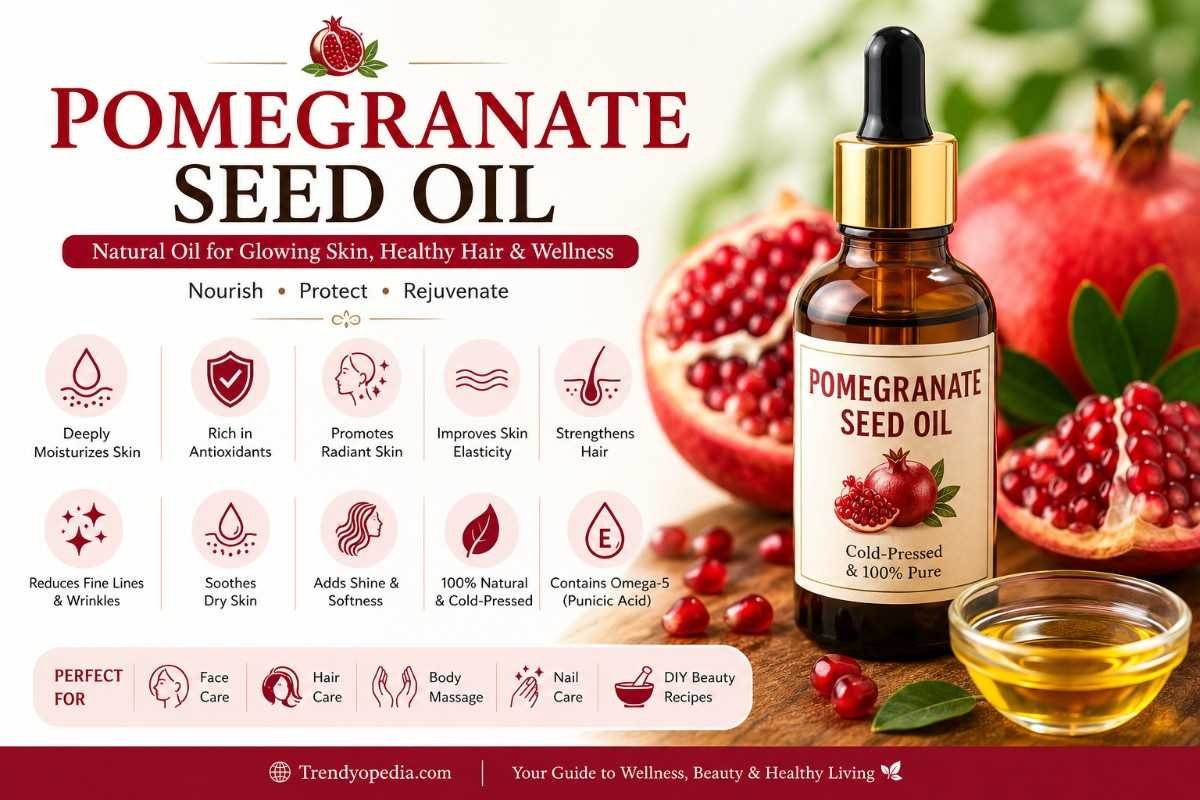
Pomegranate Seed Oil is a nutrient-rich botanical oil extracted from the tiny seeds of the pomegranate (Punica granatum). Known for its unique fatty acid profile and naturally occurring antioxidants, this lightweight oil has become increasingly popular in skincare and hair care products.
Traditionally used in natural beauty routines, Pomegranate Seed Oil may help moisturize the skin, support the skin barrier, soften hair, and improve the appearance of dry or dull skin. It is especially valued for its high content of punicic acid, a rare omega-5 fatty acid found almost exclusively in pomegranate seed oil.
Although many of its traditional uses are supported by laboratory research, more high-quality human studies are needed to confirm some skincare claims.
In this guide, you’ll learn about the 20 potential benefits of Pomegranate Seed Oil, how to use it safely, possible side effects, and the best ways to include it in your beauty routine.
While Pomegranate focuses on the whole fruit for nutrition, Pomegranate Seed Oil is primarily used for skincare and hair care. You can also explore our guides on Avocado Oil, Olive Oil, Coconut Oil, Tea Tree Oil, and Onion Oil.
What Is Pomegranate Seed Oil?
Pomegranate Seed Oil is a plant-based oil extracted from the seeds of the pomegranate fruit. It is commonly produced using cold-press extraction, which helps preserve naturally occurring fatty acids and antioxidant compounds.
Unlike pomegranate juice or supplements, Pomegranate Seed Oil is mainly used in topical skincare, hair care, and cosmetic products.
It is commonly used for:
- Facial skincare
- Moisturizing dry skin
- Hair conditioning
- Scalp care
- Facial massage
- Anti-aging skincare routines
- DIY beauty recipes
Both Pomegranate and Pomegranate Seed Oil come from the same fruit, but they are used differently. The whole fruit is valued for its vitamins, fiber, and antioxidants, while the oil extracted from its seeds is mainly used in skincare and hair care products.
How Is Pomegranate Seed Oil Made?
High-quality Pomegranate Seed Oil is usually produced through cold pressing, a process that extracts oil without excessive heat.
The basic steps include:
- Harvest ripe pomegranates.
- Separate and dry the seeds.
- Cold-press the seeds to extract the oil.
- Filter and bottle the finished product.
Cold-pressed oils generally retain more naturally occurring nutrients than oils produced with high-heat extraction methods.
Nutrition & Key Active Compounds
Pomegranate Seed Oil contains several naturally occurring compounds, including:
- Punicic acid (Omega-5 fatty acid)
- Vitamin E (small amounts)
- Phytosterols
- Polyphenols
- Flavonoids
- Antioxidant plant compounds
The exact composition varies depending on the variety of pomegranate and extraction method.
Types of Pomegranate Seed Oil
1. Cold-Pressed Pomegranate Seed Oil
- Minimally processed
- Rich in natural fatty acids
- Popular for skincare
2. Organic Pomegranate Seed Oil
- Made from organically grown pomegranates
- Preferred by clean beauty enthusiasts
3. Cosmetic Blends
- Combined with oils such as jojoba or rosehip
- Used in facial serums and creams
20 Potential Benefits of Pomegranate Seed Oil
1. Helps Moisturize Dry Skin
Its fatty acids help reduce moisture loss and leave the skin feeling soft.
2. Supports the Skin Barrier
A healthy skin barrier helps protect against dryness and environmental stress.
3. Rich in Antioxidants
Pomegranate Seed Oil contains naturally occurring antioxidant compounds that help protect the oil from oxidation and are being studied for skin-supporting properties.
4. Softens Rough Skin
Regular use may improve skin texture.
5. Promotes Smooth-Looking Skin
Its lightweight texture absorbs well without leaving a heavy residue.
6. Supports Healthy-Looking Skin
Daily moisturizing contributes to healthier-looking skin.
7. Helps Improve Skin Elasticity
Well-moisturized skin often feels more supple and flexible.
8. Suitable for Facial Massage
Provides a smooth glide for gentle facial massage.
9. Helps Reduce Dryness After Cleansing
Applying a few drops after cleansing can help lock in moisture.
10. Leaves Skin Feeling Soft
Regular use may improve skin softness.
11. Conditions Dry Hair
Can help smooth and soften dry hair.
12. Supports Scalp Moisture
Helps moisturize a dry scalp.
13. Adds Shine to Hair
Conditioned hair often appears shinier and healthier.
14. Helps Reduce Frizz
May improve hair manageability.
15. Supports Beard Care
Can soften beard hair and moisturize the skin underneath.
16. Suitable for Body Massage
Works well as a lightweight massage oil.
17. Complements Anti-Aging Skincare
Frequently included in mature skin care formulations because of its antioxidant content.
18. Multipurpose Beauty Oil
Suitable for face, body, hair, and beard care.
19. Naturally Plant-Based
A vegan-friendly oil suitable for many beauty routines.
20. Easy to Add to Daily Skincare
Can be layered with moisturizers or facial serums.
Pomegranate Seed Oil for Skin
Pomegranate Seed Oil is commonly used to moisturize and nourish the skin.
Potential benefits include:
- Supporting skin hydration
- Improving softness
- Reducing dryness
- Helping maintain a healthy skin barrier
- Leaving skin feeling smooth
Pomegranate Seed Oil for Hair
The lightweight texture makes it suitable for many hair types.
Potential uses include:
- Softening dry hair
- Reducing frizz
- Conditioning hair ends
- Moisturizing the scalp
- Adding natural shine
Pomegranate Seed Oil for the Face
Many facial oils include Pomegranate Seed Oil because it absorbs relatively quickly and layers well under moisturizer.
How to Apply
- Cleanse your face.
- Apply 2–3 drops.
- Massage gently.
- Follow with moisturizer if needed.
- Use sunscreen during the day.
How to Use Pomegranate Seed Oil
For Skin
- Apply to slightly damp skin after cleansing.
- Use once or twice daily if suitable for your skin.
For Hair
- Warm a small amount between your palms.
- Apply to hair lengths or scalp.
- Leave on for 30–60 minutes before shampooing, or use a few drops on dry ends.
For Beard
Massage a few drops into the beard and the skin underneath to help soften and moisturize.
DIY Glow Facial Oil
Ingredients
- 1 teaspoon Pomegranate Seed Oil
- 1 teaspoon Jojoba Oil
- 2 drops Vitamin E Oil
Directions
- Mix the oils in a clean bottle.
- Shake gently.
- Apply 2–3 drops at night after cleansing.
For a complete skincare routine, combine This Seed Oil with our Kumkumadi Oil .
Pomegranate Seed Oil vs Rosehip Oil
| Feature | Pomegranate Seed Oil | Rosehip Oil |
|---|---|---|
| Main Fatty Acid | Punicic acid (Omega-5) | Linoleic & linolenic acids |
| Best For | Moisturizing and antioxidant skincare | Hydration and skin nourishment |
| Texture | Lightweight | Lightweight |
| Ideal Use | Face, body, hair | Face and neck |
Pomegranate Seed Oil vs Jojoba Oil
| Feature | Pomegranate Seed Oil | Jojoba Oil |
|---|---|---|
| Type | Botanical seed oil | Liquid plant wax |
| Best For | Mature and dry skin | Most skin types |
| Texture | Light | Very light |
| Daily Use | Yes | Yes |
Pomegranate Seed Oil vs Argan Oil
| Feature | Pomegranate Seed Oil | Argan Oil |
|---|---|---|
| Source | Pomegranate seeds | Argan tree kernels |
| Popular Use | Skin and facial care | Hair and skin care |
| Texture | Lightweight | Slightly richer |
| Best For | Daily facial oil | Hair and body care |
Best Time to Use Pomegranate Seed Oil
Morning
- Apply a few drops before moisturizer.
- Finish with sunscreen.
Evening (Recommended)
Nighttime is ideal because your skin has several hours to absorb the oil.
Night routine:
- Cleanse your face.
- Apply 2–3 drops of This Oil.
- Massage gently.
- Follow with moisturizer if needed.
Possible Side Effects
Pomegranate Seed Oil is generally well tolerated, but some people may experience:
- Mild skin irritation
- Allergic reactions
- Temporary redness
- Breakouts if the product is too rich for oily skin
- Eye irritation if it accidentally enters the eyes
Safety Tips
- Perform a patch test before first use.
- Use only on healthy, intact skin.
- Avoid contact with the eyes.
- Store in a cool, dark place.
- Stop using the product if irritation develops.
- Consult a dermatologist if you have persistent skin concerns or allergies.
FAQs
Can I use Pomegranate Seed Oil every day?
Yes. Many people use it once or twice daily as part of their skincare routine, depending on their skin type.
Is Pomegranate Seed Oil good for oily skin?
Its lightweight texture may suit many skin types, but individual responses vary. Patch testing is recommended before regular use.
Can Pomegranate Seed Oil be used on hair?
Yes. It can be applied to the scalp or hair lengths to help condition dry hair and improve softness.
Does Pomegranate Seed Oil reduce wrinkles?
Its antioxidant content may help support healthy-looking skin, but no topical oil can completely remove wrinkles. A consistent skincare routine and sun protection are important.
Can I leave Pomegranate Seed Oil on overnight?
Yes. Many people apply it as an overnight facial oil if it suits their skin.
Conclusion
Pomegranate Seed Oil is a versatile botanical oil that offers moisturizing, conditioning, and antioxidant-rich care for the skin and hair. Its naturally occurring punicic acid and plant compounds make it a popular ingredient in facial oils, serums, and hair treatments. While research into its topical benefits continues, it can be a valuable addition to a balanced skincare routine when used correctly.
To build a complete natural beauty routine, explore our Ashwagandha Oil, Tulsi Oil, Amla Oil, Hibiscus Oil, Moringa Oil on Trendyopedia.
Author
Author: Hitasha
Hitasha is a beauty and wellness writer at Trendyopedia, specializing in evidence-based skincare, nutrition, hair care, and natural remedies. She creates well-researched, easy-to-understand articles to help readers make informed health and beauty decisions.
Disclaimer
This article is for informational purposes only and should not be considered medical advice. Pomegranate Seed Oil is intended for external use only. Individual results may vary depending on your skin type and the product formulation. If you have sensitive skin, allergies, or an existing skin condition, consult a qualified healthcare professional before use.