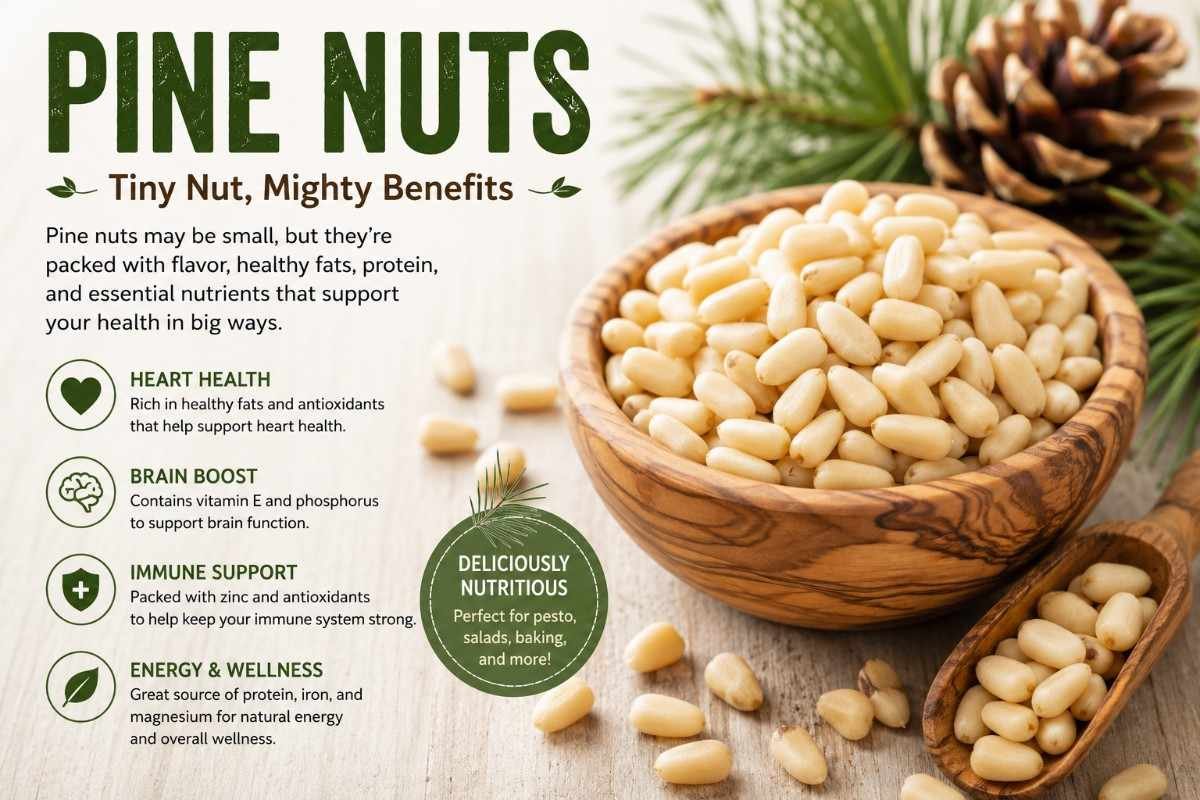
Pine nuts are small, ivory-colored edible seeds with a soft texture and mild buttery flavor. They are popular in pesto, salads, pasta dishes, rice recipes, baked goods, and Mediterranean-style meals. Although they are commonly called nuts, pine nuts are technically edible seeds harvested from the cones of certain pine trees.
These tiny seeds are nutrient-dense and provide unsaturated fats, plant protein, magnesium, iron, zinc, manganese, copper, vitamin E, vitamin K, and antioxidants. They are also naturally low in carbohydrates, making them a useful addition to balanced snacks and meals.
Like other nuts and seeds, pine nuts are calorie-dense. A small serving can provide plenty of energy and nutrients, so portion control is important. They can also trigger allergic reactions in some people. This guide explains pine nut nutrition, possible health benefits, healthy ways to eat them, side effects, and safe serving sizes.
Pine nuts can be enjoyed as part of a balanced diet alongside other nutritious foods such as cashews, hazelnuts .
What Are Pine Nuts?
Pine nuts are edible seeds that grow inside the cones of specific pine tree species. Not every pine cone produces edible seeds, and the seeds must be carefully harvested and shelled.
They have been used in traditional cuisines for centuries, especially in Mediterranean, Middle Eastern, Asian, and European dishes. Their creamy texture and slightly sweet flavor make them a popular ingredient in pesto and other sauces.
Pine nuts are sometimes called:
- Pignoli
- Pinon nuts
- Pine kernels
- Cedar nuts
- Chilgoza
- Stone pine seeds
- Pine cone seeds
Although pine nuts are seeds rather than true botanical nuts, they can still cause reactions in people with nut or seed allergies. If you have a history of food allergies, ask an allergy specialist before adding them to your diet.
Pine Nut Nutrition Facts
Pine nuts provide a concentrated source of calories, healthy fats, minerals, and plant compounds.
Nutrition in 1 Ounce or 28 Grams of Pine Nuts
| Nutrient | Approximate Amount |
|---|---|
| Calories | 191 calories |
| Protein | 3.9 g |
| Total fat | 19 g |
| Carbohydrates | 3.7 g |
| Fiber | 1.1 g |
| Sugar | 1 g |
| Magnesium | 71 mg |
| Phosphorus | 163 mg |
| Iron | 1.6 mg |
| Zinc | 1.8 mg |
| Manganese | About 110% of daily needs |
| Vitamin E | About 18% of daily needs |
| Vitamin K | About 13% of daily needs |
Pine nuts are particularly rich in unsaturated fats, including polyunsaturated and monounsaturated fats. They also contain a fatty acid called pinolenic acid, which is being studied for its possible role in appetite regulation and metabolism. More research is needed before making strong health claims about this compound.
Top Health Benefits of Pine Nuts
1. Rich in Healthy Unsaturated Fats
Pine nuts contain mostly unsaturated fats. These fats can be part of a heart-friendly eating pattern when they replace foods high in trans fats, saturated fats, or refined carbohydrates.
Healthy fats support normal cell function and help the body absorb fat-soluble vitamins such as vitamins A, D, E, and K. Adding a small amount of pine nuts to salads, vegetables, or whole grains can also make meals more satisfying.
Because pine nuts are high in calories, use them as a topping or ingredient rather than eating large handfuls.
2. May Support Heart Health
Pine nuts provide unsaturated fats, magnesium, antioxidants, and plant compounds that can support a heart-healthy diet. Nuts and seeds may be helpful when they replace highly processed snacks, fried foods, or foods high in added sugar.
They should be part of an overall eating pattern that includes vegetables, fruits, beans, whole grains, and lean or plant-based proteins. Pine nuts are not a treatment for heart disease or high cholesterol.
To build a heart-healthy eating pattern, explore our complete guide to the DASH Diet for Heart Health.
3. May Help With Fullness and Appetite Control
Pine nuts contain fat, protein, and a small amount of fiber. This combination can make meals and snacks more filling.
Their unique fatty acid, pinolenic acid, has been studied for its potential effect on appetite-related hormones. However, research is still limited, and pine nuts should not be treated as a weight-loss food.
A measured serving of pine nuts with fruit, yogurt, oats, or a salad may help you feel more satisfied than a snack made mostly of refined carbohydrates.
4. Supports Energy Production
Pine nuts provide magnesium, iron, phosphorus, copper, and manganese. These nutrients are involved in normal energy metabolism and enzyme activity. Pine nuts also provide minerals that work alongside vitamin B6 to support normal energy metabolism.
Iron helps carry oxygen in the blood, while magnesium supports many reactions involved in energy production. Pine nuts are not an instant energy drink, but they can be a nutrient-rich part of a balanced snack.
5. Provides Antioxidant Support
Pine nuts contain vitamin E and other plant compounds with antioxidant activity. Antioxidants help protect cells from oxidative stress caused by normal metabolism and environmental factors.
A healthy antioxidant-rich diet includes many colorful fruits and vegetables, beans, whole grains, herbs, spices, nuts, and seeds. Pine seeds can add variety, but they should not be the only source of antioxidants in your diet.
Looking for more antioxidant-rich foods? Read our guide to Fig Water: Benefits, Nutrition, Uses & Side Effects.
6. May Support Blood Sugar Balance
Pine nuts are low in carbohydrates and provide fat, protein, and fiber. When added to a balanced meal, this combination may slow digestion and support steadier blood sugar levels compared with sugary snacks.
For example, adding a small amount of pine nuts to a vegetable salad or pairing them with plain yogurt and fruit may be more balanced than eating sweets or biscuits alone.
People with diabetes can often include pine nuts in a meal plan, but serving size and total calorie intake still matter. Ask a doctor or registered dietitian for individual guidance.
7. May Support Brain and Nerve Function
Pine nuts provide healthy fats, magnesium, iron, zinc, vitamin E, and small amounts of omega-3 fats. These nutrients support normal nervous system function and overall nutrition.
A brain-supportive diet should include a wide range of foods, including walnuts, almonds, seeds, leafy greens, berries, legumes, and whole grains.
You may also enjoy our guide to Walnuts: Benefits for Brain and Heart Health.
8. May Support Bone Health
Pine nuts contain magnesium, phosphorus, manganese, zinc, and vitamin K. These nutrients are involved in normal bone structure and body functions.
They work best as part of an overall bone-supportive lifestyle that includes calcium-rich foods, vitamin D, enough protein, regular walking, and resistance exercise.
9. May Support Skin Health
Pine seeds contain vitamin E, healthy fats, and antioxidant compounds. Vitamin E helps protect cells from oxidative stress, while dietary fats support normal skin structure.
A balanced diet can support overall skin nutrition, but pine nuts cannot replace sunscreen, skincare routines, or treatment for skin conditions.
10. A Useful Plant-Based Food
Pine nuts are naturally vegan and can add richness to vegetarian and plant-based meals. They can be used in pesto, grain bowls, hummus, salads, and vegetable dishes.
They are especially useful when you want a creamy, satisfying texture without dairy. However, because they can be expensive, use small amounts as a garnish or topping.
11. May Be Suitable for Low-Carb Diets
Pine seeds are relatively low in carbohydrates and can fit into low-carb eating patterns. They can be used in salads, sauces, and snacks to add flavor and healthy fats.
Low-carb diets are not suitable for everyone. Choose an eating pattern based on your health needs, preferences, and professional advice.
Types of Pine Nuts
Different pine species produce edible pine nuts. The size, flavor, and price may vary.
Mediterranean Pine Nuts
Mediterranean pine nuts are often used in Italian-style pesto. They are usually long, pale, and creamy.
Chilgoza Pine Nuts
Chilgoza are long, slender pine seeds popular in India, Pakistan, Afghanistan, and nearby regions. They are often eaten as a dry fruit or roasted snack.
Korean Pine Nuts
Korean pine nuts are commonly used in East Asian cooking. They may be slightly larger and have a rich, buttery taste.
Chinese Pine Nuts
Chinese pine nuts are widely available and often used in snacks, cooking, and baking.
Raw Pine Nuts
Raw pine nuts have a soft texture and mild flavor. They can be eaten directly or added to recipes.
Roasted Pine Nuts
Toasted pine seeds have a deeper, nuttier flavor. Toast them gently because they can burn quickly.
Pine Nut Oil
Pine nut oil has a delicate flavor and can be used in dressings or as a finishing oil. Use small amounts because it is calorie-dense.
How Many Pine Nuts Should You Eat Per Day?
A standard serving is about:
- 1 ounce or 28 grams
- About 1/8 cup
- Around 160 to 170 kernels
Because pine nuts are high in calories, many people may prefer a smaller serving of 1 to 2 tablespoons when using them as a topping.
If you are trying to manage weight, measure your serving instead of eating directly from a packet.
Best Time to Eat Pine Nuts
Pine seeds can be eaten at any time of day. The best time depends on how you use them in meals.
In the Morning
Sprinkle toasted pine nuts over oats, yogurt, fruit bowls, or whole-grain toast.
As a Snack
Mix a small portion with fruit or unsweetened yogurt for a satisfying snack.
With Lunch or Dinner
Add pine seeds to salads, roasted vegetables, pasta, rice, quinoa, couscous, or grain bowls.
Before or After Exercise
Pine seeds provide energy but are not very high in protein. Pair them with yogurt, milk, soy foods, eggs, or legumes for a more balanced workout snack.
Healthy Ways to Eat Pine Nuts
Try these easy ideas:
- Make homemade pesto with basil, garlic, olive oil, and pine nuts
- Sprinkle toasted kernels over salads
- Add them to pasta dishes
- Mix into rice, quinoa, or couscous
- Use as a topping for roasted vegetables
- Add to yogurt with fruit
- Blend into hummus
- Add small amounts to oatmeal
- Use in homemade trail mix
- Add to stuffed vegetables
- Sprinkle over soups
- Use in baking recipes
Choose raw or dry-roasted pine seeds without added sugar, excess salt, or oil.
Pine Nuts for Weight Loss
Pine seeds can fit into a weight-loss plan when eaten in moderate portions.
Their fat, protein, and fiber may help with fullness, which can make it easier to avoid less nutritious snacks. However, pine nuts are calorie-dense, so large portions can add many calories quickly.
Tips for Eating Pine Nuts During Weight Loss
- Use 1 to 2 tablespoons as a topping
- Add them to high-fiber meals such as salads and vegetables
- Pair them with fruit or yogurt
- Avoid sugar-coated or heavily salted products
- Measure portions before eating
- Do not rely on pine seeds as a weight-loss supplement
If you’re exploring natural ways to support healthy weight management, you may also like our guide to the Viral Apple Cider Vinegar Morning Routine: Benefits, Recipes & Weight Loss Truth, which explains the science behind this popular wellness trend and how to use apple cider vinegar safely as part of a balanced lifestyle.
Are Pine Nuts Good for Diabetes?
Pine seeds may be a suitable food for many people with diabetes because they are low in carbohydrates and contain healthy fats, protein, and fiber.
They may be a better snack choice than sweets, pastries, or sugar-coated snacks. Still, they are calorie-dense, so portion control is important.
Choose plain pine seeds and include them in a balanced meal plan. If you have diabetes, consult your doctor or dietitian for personal nutrition guidance.
Pine Nut Side Effects and Risks
1. Food Allergy
Pine seeds can cause allergic reactions in some people. Symptoms may include:
- Itching or hives
- Swelling of the lips, tongue, or throat
- Stomach pain, nausea, or vomiting
- Wheezing or difficulty breathing
- Dizziness or fainting
Severe allergy symptoms need emergency medical care. People with a known allergy to pine nuts should avoid them. If you have a tree-nut, peanut, seed, or pine pollen allergy, ask an allergy specialist before trying pine seeds .
2. Pine Mouth Syndrome
Some people develop a temporary bitter or metallic taste after eating pine seeds . This is often called pine mouth syndrome or pine nut syndrome.
The taste may begin 12 to 48 hours after eating pine seeds and can last for several days or, in some cases, longer. It is usually not an allergic reaction, but it can be unpleasant.
If you develop a bitter or metallic taste after eating these seeds, avoid them and speak with a healthcare professional if symptoms are severe or do not improve.
3. High Calorie Content
Pine seeds are high in fat and calories. Eating large portions often may contribute to weight gain.
4. Digestive Discomfort
Some people may experience gas, bloating, or stomach discomfort after eating nuts or seeds. Start with a small portion if you are not used to high-fat foods.
5. Storage and Freshness
Pine nuts contain oils that can turn rancid. Store them in an airtight container in the refrigerator or freezer to help keep them fresh.
Do not eat pine seeds that smell sour, stale, or rancid.
Pine Nuts vs Almonds: Which Is Better?
Both pine seeds and almonds can be nutritious, but they have different strengths.
| Feature | Pine Nuts | Almonds |
| Calories | Higher | Lower |
| Protein | Moderate | Higher |
| Healthy fats | High | High |
| Vitamin E | Moderate | Higher |
| Manganese | Very high | Moderate |
| Best for | Pesto, toppings, rich flavor | Everyday snacks, protein, fiber |
Pine seeds are excellent for adding a buttery flavor to meals, while almonds are often easier to use as an everyday snack because they provide more protein and fiber for a similar serving size.
Learn more in our complete guide to Almonds: Benefits, Nutrition and Side Effects.
FAQ
Are pine nuts healthy?
Yes, pine seeds can be healthy when eaten in moderate portions. They provide unsaturated fats, plant protein, minerals, vitamin E, and antioxidant compounds.
Are pine nuts actually nuts?
Pine seeds are technically edible seeds from pine cones, not true botanical nuts. However, they are commonly used like nuts in cooking.
How many pine nuts should I eat per day?
A standard serving is about 28 grams, but 1 to 2 tablespoons may be enough when using them as a topping.
Are pine nuts good for weight loss?
They may support fullness, but they are high in calories. Use small measured portions as part of a balanced diet.
Can people with diabetes eat pine nuts?
Many people with diabetes can include plain pine seeds in balanced meals. Portion size matters because they are calorie-dense.
Why do pine nuts leave a bitter taste in the mouth?
Some people experience pine mouth syndrome, a temporary bitter or metallic taste that can begin after eating pine seeds . It is usually not an allergy.
Are raw or roasted pine nuts better?
Both can be nutritious. Raw pine nuts are minimally processed, while roasted pine seeds have a deeper flavor. Choose options without added sugar or excess salt.
Can dogs eat pine nuts?
Pine nuts are not considered toxic to dogs in small amounts, but they are high in fat and can cause stomach upset. Avoid giving them regularly, especially seasoned or salted pine seeds .
Conclusion
Pine nuts are small, buttery edible seeds that can add flavor, texture, and nutrition to many meals. They provide healthy unsaturated fats, plant protein, magnesium, iron, zinc, manganese, vitamin E, vitamin K, and antioxidant compounds.
When eaten in moderate portions, pine seeds may support fullness, heart-friendly eating, energy metabolism, blood sugar balance, and overall nutrition. They are easy to use in pesto, salads, pasta, grain bowls, roasted vegetables, yogurt, and homemade trail mixes.
Because pine seeds are calorie-dense, use a small measured portion. Choose plain raw or dry-roasted options, store them in the refrigerator or freezer, and avoid them if you have an allergy or develop pine mouth syndrome.
If you enjoy learning about healthy nuts and seeds, explore our complete guides on Macadamia Nuts, Brazil Nuts, Peanuts to compare their nutrition, health benefits, and best ways to include them in your diet.
Sources and References
- USDA FoodData Central – Pine Nuts, Dried (Nutrition Facts)
- Mayo Clinic – Nuts and Your Heart: Eating Nuts for Heart Health
- Cleveland Clinic – Are Nuts Good for You?
- American Heart Association – Healthy Eating: Nuts and Seeds
About the Author
Hitasha is a health and wellness content writer passionate about creating evidence-based, easy-to-understand articles on nutrition, healthy foods, fitness, and lifestyle. Her goal is to help readers make informed health choices through reliable, practical, and SEO-friendly content.
Disclaimer
This article is for informational and educational purposes only and should not be considered medical advice. Always consult a qualified healthcare professional before making significant changes to your diet or lifestyle, especially if you have food allergies, a medical condition, are pregnant or breastfeeding, or are taking medications.