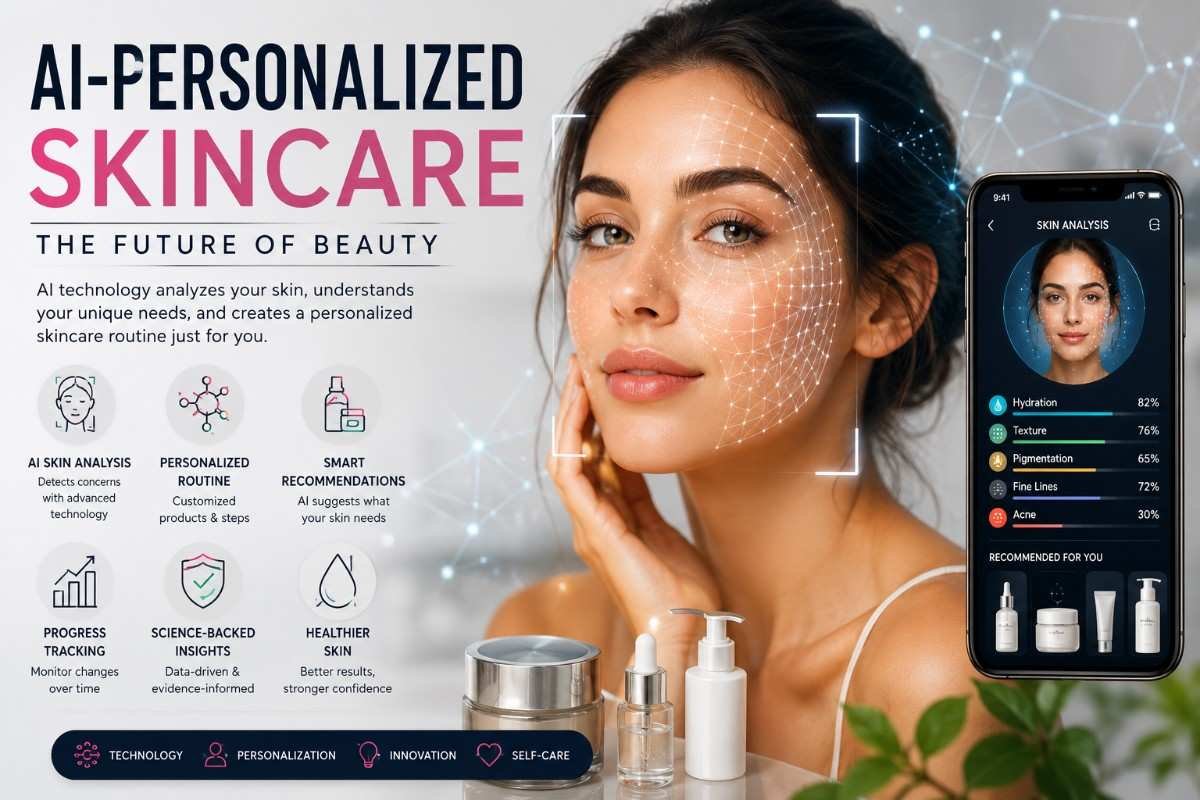
Imagine taking a selfie and receiving a skincare routine designed specifically for your skin in just a few seconds. What once sounded like science fiction is now becoming a reality through AI-personalized skincare.
Artificial intelligence (AI) is transforming the beauty industry by analyzing skin conditions,
This shift is part of a much larger trend where Artificial Intelligence in Everyday Life is changing how people shop, communicate, work, manage health, and make personal decisions.
identifying concerns such as wrinkles, acne, pigmentation, and dryness, and recommending products tailored to individual needs. Instead of following generic skincare advice, consumers can now access customized routines based on data-driven insights.
The demand for personalized beauty solutions is growing rapidly as more people seek skincare products that match their unique skin type, lifestyle, environment, and goals. AI-powered skincare apps, smart mirrors, and skin analysis devices are making personalized beauty more accessible than ever before.
In this comprehensive guide, you’ll learn how AI-personalized skincare works, its advantages, potential risks, and why experts believe it represents the future of beauty.
What Is AI-Personalized Skincare?
AI-personalized skincare uses artificial intelligence, machine learning, and computer vision to analyze a person’s skin and recommend customized skincare routines.
Instead of relying solely on broad skin categories such as oily, dry, or combination skin, AI systems evaluate multiple factors, including:
- Skin texture
- Fine lines and wrinkles
- Dark spots
- Acne
- Pore size
- Redness
- Oil production
- Hydration levels
- Skin tone
- Environmental factors
Many AI-powered skincare platforms ask users to upload facial photos or answer lifestyle questions before generating personalized recommendations.
As AI learns from larger datasets, its recommendations continue to improve over time. According to the World Health Organization (WHO), artificial intelligence is increasingly being integrated into healthcare to support decision-making and improve personalized care, although it should complement—not replace—human expertise.
Why AI-Personalized Skincare Is Becoming So Popular
AI-Personalized Skincare: Several trends are driving the rise of AI in the skincare industry.
1. Consumers Want Personalized Solutions
People are moving away from “one-size-fits-all” skincare.
Two people with oily skin may have completely different concerns. One may struggle with acne, while another wants to reduce enlarged pores.
AI helps create routines that address individual needs rather than general skin types.
2. Technology Is More Accessible
Smartphones now have high-quality cameras capable of capturing detailed facial images.
This allows AI skincare apps to analyze skin without requiring expensive professional equipment.
3. Better Understanding of Skin Health
Today’s consumers are more educated about skincare ingredients.
Instead of simply buying popular products, many now look for routines based on:
- Skin barrier health
- Hydration
- Anti-aging
- Acne prevention
- Hyperpigmentation
AI helps organize these concerns into a personalized routine.
4. Growth of Digital Beauty
Virtual beauty consultations became increasingly popular in recent years.
Many skincare brands now use AI to recommend products online, making personalized skincare available from home.
How AI Skin Analysis Works
AI-Personalized Skincare: AI skincare platforms use several technologies together.
Facial Image Recognition
Users typically upload one or more photos taken under good lighting.
Computer vision algorithms evaluate different areas of the face, including:
- Forehead
- Cheeks
- Nose
- Chin
- Under-eye area
The software identifies visible skin characteristics using pattern recognition. Advances in artificial intelligence and medical imaging continue to improve computer-assisted analysis. However, research from the National Institutes of Health (NIH) notes that AI systems should be validated carefully before being relied upon in clinical settings.
Machine Learning
Machine learning models compare your skin with millions of previously analyzed images.
Over time, these models improve their ability to identify:
- Acne severity
- Wrinkles
- Uneven skin tone
- Pigmentation
- Dryness
- Oiliness
The larger the training dataset, the more accurate the predictions may become.
Lifestyle Questionnaires
AI-Personalized Skincare: Most AI skincare tools also ask questions about:
- Age
- Climate
- Daily routine
- Sleep
- Water intake
- Sun exposure
- Existing skincare products
- Skin sensitivity
These additional details help refine recommendations.
Continuous Learning
Unlike traditional skincare quizzes, AI systems continue learning.
As users upload new photos and provide feedback, recommendations can be updated to reflect changes in skin condition.
Benefits of AI-Personalized Skincare
1. Customized Skincare Routine
AI-Personalized Skincare: One of AI’s greatest strengths is personalization.
Rather than recommending the same routine to everyone, AI adjusts products based on individual skin concerns.
This may reduce unnecessary product purchases. AI also works well alongside modern skincare methods. For example, many users combine personalized recommendations with routines like Skin Cycling to reduce irritation or the Skin Flooding Trend to improve hydration.
2. Faster Skin Analysis
A traditional consultation may require scheduling an appointment.
AI-powered apps often provide basic skin assessments within minutes.
While they cannot diagnose medical conditions, they can highlight common cosmetic concerns.
3. Product Recommendations Based on Skin Needs
Many AI platforms suggest products that match identified concerns.
Examples include recommendations for:
- Dry skin
- Acne-prone skin
- Aging skin
- Sensitive skin
- Hyperpigmentation
Some systems even recommend ingredient combinations rather than specific brands.
4. Progress Tracking
Many users struggle to determine whether a skincare routine is working.
AI platforms often compare photos taken weeks or months apart.
This allows users to monitor changes in:
- Fine lines
- Acne
- Dark spots
- Hydration
- Skin brightness
Tracking progress can encourage consistency.
5. Better Ingredient Matching
AI-Personalized Skincare: Instead of following viral beauty trends, AI focuses on ingredients suitable for your skin.
For example:
Dry skin may benefit from:
- Ceramides
- Hyaluronic acid
- Glycerin
Acne-prone skin may require:
- Salicylic acid
- Niacinamide
- Azelaic acid
Hyperpigmentation concerns may involve:
- Vitamin C
- Alpha arbutin
- Tranexamic acid
These recommendations vary based on each user’s analysis.
6. Supports Better Skin Habits
Many AI skincare apps include reminders for:
- Cleansing
- Moisturizing
- Sunscreen
- Drinking water
- Progress photos
Small habits performed consistently often contribute to healthier-looking skin over time.
Can AI Replace a Dermatologist?
AI-Personalized Skincare: This is one of the most common questions.
The short answer is no.
AI can help identify visible skin patterns and provide skincare recommendations, but it cannot diagnose skin diseases or replace a medical examination.
A board-certified dermatologist can:
- Diagnose eczema
- Identify rosacea
- Detect skin cancer
- Treat severe acne
- Prescribe medications
- Evaluate allergic reactions
AI should be viewed as a supportive tool rather than a replacement for professional medical care.
If you notice rapidly changing moles, persistent rashes, severe acne, or unexplained skin changes, seek evaluation from a qualified healthcare professional. The American Academy of Dermatology (AAD) recommends consulting a board-certified dermatologist for diagnosing skin diseases, prescribing treatments, and evaluating persistent or unusual skin concerns.
Is AI Skincare Accurate?
AI-Personalized Skincare: The accuracy of AI skincare depends on several factors, including:
- Image quality
- Lighting conditions
- Camera resolution
- Training data used by the AI system
- User-provided information
High-quality AI platforms can identify many common cosmetic skin concerns reasonably well, but they are not perfect. Different apps may produce different recommendations, and results should be interpreted as guidance rather than a medical diagnosis.
Risks and Limitations of AI-Personalized Skincare
Although AI is changing the beauty industry, it still has limitations. Understanding these challenges can help you use AI skincare tools more effectively and avoid unrealistic expectations.
1. AI Cannot Diagnose Skin Diseases
AI can identify visible patterns such as dryness, wrinkles, or uneven skin tone, but it cannot accurately diagnose medical skin conditions.
Conditions like:
- Melanoma
- Psoriasis
- Rosacea
- Eczema
- Skin infections
- Allergic reactions
require evaluation by a qualified dermatologist or healthcare professional.
If you notice unusual skin changes, persistent rashes, or rapidly changing moles, seek professional medical advice instead of relying solely on an AI app.
2. Results Depend on Image Quality
AI analyzes what it “sees.”
Poor lighting, makeup, filters, low-resolution cameras, or blurry photos can reduce accuracy.
For the best results:
- Use natural daylight whenever possible.
- Remove makeup before taking photos.
- Avoid beauty filters.
- Keep your face centered and clearly visible.
3. Recommendations May Vary Between Apps
AI-Personalized Skincare: Different AI skincare platforms use different algorithms and training datasets.
As a result, two apps may provide different recommendations for the same person.
This is one reason AI should be viewed as a helpful guide rather than an absolute authority.
4. Product Bias
Some AI skincare tools are developed by beauty brands.
These platforms may primarily recommend products from their own product lines rather than comparing options across the market.
Reading ingredient lists and understanding your skin’s needs can help you make informed decisions.
5. Limited Understanding of Lifestyle Factors
Although many AI platforms ask about sleep, stress, and diet, they cannot fully measure how these factors affect your skin.
Hormonal changes, genetics, medications, and underlying health conditions may also influence your skin in ways AI cannot completely assess.
Nutrition also plays a role in overall skin health. As food innovation evolves, emerging nutrient-rich options discussed in our Future Fruits article may become part of broader wellness and beauty conversations in the years ahead.
AI vs. Traditional Skincare Consultations
AI-Personalized Skincare: Both AI technology and dermatologists have important roles in skincare.
| AI-Personalized Skincare | Traditional Dermatologist Consultation |
|---|---|
| Available anytime | Requires an appointment |
| Fast skin analysis | Comprehensive medical examination |
| Personalized product suggestions | Medical diagnosis and treatment |
| Tracks skin progress | Can prescribe medications |
| Convenient for everyday skincare | Essential for skin diseases and serious concerns |
| Lower cost in many cases | Higher cost but provides expert medical care |
For everyday skincare routines, AI can be a useful assistant. For medical concerns, a dermatologist remains the best choice.
Popular AI Skincare Technologies
AI-Personalized Skincare: The beauty industry continues to introduce new AI-powered tools designed to make skincare more personalized.
Common examples include:
AI Skin Analysis Apps
These apps analyze facial images and provide personalized skincare recommendations.
Many also track improvements over time by comparing photos.
Smart Beauty Mirrors
Some smart mirrors use built-in cameras and artificial intelligence to evaluate:
- Wrinkles
- Dark spots
- Skin texture
- Pores
- Hydration
They often display progress reports and personalized suggestions.
AI Shopping Assistants
Many online beauty retailers now use AI-powered quizzes and recommendation systems to help shoppers discover products that match their skin type and concerns.
Smart Skin Analysis Devices
Portable skin scanners and connected beauty devices can measure factors such as hydration and oil levels, providing additional insights alongside AI recommendations.
Privacy and Data Security
AI-Personalized Skincare: Because AI skincare platforms often require facial photographs and personal information, privacy is an important consideration.
Before using an AI skincare app:
- Read the privacy policy carefully.
- Understand how your photos are stored.
- Check whether your data is shared with third parties.
- Review options for deleting your account and uploaded images.
- Use reputable apps from trusted companies.
Protecting your personal information is just as important as caring for your skin.
The U.S. Food & Drug Administration (FDA) encourages developers of digital health technologies to prioritize safety, transparency, and responsible handling of user data when designing AI-powered healthcare tools.
The Future of AI in Beauty
Artificial intelligence is expected to become even more advanced in the coming years.
Future innovations may include:
Real-Time Skin Monitoring
Wearable devices may continuously monitor skin hydration, UV exposure, and environmental conditions throughout the day.
Smart Bathroom Mirrors
Future mirrors may automatically analyze your skin every morning and recommend changes to your skincare routine.
Personalized Product Formulation
Some companies are already exploring AI systems that create customized skincare products based on an individual’s unique skin profile.
This trend is likely to expand as technology improves.
Virtual Dermatology Support
AI may assist dermatologists by organizing patient information, tracking skin changes over time, and improving treatment planning.
However, human medical expertise will remain essential.
Expert Tips for Better AI Skin Analysis
AI-Personalized Skincare: To get the most accurate results:
Take Photos in Natural Lighting
Avoid harsh shadows and artificial filters.
Remove Makeup
Clean skin allows AI to evaluate your natural complexion more accurately.
Stay Consistent
Take progress photos under similar lighting and camera angles to monitor changes over time.
Be Honest in Lifestyle Questionnaires
Providing accurate information about your routine, environment, and skin concerns helps AI generate more relevant recommendations.
Use AI as a Guide
AI can help you understand your skin better, but it should complement—not replace—professional skincare advice when medical concerns arise.
Is AI-Personalized Skincare Worth Trying?
For many people, yes.
AI skincare offers:
- Personalized recommendations
- Convenient skin analysis
- Progress tracking
- Educational insights
- Improved skincare consistency
However, success still depends on using quality products, protecting your skin from the sun, maintaining healthy lifestyle habits, and consulting a dermatologist when necessary.
Technology is a tool—not a miracle solution.
FAQs
What is AI-personalized skincare?
AI-personalized skincare uses artificial intelligence to analyze your skin through photos and questionnaires, then recommends customized skincare routines and products based on your unique concerns.
Is AI skincare accurate?
AI can identify many common cosmetic skin concerns with reasonable accuracy, but results depend on image quality, the platform’s algorithms, and user-provided information. It cannot provide a medical diagnosis.
Can AI detect skin cancer?
No. While some AI technologies are being researched for medical applications, consumer skincare apps should not be relied upon to detect skin cancer or other serious skin diseases. Any suspicious skin changes should be evaluated by a dermatologist.
Is AI skincare safe?
Most reputable AI skincare platforms are safe to use for cosmetic guidance. However, users should review privacy policies carefully because facial images and personal information may be collected.
Who should use AI-personalized skincare?
AI skincare is ideal for beginners, skincare enthusiasts, and anyone seeking a more personalized routine. People with chronic or severe skin conditions should also seek professional medical advice.
What is the future of AI in skincare?
AI is expected to play a larger role in personalized product recommendations, smart beauty devices, virtual consultations, and continuous skin monitoring. These innovations may make skincare more tailored and convenient, but they are unlikely to replace healthcare professionals.
Conclusion
AI-personalized skincare is reshaping the beauty industry by making customized skincare routines more accessible than ever before. With the help of artificial intelligence, consumers can better understand their skin, receive tailored product recommendations, and monitor their progress over time—all from the convenience of a smartphone or smart device.
While AI offers exciting possibilities, it is important to remember that no algorithm can replace the expertise of a qualified dermatologist. The best skincare approach combines technology with evidence-based products, healthy lifestyle habits, and professional medical care when needed.
As AI continues to evolve, personalized beauty experiences are likely to become even more accurate, convenient, and data-driven. Whether you’re new to skincare or looking to refine your existing routine, AI-powered tools can serve as valuable assistants on your journey toward healthier, more confident skin. By using them thoughtfully and protecting your personal data, you can take advantage of one of the most innovative trends shaping the future of beauty.
AI-powered skincare is just one part of a broader shift toward personalized health and beauty. Depending on your skincare goals, you may also benefit from learning about Face Basting Trend, Cryotherapy Skincare Trend,
About the Author
Hitasha is a health, wellness, and beauty content writer at Trendyopedia, specializing in skincare trends, nutrition, healthy living, and emerging technologies in beauty. She creates well-researched, evidence-based articles that simplify complex topics into practical, easy-to-understand advice. Her goal is to help readers make informed decisions with accurate, up-to-date information backed by trusted medical and scientific sources.
Disclaimer
The information in this article is for educational and informational purposes only and should not be considered medical, dermatological, or professional advice. While AI-powered skincare tools can provide personalized recommendations, they cannot diagnose or treat skin conditions. Always consult a board-certified dermatologist or qualified healthcare professional for persistent skin concerns, medical conditions, or before starting a new skincare regimen. Trendyopedia is committed to publishing accurate, evidence-based content but does not replace professional medical advice, diagnosis, or treatment.
2 thoughts on “AI-Personalized Skincare: The Future of Beauty in 2026”